
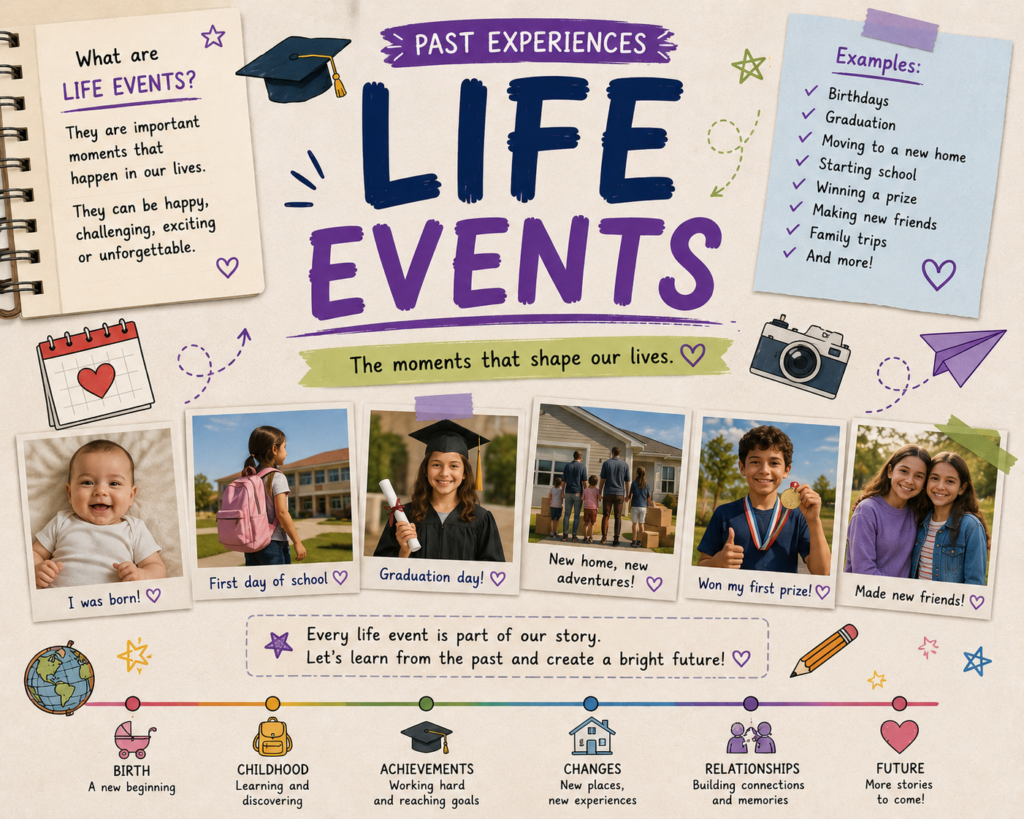
Life Events
SKILLS
EFL 4.1.2: Understand main ideas and details in narratives about past life events.
EFL 4.2.14: Use strategies to maintain conversational exchanges when talking about personal history.
EFL 4.3.4: Use digital tools to organize and present personal timelines.
EFL 4.4.1: Write short, simple narrative texts using sequence connectors (first, then, after that, finally).
REAL-LIFE APPLICATION
Discussing life events is the cornerstone of personal identity and social bonding. At an A2 level, students are transitioning from “what I do” to “who I am.” Learning to narrate life events (being born, moving house, starting school) allows students to share their personal history, build empathy with peers, and clarify their own experiences. This skill is vital for future academic or job interviews, where candidates must often explain their background and how past experiences have shaped their current character.
LEARNING ACTIVITIES
SESSION 1 (80 min) ANTICIPATION
Part 1 – ( 10-15 minutes)
Anticipation Activity (10–15 minutes)
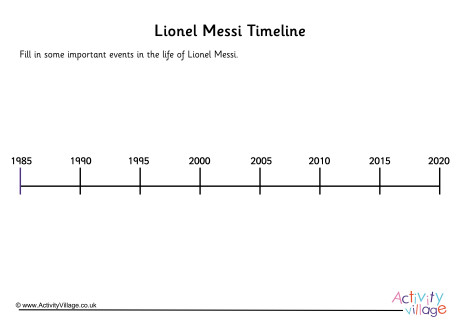
“The Mystery Timeline”
- Activity: Display a digital timeline of a famous person (e.g., Lionel Messi or a famous Ecuadorian figure) with blank spaces for the years and events.
- Instruction: Students work in pairs to guess what happened in the missing years (e.g., “In 2010, he played for Barcelona”).
- Bridge: Ask students: “What is one thing that happened to you in 2015?” This naturally introduces the Past Simple tense.
CONSTRUCTION
Part 2: Vocabulary Development (15 min)
The teacher explicitly introduces key vocabulary needed for the lesson, ensuring students clearly understand meaning and use. The words include:
| Phrase | Context | Example Sentence |
|---|---|---|
| Was born | The start of life. | I was born in Quito in 2010. |
| Started school | The beginning of education. | She started school when she was five. |
| Moved | Changing homes or cities. | We moved to a new house last year. |
| Met (a friend) | Meeting someone new. | I met my best friend in second grade. |
| Learned to | Acquiring a new skill. | I learned to ride a bike at age seven. |
| Won | Being successful in a contest. | He won a soccer tournament in 2022. |
Part 3: Grammar Introduction: Simple Past Tense (20 mins)
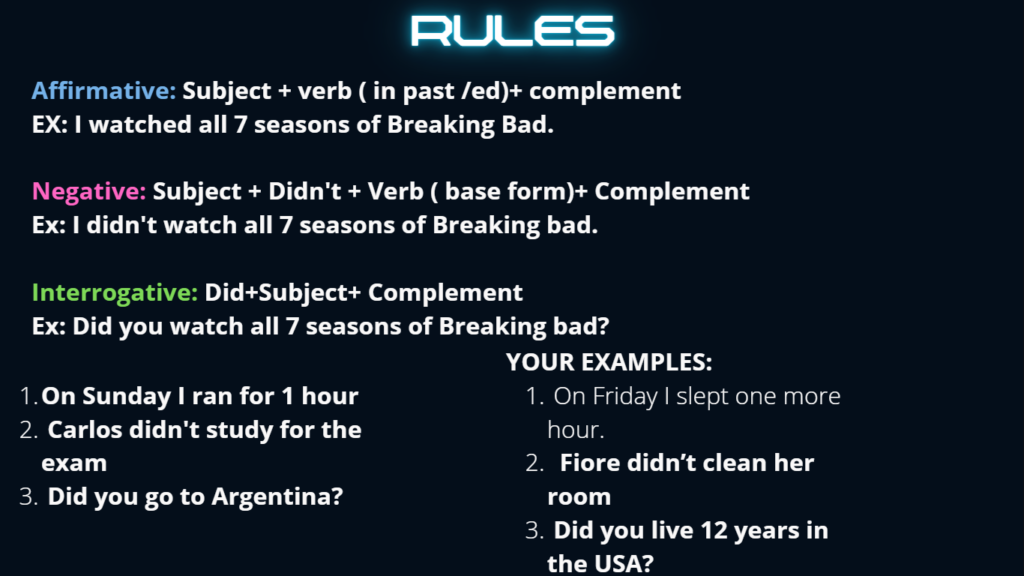
Presentation Link: https://canva.link/26yvk302ouf60qi
Focus: The Past Simple (Regular vs. Irregular)
- Concept: Explain that we use the Past Simple to talk about finished events.
- Regular (-ed): Show the pattern: Move -> Moved, Start -> Started. Explain this is the “easy” rule.
- Irregular (The “Troublemakers”): Introduce the top 5 irregulars using a “Verb Transformation” game: Meet -> Met, Win -> Won, Be -> Was/Were.
4. Grammar Practice Activity (25 Minutes)
Activity:
Grammar Practice Activity (25 min): “Biography Interview”
- Task: Students interview their partner about their life history using a provided template.
https://share.gemini.google/Z0pVfR7QqZ8c - Questions:
- Where were you born?
- When did you start school?
- Who was your first friend?
- Goal: Students must write down the partner’s answers using the full sentence: “Juan was born in…” or “He met his friend in…”
SESSION 2: CONSTRUCTION – REINFORCEMENT (40 min)
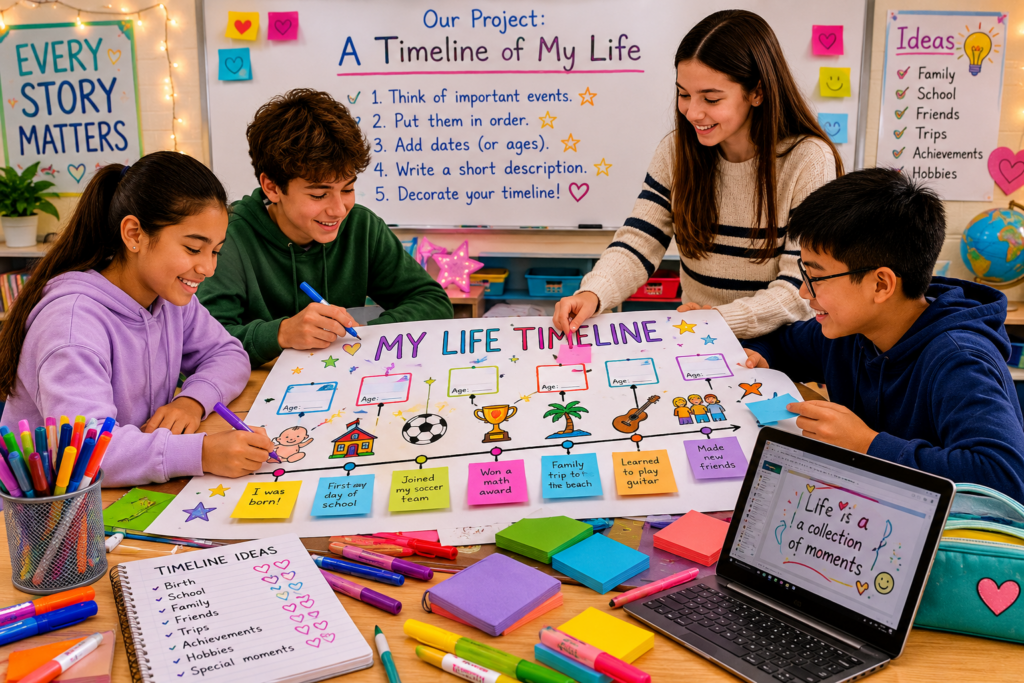
“My Digital Life Map”
- Task: Students create a “Digital Life Map” using a simple presentation tool (Canva or Google Slides).
- Instructions:
- Select 4 “Big Moments” from their life.
- Find or draw an image for each.
- Write one sentence for each, using a sequence connector (First, Second, After that, Finally).
- Example: “First, I was born in Guayaquil. Second, I started school at five. Finally, I moved to Quito.”
SESSION 3: CONSOLIDATION (80 min)
Part 1 – ( 2 x 40min)
Assessment Activity
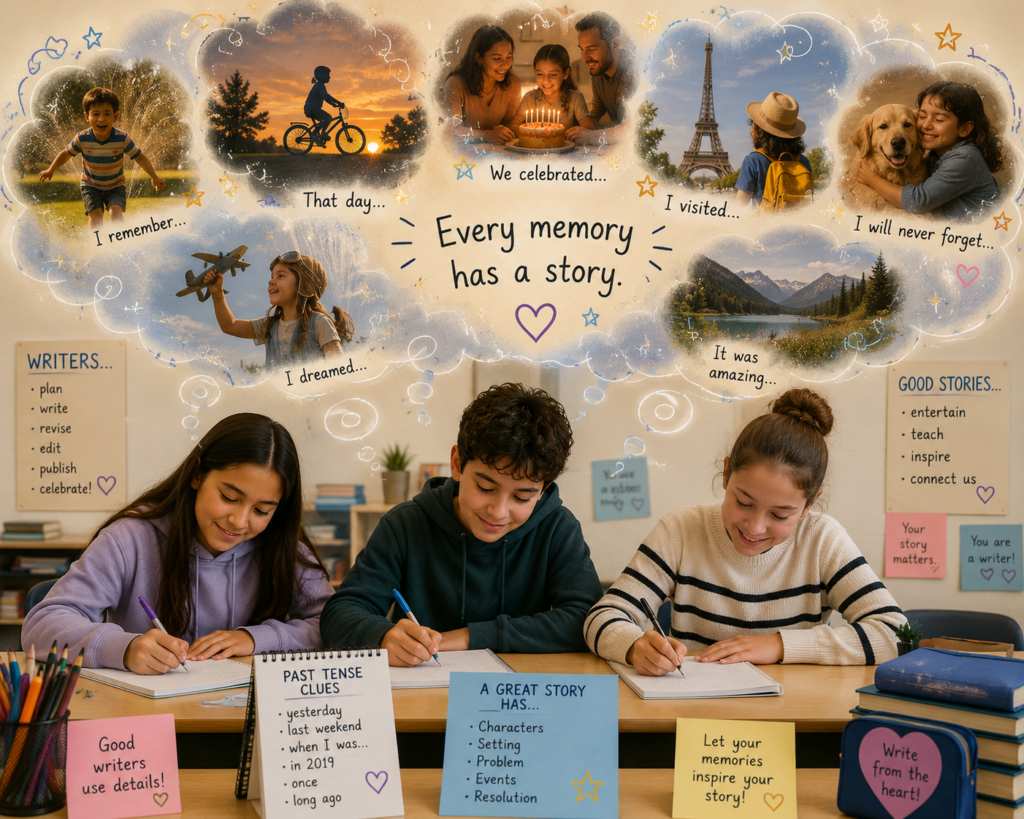
Assessment Class (2 Periods of 40 min)
- Period 1 (Writing): “My Life Story.” Students write a 100-word paragraph narrating their past experiences. They must use at least 4 vocabulary phrases and both regular/irregular past tense verbs.
- Period 2 (Speaking/Oral Exam): “The Storyteller.” In pairs, students share their Life Maps from the previous day. The teacher walks around listening for correct verb usage and flow.
Assessment Rubric (10 Points)
| Criteria | Excellent (3-4) | Good (2) | Developing (1) |
|---|---|---|---|
| Verb Usage | Correctly uses regular/irregular verbs in the past. | 2-3 mistakes with verbs. | Many verb errors. |
| Vocabulary | Uses 4+ target phrases. | Uses 2-3 target phrases. | Uses 0-1 target phrases. |
| Sequencing | Uses connectors (First, then, etc.) correctly. | Basic sequence used. | No connectors used. |
| Communication | Clear and easy to understand. | Mostly clear. | Hard to follow. |
NEE – Agregar el tipo de adaptaciones curriculares
Principio II: Pautas 6.1 – 6.3 – 6.4
Principio III: Pautas 7.1 – 8.1 – 9.1
ALUMNO 1: Constante monitoreo. Dar tiempo adicional para el desarrollo de la actividad y se reduce el número de ejercicios o se modifican los ejercicios con un nivel de dificultad reducido, de acuerdo con sus necesidades académicas.
ALUMNO 2: Constante monitoreo, Dar tiempo adicional para el desarrollo de la actividad y se reduce el número de ejercicios o se modifican los ejercicios con un nivel de dificultad reducido, de acuerdo con sus necesidades académicas.
ALUMNO 3: Constante monitoreo. Corroborar que el contenido entregado en clase haya sido comprendido por la estudiante mediante retroalimentación.