
Speculating on History

SKILLS
EFL 4.3.7. Read, gather, view and listen to information from various sources in order to organize and discuss relationships between academic content areas.
EFL 4.2.10. Sustain a conversational exchange on a familiar, everyday subject when carrying out a collaborative task.


REAL-LIFE APPLICATION
This topic helps students talk about past decisions and imagine what people probably felt, knew, or should have done. Students learn to use past modals to express regret, criticism, deduction, and possibility. In real life, this helps them analyze history, understand consequences, and speak more thoughtfully about decisions that affected communities.
LEARNING ACTIVITIES
SESSION 1 (80 min) ANTICIPATION
Part 1: Anticipation: History Mystery Bag (20 min)
The teacher brings “mystery cards” with short descriptions of past global decisions. Students work in groups and choose one card. They must guess whether the decision was wise, risky, unfair, or necessary. The teacher asks: What clues help us understand what people should have done? This activates speculation before grammar is explained.
Mystery cards:
- A government ignored warnings before a crisis.
- A country limited people’s right to vote.
- Leaders delayed action during a health emergency.
- A school system excluded some children.
- A company polluted a river.
- A community was forced to leave its land.
- A law protected only one group of people.
- A leader refused to negotiate peace.
- A country invested in education after a conflict.
- A group protested against unfair treatment.
CONSTRUCTION
Part 2: Vocabulary Development (15 min)
The teacher introduces vocabulary for analyzing past decisions.
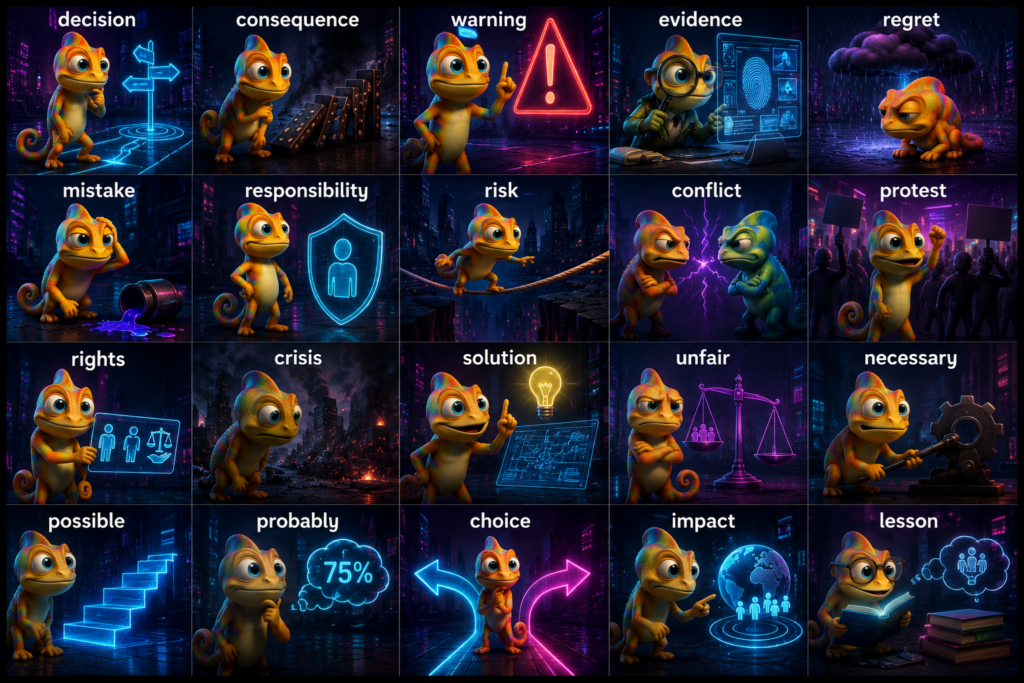
- decision
- consequence
- warning
- evidence
- regret
- mistake
- responsibility
- risk
- conflict
- protest
- rights
- crisis
- solution
- unfair
- necessary
- possible
- probably
- choice
- impact
- lesson
Part 3: Grammar Input: Past Modals (25 min)
The teacher explains the topic:
Past modals help us speculate about the past. They are useful when we analyze what people probably did, what they possibly did, or what they should have done differently.
should have + past participle = a better action in the past
Example: They should have protected workers earlier.
should not have + past participle = a past action was wrong
Example: They should not have ignored the warning.
must have + past participle = strong deduction about the past
Example: People must have felt afraid.
might have / could have + past participle = possibility in the past
Example: Leaders might have misunderstood the situation.
Exercise: Choose the best past modal.
The leaders had clear warnings. They ______ acted sooner.
The community lost its land. People ______ felt angry.
The law was unfair. The government ______ approved it.
The decision was confusing. Some people ______ misunderstood it.
The school excluded some children. It ______ provided equal access.
The river was polluted. The company ______ been more responsible.
The protest was large. The problem ______ been serious.
The peace talks failed. Leaders ______ listened more carefully.
The voting law excluded many people. It ______ been changed earlier.
The crisis was unexpected. Authorities ______ not have been prepared.
Part 4: History Detective Cards (20 min)
Students receive historical decision cards and work as “history detectives.” They must say two sentences for each card: one deduction with must have or might have, and one regret with should have or should not have. The teacher models first and then students practice orally.
Decision cards:
- A warning was ignored.
- A protest was stopped.
- A law excluded some citizens.
- A crisis was handled too slowly.
- A community was not consulted.
- A school refused access to some children.
- A government censored information.
- A peace agreement was rejected.
- A leader accepted an unfair rule.
- A company damaged the environment.
Example:
“The community must have felt ignored. The leaders should have listened to them.”
SESSION 2: CONSTRUCTION – REINFORCEMENT (40 min)
Part 1 – Modal Movement Game (15 min)
The teacher places four signs around the room: should have, should not have, must have, and might have. The teacher reads a situation. Students move to the sign that best completes the idea and then explain their choice orally.
Situations:
- People had no access to clean water.
- Leaders ignored strong evidence.
- A group was excluded from voting.
- A government acted without asking the community.
- A protest became very large.
- People were afraid during the conflict.
- Authorities did not prepare for a disaster.
- A harmful law was approved.
- The decision created inequality.
- Some people did not understand the consequences.
Part 2 – Regret Relay (15 min)
Students work in teams. The teacher gives a past decision, and the first student says a regret sentence with should have. The next student adds a possible consequence with might have or must have. This keeps the activity oral, fast, and collaborative.
Prompts:
- The warning was ignored.
- The law was not changed.
- Children were excluded from school.
- Workers were not protected.
- Information was censored.
- The community was not heard.
- Peace talks were rejected.
- The environment was damaged.
- People were treated unfairly.
- Leaders delayed the decision.
Example:
“They should have changed the law earlier.”
“People must have felt frustrated.”
Part 3 – Exit Voice Note (10 min)
Students record or say one 20-second voice note explaining a past decision using one past modal. The teacher listens to a few examples and corrects common grammar problems.
SESSION 3: CONSOLIDATION (80 min)
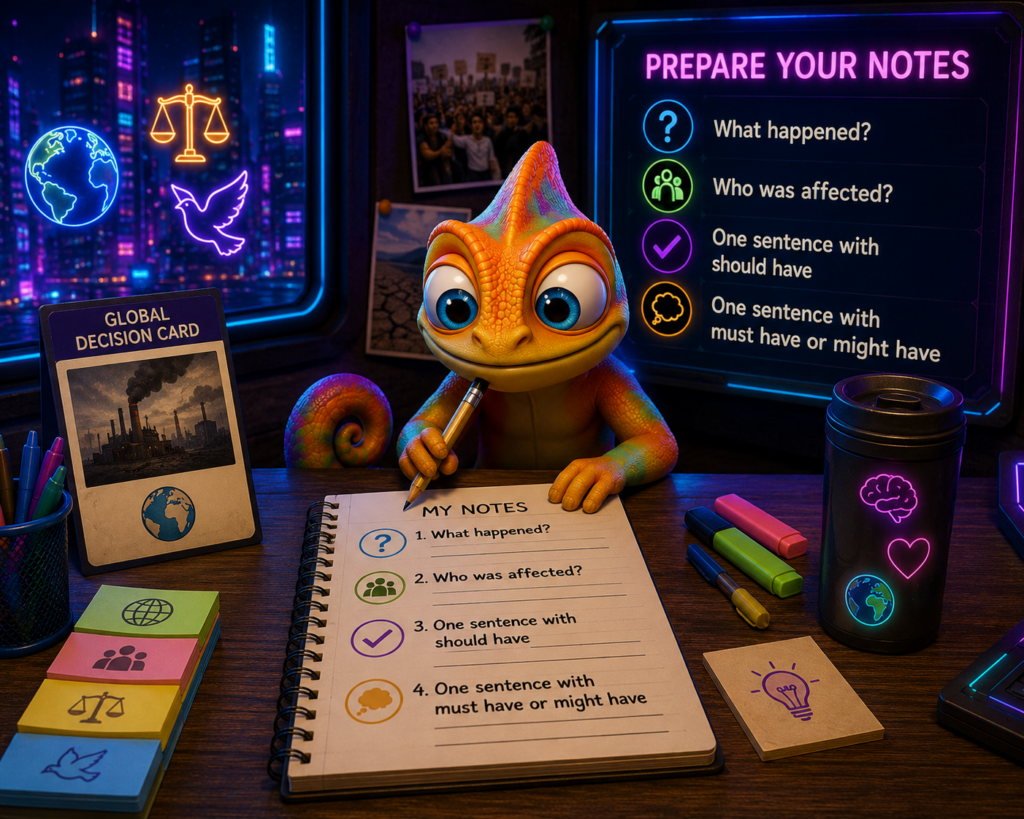
Part 1 – Preparation: Historical Decision Mystery Circles (15 min)
Students choose one global decision card and prepare notes, not a full script. They must include what happened, who was affected, one sentence with should have, and one sentence with must have or might have.
Global decision cards:
- A government delayed disaster response.
- A country restricted voting rights.
- A school system excluded girls.
- A company polluted a local environment.
- A leader rejected peace negotiations.
- A government censored newspapers.
- A community was displaced.
- A law allowed discrimination.
- A health warning was ignored.
- A country invested in education after conflict.
Part 2 – Mystery Circle Discussions (50 min)
Students sit in small circles. One student presents the decision without saying the title. The group listens and guesses what type of decision it was. Then the speaker explains the consequences and uses past modals to speculate. Each listener asks one follow-up question. This activity is oral, interactive, and fun because students must guess, question, and respond.
Required language:
They should have…
They should not have…
They must have…
They might have…
People were affected because…
Part 3 – Circle Reflection (15 min)
Students choose the most interesting case they heard and explain why using one past modal. The teacher closes by connecting historical speculation with empathy, responsibility, and better decision-making.
 RUBRIC:
Speculating on History
NEE – Agregar el tipo de adaptaciones curriculares
Principio II: Pautas 6.1 – 6.3 – 6.4
Principio III: Pautas 7.1 – 8.1 – 9.1
ALUMNO 1: Constante monitoreo. Dar tiempo adicional para el desarrollo de la actividad y se reduce el número de ejercicios o se modifican los ejercicios con un nivel de dificultad reducido, de acuerdo con sus necesidades académicas.
ALUMNO 2: Constante monitoreo, Dar tiempo adicional para el desarrollo de la actividad y se reduce el número de ejercicios o se modifican los ejercicios con un nivel de dificultad reducido, de acuerdo con sus necesidades académicas.
ALUMNO 3: Constante monitoreo. Corroborar que el contenido entregado en clase haya sido comprendido por la estudiante mediante retroalimentación.