
K-Learning Project

SKILLS
EFL 4.4.4. Write to describe feelings/ opinions in order to effectively influence an audience. (Example: persuade, negotiate, argue, etc.)
EFL 4.4.7. Use the process of prewriting, drafting, revising, peer editing and proofreading (i.e., “the writing process”) to produce well-constructed informational texts.


REAL-LIFE APPLICATION
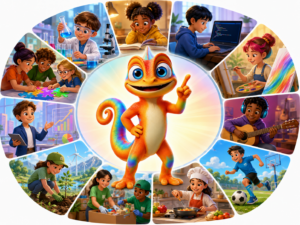
This project helps students use English to explain a real global trend with evidence, structure, and persuasive purpose. Instead of only giving opinions, students learn to choose a topic, understand why it matters, use information from sources, organize a short academic message, speak for 90–120 seconds, and answer a question from the audience. This is useful for school presentations, project fairs, leadership activities, oral exams, academic discussions, and situations where students need to explain future changes clearly and responsibly.
LEARNING ACTIVITIES
SESSION 1 (80 min) ANTICIPATION
Part 1: Global Trend Field Map (20 min)
The teacher places or projects a large “field map” of future trends.
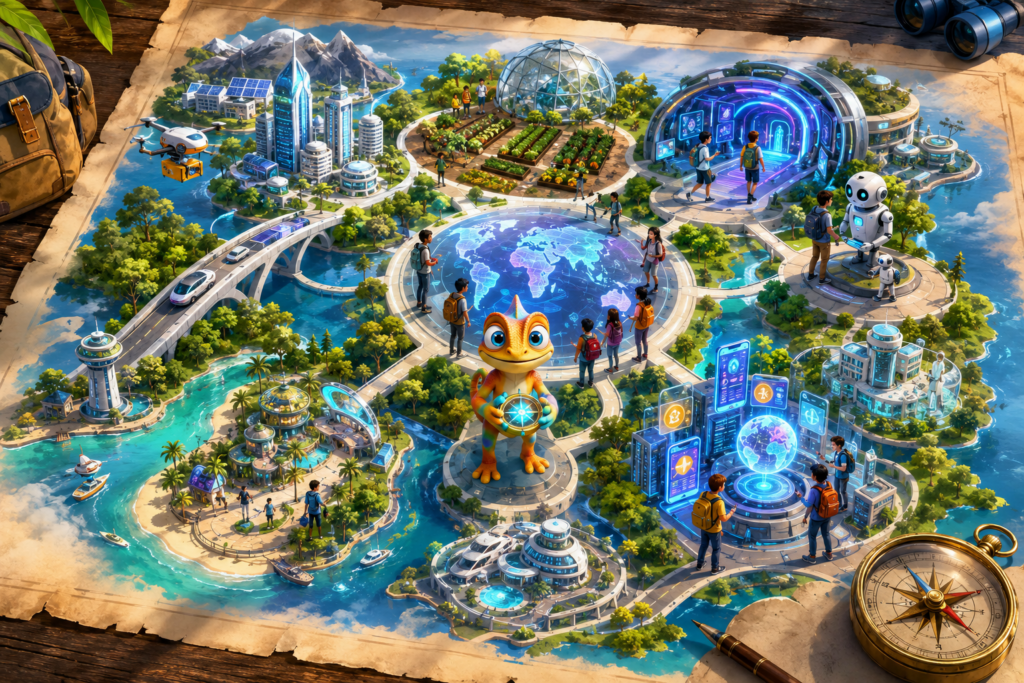
Each area of the map represents a different trend: future jobs, smart homes, robotics, online education, food innovation, health technology, future transportation, digital payments, tourism, and digital wellbeing. Students walk to the area that interests them most. They do not choose randomly; they must explain why that trend matters to people their age.
This activity is important because it turns topic selection into a decision-making process. Students often choose topics that are too broad, such as “technology” or “the future.” The teacher should guide them to narrow the topic by asking: Who is affected? What is changing? Why does it matter? What problem or opportunity does this trend create?
Example teacher modeling:
“Technology is too broad. A better topic is digital wellbeing because it affects how teenagers sleep, study, and communicate.”
By the end of this part, each student or group should have a more focused trend, not just a general theme.
Part 2: Vocabulary Activation: Trend Object Match (15 min)
Students receive or choose objects/images that represent global trends: a phone, a coin, a map, a robot icon, a food package, a transport symbol, a health bracelet, a digital classroom icon, a passport, or a clock. They connect the object to one vocabulary word and one project idea.
Example:
“This coin connects to digital payments because money is changing. My project could explain how digital payments affect teenagers and families.”
academic research project
global trend
research question
thesis
claim
evidence
source credibility
synthesis
stakeholder
implication
recommendation
limitation
counterargument
forecast
impact
policy
innovation
demographic change
AI governance
automation
remote work
urban loneliness
water security
misinformation
micro-credentials
public health
space economy
digital exclusion
ethical concern
measurable outcome
persuasive stamina
formal register
delivery
challenge question
audience adaptation
argue
synthesize
evaluate
defend
recommend
justify
clarify
refine
The teacher should push students to move from simple naming to explanation:
Weak: “This is about robots.”
Stronger: “This object represents robotics because robots may change future jobs and daily routines.”
Part 3: Extended Explanation: What Is a Persuasive Academic Research Project? (25 min)
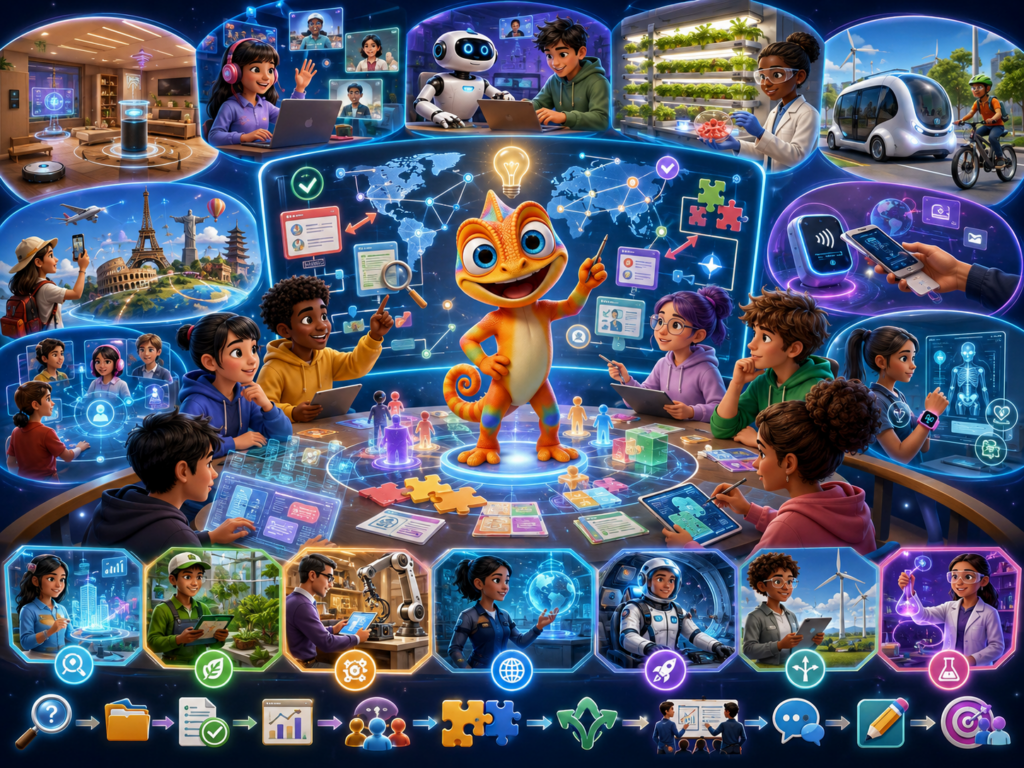
The teacher explains that this final project is not a normal oral presentation and not a simple opinion speech. It is a short academic research project with persuasive stamina. That means students must speak long enough to develop one clear idea, but they must also stay organized and convincing.

A strong project has five parts:
- Trend: What global trend are you presenting?
- Issue: What problem or change does this trend create?
- Evidence: What information supports your idea?
- Impact: Who is affected and why does it matter?
- Recommendation: What should students, schools, or communities do?
The teacher should explain that persuasive stamina means students continue speaking with control for 90–120 seconds. They should not speak fast just to fill time. They should use structure, examples, reasons, and visuals to help the audience understand.
Useful frames:
“The global trend I researched is…”
“This trend matters because…”
“One source explains that…”
“This affects…”
“My recommendation is…”
“Students should pay attention to this because…”
The teacher models a short version:
“The global trend I researched is digital wellbeing. This matters because many teenagers use screens for school, entertainment, and communication. One source explains that screen habits can affect focus and rest. This affects students because they need technology, but they also need balance. My recommendation is that schools should teach digital wellbeing strategies, such as screen breaks and healthy study routines.”
Part 4: Grammar / Language Teaching Idea: Claim–Evidence–Impact Ladder (20 min)
Instead of teaching grammar as isolated rules, the teacher uses a ladder. Each step makes the message stronger.
Step 1: Topic
“Digital wellbeing is important.”
Step 2: Claim
“Digital wellbeing is important because screen habits affect students’ daily routines.”
Step 3: Evidence
“One source explains that teenagers use digital tools for learning and communication.”
Step 4: Impact
“This affects students because technology can support learning, but it can also create distraction.”
Step 5: Recommendation
“Therefore, schools should teach students how to manage screen time responsibly.”
Students practice climbing the ladder with their own topic. This teaches sentence expansion, cause-effect language, and persuasive structure through a visible thinking routine.
SESSION 2: CONSTRUCTION – REINFORCEMENT (40 min)
Part 1 – Evidence Elevator (15 min)
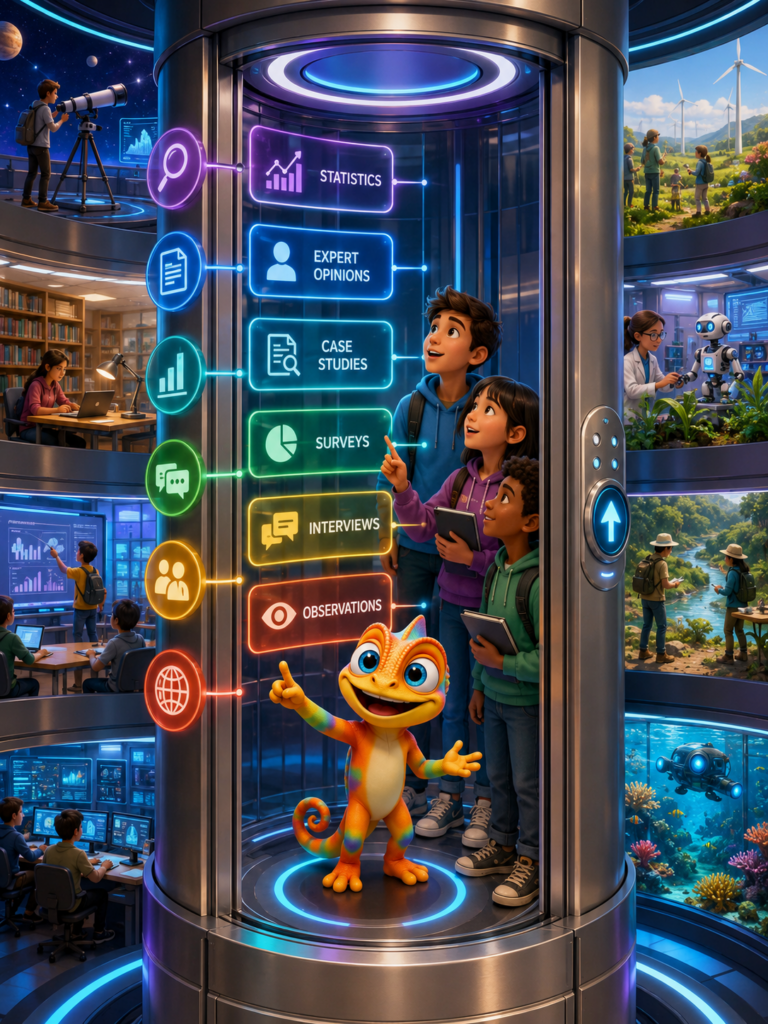
The teacher shows the idea of an elevator moving upward from “fact” to “persuasive evidence.” Students receive basic facts and must make them stronger by adding explanation and impact.
Example:
Basic fact: “Many students study online.”
Better: “Many students study online, so digital learning habits affect how they focus, organize time, and complete assignments.”
This activity helps students understand that a fact alone is not enough. A presentation becomes persuasive when the speaker explains why the fact matters.
Part 2 – Audience Switch Micro-Performance (15 min)
Students explain the same trend to two different audiences: younger students and school leaders. The explanation must change because the audience changes.
Example topic: future jobs
For younger students:
“Future jobs may use more technology, so we should learn digital skills.”
For school leaders:
“Future job trends suggest that students need stronger digital and problem-solving skills; therefore, school projects should include technology and teamwork.”
This activity trains students to adapt tone, vocabulary, and examples. It also prepares them to speak more naturally instead of memorizing one fixed speech.
Part 3 – Partner Quality Check Card (10 min)
Students exchange project notes and complete a quick partner card:
- I understood your trend.
- I understood why it matters.
- I heard one evidence point.
- I heard one recommendation.
- One thing you should make clearer is…
This closes the reinforcement section through peer review, not an exit sentence.
SESSION 3: CONSOLIDATION (80 min)
Part 1-Preparation: Research Capsule Card (15 min)
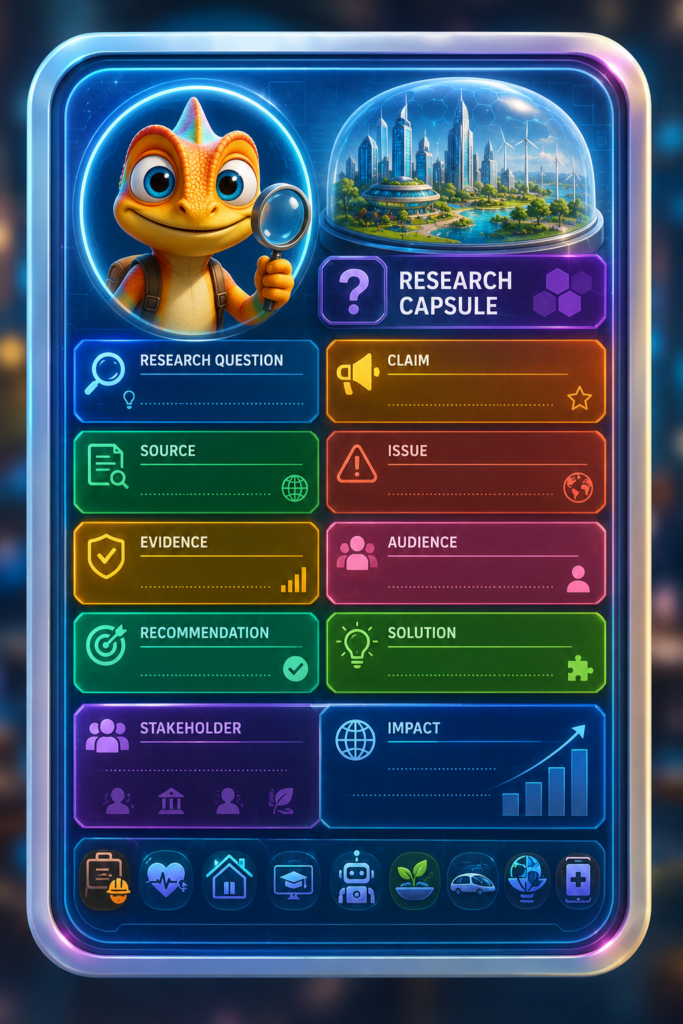
Students prepare a Research Capsule Card with only keywords, not full sentences. The card must include:
- trend
- issue
- evidence
- impact
- recommendation
The teacher should explain that the card is a support tool, not a script. If students write the whole presentation, they may read instead of speaking. The goal is to use the card to remember the structure while maintaining eye contact and natural voice.
Part 2 – Global Trends Research Capsule Launch (50 min)
Students present their 90–120 second research project as a “capsule launch.” Each speaker opens or reveals five capsule elements one by one: trend, issue, evidence, impact, and recommendation. Each element activates one part of the speech.
This format makes the project more dynamic than a regular front-of-class presentation. Students can use a small box, envelope, digital capsule, visual icons, or physical objects. The audience listens for structure and prepares one question.
Presentation requirements:
- one global trend
- one clear issue
- one evidence point from a source
- one impact explanation
- one recommendation
- 90–120 seconds
- one audience question response
Example:
“My global trend is future jobs. The issue is that technology is changing the skills people need. One source explains that digital skills are becoming more important. This affects students because the jobs they want may require problem-solving and technology. My recommendation is that schools should include more real-life technology projects.”
Part 3 – Milestone Badge Review (15 min)

Instead of a simple vote, students award one evidence-based badge to a peer:
- Clear Trend Badge
- Strong Evidence Badge
- Persuasive Voice Badge
- Useful Visual Badge
- Strong Recommendation Badge
To award the badge, students must explain the reason:
“I give the Strong Evidence Badge because the speaker used a source and explained why it mattered.”

RUBRIC:
Unit3 KLearning Project
NEE – Agregar el tipo de adaptaciones curriculares
Principio II: Pautas 6.1 – 6.3 – 6.4
Principio III: Pautas 7.1 – 8.1 – 9.1
ALUMNO 1: Constante monitoreo. Dar tiempo adicional para el desarrollo de la actividad y se reduce el número de ejercicios o se modifican los ejercicios con un nivel de dificultad reducido, de acuerdo con sus necesidades académicas.
ALUMNO 2: Constante monitoreo, Dar tiempo adicional para el desarrollo de la actividad y se reduce el número de ejercicios o se modifican los ejercicios con un nivel de dificultad reducido, de acuerdo con sus necesidades académicas.
ALUMNO 3: Constante monitoreo. Corroborar que el contenido entregado en clase haya sido comprendido por la estudiante mediante retroalimentación.