
Blogging

SKILLS
EFL 5.3.3 (Reading): Identify hidden agendas, bias, and underlying cultural assumptions in complex digital texts (e.g., distinguishing an objective blog review from a sponsored brand endorsement).
EFL 5.4.4 (Writing): Produce clear, well-structured complex digital texts (blog posts, personal essays, travelogues) using controlled organizational patterns, hyperlinks, and engaging formatting choices.
EFL 5.2.2 (Oral Communication): Evaluate informational digital media, identifying speaker stance, implicit registers, and conversational engagement in vlogs or audio blogs.
REAL-LIFE APPLICATION
Blogging has evolved from simple online diaries into a massive global industry driving digital marketing, thought leadership, and independent content creation. Mastering the art of the blog teaches students how to translate complex academic ideas into accessible, engaging public writing. They learn how to curate a digital identity, utilize search engine optimization (SEO) techniques, and format content for scannability. These skills are highly sought after in modern marketing, corporate communications, copywriting, and public relations.
LEARNING ACTIVITIES
SESSION 1 (80 min) ANTICIPATION
Part 1 ( 15- 20 min)
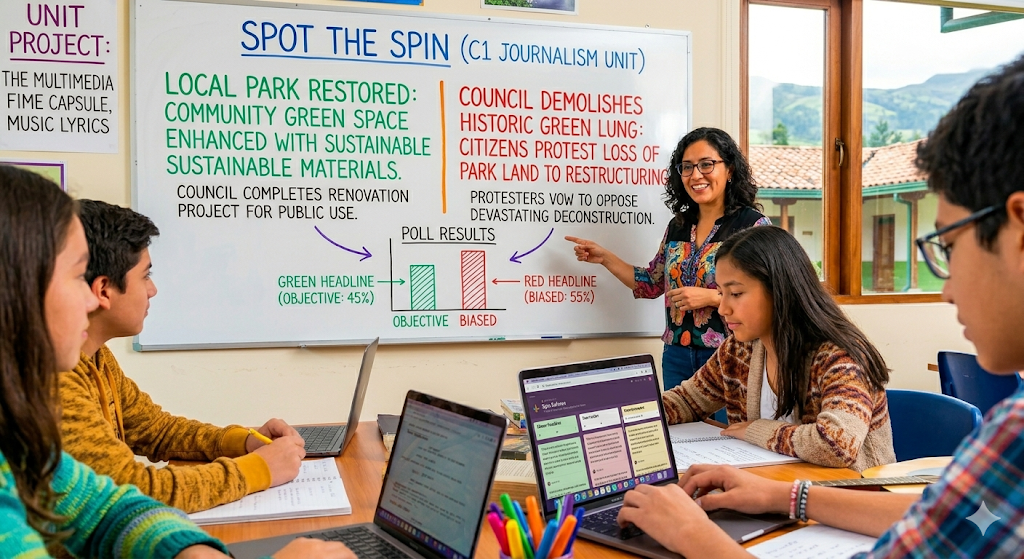
Anticipation Activity: “Click or Pass”
- Instructions: Display three different blog post headlines and featured images on a digital whiteboard (e.g., “An Honest Review of the New Smartphone” vs. “Why You are Wasting Your Money on This Brand” vs. “10 Life-Changing Tech Secrets They Don’t Want You to Know”).
- Task: Students use a digital poll or chat box to select which blog post they would actually click on and write a one-sentence C1 justification analyzing the emotional trigger or curiosity gap of the title.
CONSTRUCTION
Part 2: Vocabulary Development (15 min)
The teacher explicitly introduces key vocabulary needed for the lesson, ensuring students clearly understand meaning and use. The phrases include:
Niche: A specialized segment of the market or a specific topic focus (e.g., eco-travel, vegan baking, indie gaming).
Scannability: The quality of a text being easy to read quickly, achieved through headers, bullet points, and bold text.
Call to Action (CTA): A piece of content intended to induce a viewer or reader to perform a specific act (e.g., “Subscribe below” or “Leave a comment”).
Sponsored Content: Material in an online publication which resembles the publication’s editorial content but is paid for by an advertiser.
Clickbait: Content whose main purpose is to attract attention and encourage visitors to click on a link to a particular web page.
Evergreen Content: Search-optimized content that remains relevant and “fresh” for readers over a long period of time.
Part 3: Grammar Review using Presentation (20 min)
Grammar Introduction: The Journalistic Passive & Hedging
- Theory: Focus on how journalists maintain objectivity by removing the agent (Passive Voice) and avoiding defamation lawsuits (Hedging Language).
- Structures:
- Passive: Object + to be + Past Participle —–>”The minister was questioned.”
- Hedging: It is alleged/reported/claimed that… —->”It is alleged that the funds were mishandled.”
- Digital Presentation: Show a quick comparison slider or side-by-side text demonstrating how “The police arrested the suspect” becomes the more objective, headline-ready “Suspect was arrested early Tuesday morning.”
Part 4: Guided Practice (25 min)
4. Grammar Practice Activity: “The Hook Makeover” (25 Mins)
- Instructions: Break students into groups and provide a shared document containing 5 boring, flat statements about food, travel, or technology.
- Task: Students must rewrite these statements into high-impact, persuasive blog introduction hooks using inversion and cleft structures.
- Deliverable: A collaborative Google Slide featuring their “Before and After” sentences to present to the class.
SESSION 2: CONSTRUCTION – REINFORCEMENT (40 min)

Day 2: Reinforcement & Creative Application
Next-Day Activity: “The Guest Blogger Challenge” (40 Mins)
- Instructions: Provide students with a fictional, high-traffic lifestyle and tech blog platform. The blog is looking for a guest writer to review a newly released, highly anticipated futuristic gadget or digital tool.
- Task:
- First 15 mins: Students research the “product specification sheet” provided by the teacher and map out their blog layout, selecting their niche and target audience.
- Remaining 25 mins: Students individually write a 150-word quick review snippet. They must include at least one inversion structure, one cleft sentence, two vocabulary words from Day 1, and ensure the text utilizes headings and bold text for high scannability
SESSION 3: CONSOLIDATION (80 min)
Part 1 – ( 2 x 40min)
The Project: “The Live Blog Launch”
Students work in creative pairs or trios to launch a multi-post niche blog landing page using a digital design tool (like Canva or a mock-up builder).
- Period 1: Designing and Curating the Blog (40 Mins)
- Groups collaborate digitally to establish their blog’s niche, layout theme, and branding.
- They must write one Evergreen Guide (e.g., “How to Master Study Habits in 2026”) and one Opinionated Product/Service Review (ensuring clear stance and evaluation).
- The posts must seamlessly weave in the 6 unit vocabulary words, feature clear Call to Action (CTA) buttons, and exhibit perfect scannability.
- Period 2: The Traffic Pitch (40 Mins)
- Each group has 3 minutes to present their blog landing page to the class, acting as digital creators seeking funding or brand sponsorships.
- They must explicitly highlight their use of emphatic grammar structures to manipulate reader focus and defend their content strategy.
- Peer assessment via a digital rubric evaluating: C1 Conversational Tone, Mastery of Emphatic Structures, Layout Scannability, and Niche Consistency.
NEE – Agregar el tipo de adaptaciones curriculares
Principio II: Pautas 6.1 – 6.3 – 6.4
Principio III: Pautas 7.1 – 8.1 – 9.1
ALUMNO 1: Constante monitoreo. Dar tiempo adicional para el desarrollo de la actividad y se reduce el número de ejercicios o se modifican los ejercicios con un nivel de dificultad reducido, de acuerdo con sus necesidades académicas.
ALUMNO 2: Constante monitoreo, Dar tiempo adicional para el desarrollo de la actividad y se reduce el número de ejercicios o se modifican los ejercicios con un nivel de dificultad reducido, de acuerdo con sus necesidades académicas.
ALUMNO 3: Constante monitoreo. Corroborar que el contenido entregado en clase haya sido comprendido por la estudiante mediante retroalimentación.