
FAMILY
SKILLS
(EFL 4.1.1): Compare and contrast aspects of self and family.
Oral Communication (EFL 4.2.2): Use simple phrases and sentences to describe family members and their relationships.
Reading (EFL 4.3.4): Understand the main points in short, simple texts on familiar topics.
REAL-LIFE APPLICATION
Understanding family vocabulary and grammar allows students to share their background, build social connections, and describe their support systems in any international or travel setting. It moves “Identity” from an abstract concept to a relatable, everyday conversation.
LEARNING ACTIVITIES
SESSION 1 (80 min) ANTICIPATION
Part 1 (10 -15min)
“The Mystery Tree” (10–15 min)
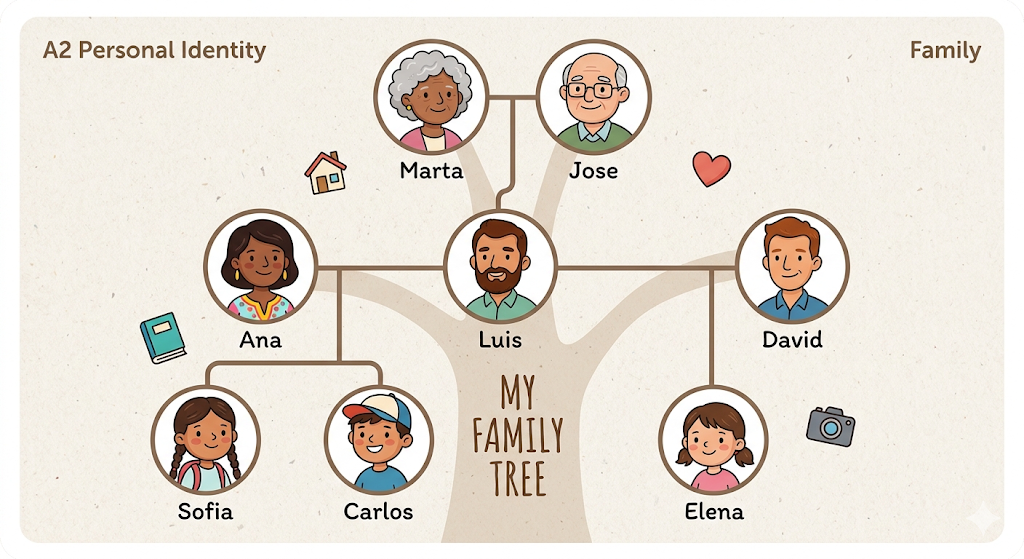
Instruction: Show an image of a generic family tree with names but no labels (e.g., “Marta,” “Jose”).
- Task: Students work in pairs to guess relationships based on the tree structure.
- Theory: Introduce the concept that “Family” includes diverse structures (nuclear, extended, blended).
CONSTRUCTION
Part 2: Vocabulary Development (15-20 min)
The teacher explicitly introduces key vocabulary needed for the lesson, ensuring students clearly understand meaning and use. The words include:
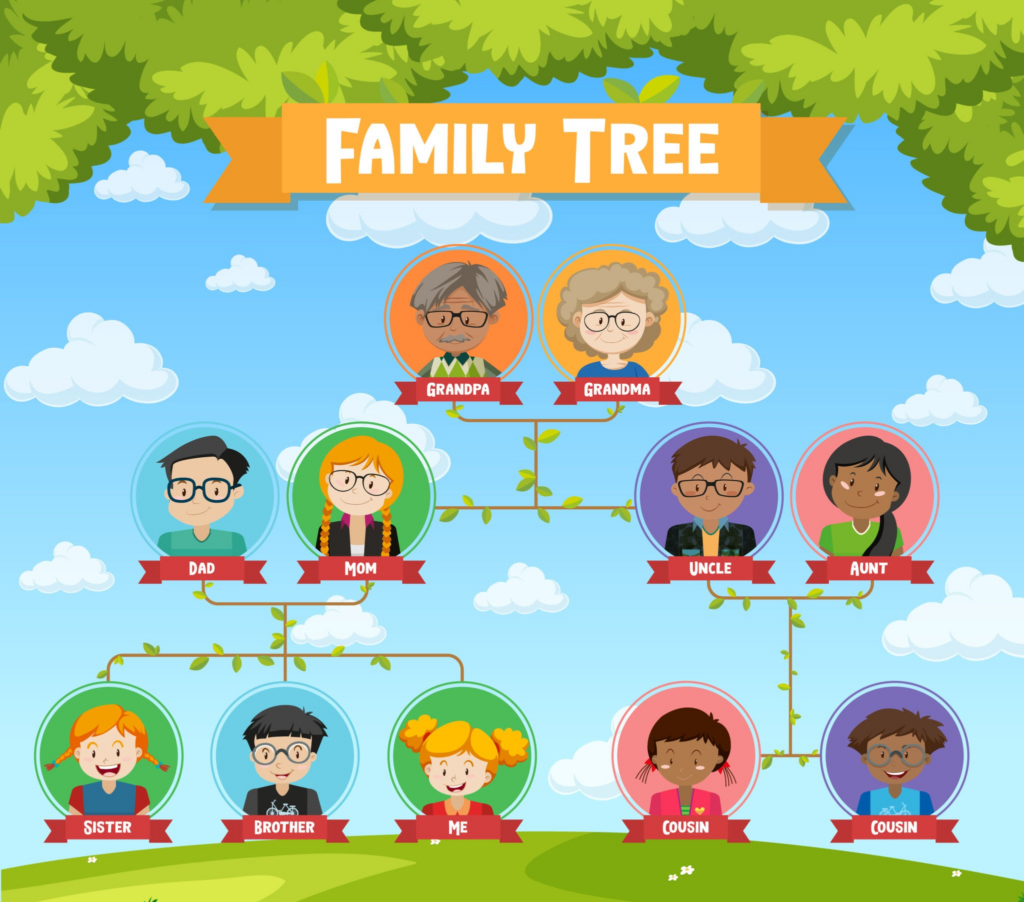
- Parents
- Mom
- Dad
- Siblings
- Brother
- Sister
- Grandma
- Grandpa
- Aunt
- Uncle
- Cousin
Encourage students to create a sentence out loud with any of the vocab words.
Part 3: Grammar Introduction (35 min)
Grammar Introduction: Possessive ‘s & Adjectives (20 min)
Instruction: Explain that we use ‘s to show relationship, not just ownership.
- Formula:Owner + ‘s + Person/Object
- Examples: Maria’s brother, My father’s car.
- Possessive Adjectives: Quick review of my, your, his, her, its, our, their.
Presentation: https://docs.google.com/presentation/d/1SKMmKq4qX0TOqMoxZmPMjmP79WqTAQN_HKffItNg_GA/edit?usp=sharing
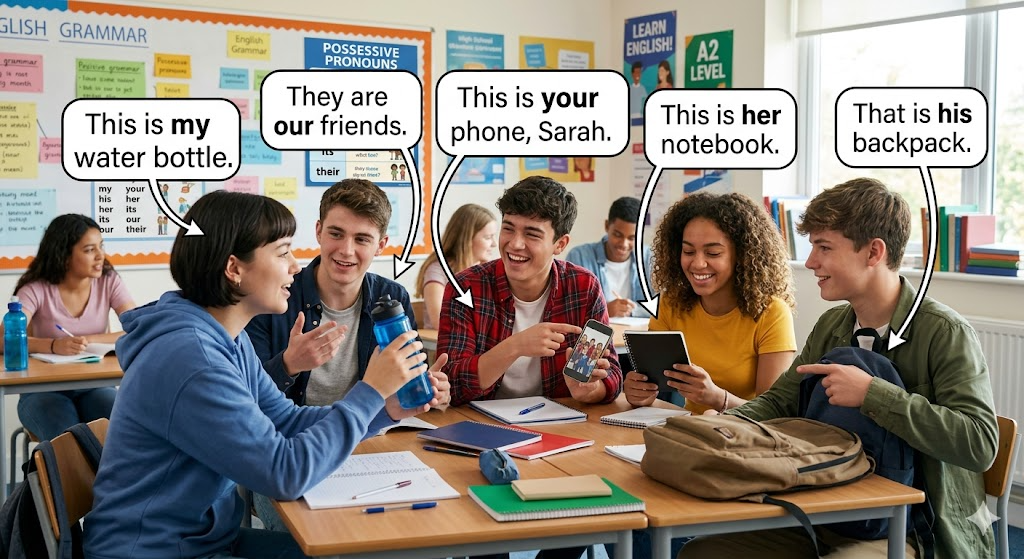
Activity Idea: Allow students to make sentences using their classmates as examples.
Ex: This is Fiorella’s pencil case.
Taty is Fiorella’s friend.
SESSION 2: CONSTRUCTION – REINFORCEMENT (40 min)
“The Future Family Collage” (40 min)
Materials: Slips of paper/digital cards with “boring” sentences.
Instruction: A creative project using digital tools (Canva or Genially).
Task: Students create a “Future Family” or “Dream Family” collage. It can include pets, friends (chosen family), or famous people.Requirement: Write a 5-sentence description using at least 4 vocabulary words and correct possessive grammar.
Final Activity: Students do a “Gallery Walk” by looking at each other’s digital files and leaving one comment: “Is [Name] your sister?”
SESSION 3: CONSOLIDATION (80 min)
“My Identity, My Roots” (40 Minutes)
“My Identity, My Roots”
Period 1: The Draft (40 min)
Task: Students write a short biography (40–70 words) about their family or a fictional family.
Criteria: Must include at least 3 generations, mention where they live, and use possessive adjectives correctly.
Period 2: The Digital Presentation (40 min)
Task: Students record a 1-minute video or audio clip (using Flip or Vocaroo) presenting their family.
Evaluation: Focus on pronunciation of vocabulary and the correct use of the possessive ‘This focuses on speed and structural accuracy.
NEE – Agregar el tipo de adaptaciones curriculares
Principio II: Pautas 6.1 – 6.3 – 6.4
Principio III: Pautas 7.1 – 8.1 – 9.1
ALUMNO 1: Constante monitoreo. Dar tiempo adicional para el desarrollo de la actividad y se reduce el número de ejercicios o se modifican los ejercicios con un nivel de dificultad reducido, de acuerdo con sus necesidades académicas.
ALUMNO 2: Constante monitoreo, Dar tiempo adicional para el desarrollo de la actividad y se reduce el número de ejercicios o se modifican los ejercicios con un nivel de dificultad reducido, de acuerdo con sus necesidades académicas.
ALUMNO 3: Constante monitoreo. Corroborar que el contenido entregado en clase haya sido comprendido por la estudiante mediante retroalimentación.