
Verb to be
SKILLS
EFL 3.1.9: Follow short, simple instructions for performing an action.
EFL 3.2.1: Understand some simple words and phrases in listening texts on common topics.
EFL 3.4.7: Write short, simple sentences about oneself and others using appropriate grammar.
REAL-LIFE APPLICATION
The verb “to be” is the “passport” of the English language. Students need it to introduce themselves, state their nationality (e.g., “I am Ecuadorian”), and describe their current feelings or locations in any social or travel situation.
LEARNING ACTIVITIES
SESSION 1 (80 min) ANTICIPATION
Part 1 (10-15 min)”
“The Secret Passport” (10–15 min)
- Instruction: Give each student a small piece of paper with a “secret identity” (e.g., a famous singer, a soccer player, or a superhero).
- Task: Students stand up and find a partner. They can only say three sentences starting with “I am…” (e.g., “I am from Argentina. I am a soccer player. I am Number 10.”). The partner must guess the identity.

CONSTRUCTION
Part 2: Vocabulary Development (15 min)
The teacher explicitly introduces key vocabulary needed for the lesson, ensuring students clearly understand meaning and use. The words include:
- Origin: Ecuadorian, American, Spanish, Colombian.
- Occupations: Student, athlete, artist, musician.
- States/Feelings: Happy, tired, excited, hungry.
- Locations: At school, at home, in the park, in Quito.
Make sentences as examples and then encourage them to do so too!
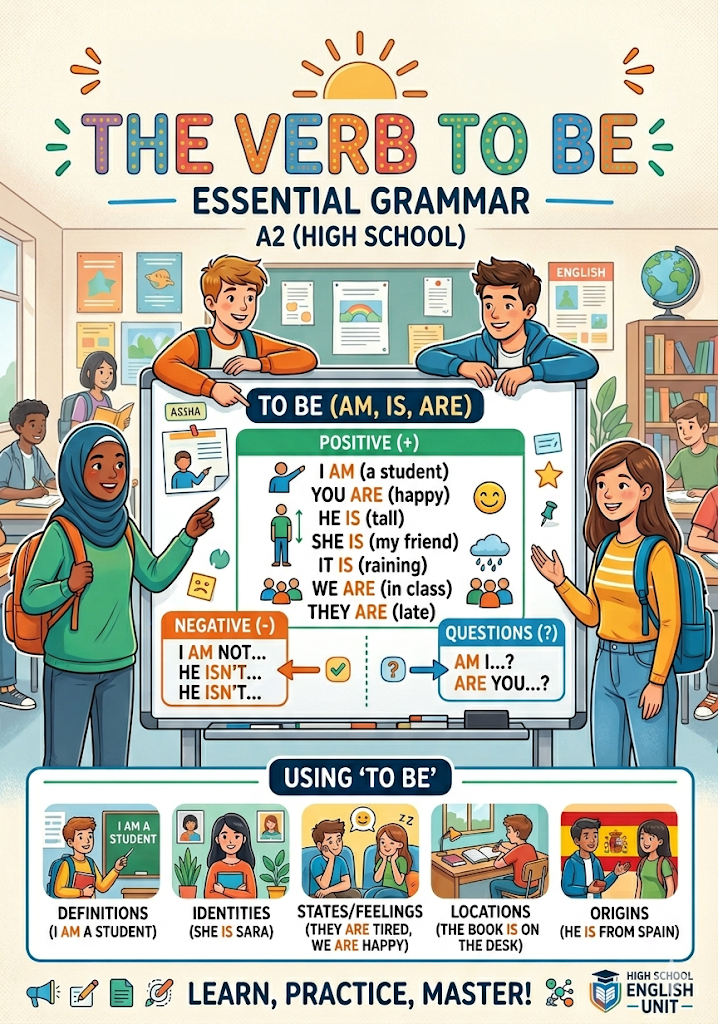
Part 3: Grammar Introduction using Presentation (20 min)
The Identity Bridge (20 min)
- Theory: Explain that “to be” acts like a bridge connecting the subject to their identity or state.
- Positive, Negative, and Question forms:
- (+) I am a student. / He is happy.
- (-) They are not (aren’t) tired.
- (?) Are you from Quito?
- Tip: Show the contractions (I’m, You’re, He’s) as they are more common in spoken English.
Part 4: Guided Practice (25 min)
Identity Bingo (25 min)
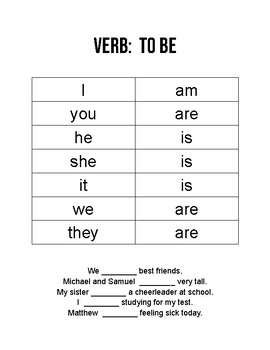
- Instruction: Provide a 3×3 grid with sentences missing the verb “to be” (e.g., “She ___ a doctor,” “We ___ in Ecuador”).
- Task: Students must move around the room and find classmates who can correctly “fill” the bridge for each square. Once they have a full line, they shout “Bingo!”.
| My best friend ___ very funny. | We ___ fans of the same music. | My parents ___ strict about screen time. |
| I ___ obsessed with this new game. | FREE SPACE | This school ___ the best in the city! |
| My siblings ___ annoying sometimes. | You ___ a great TikTok dancer. | We ___ proud to be from Ecuador. |
SESSION 2: CONSTRUCTION – REINFORCEMENT (40 min)
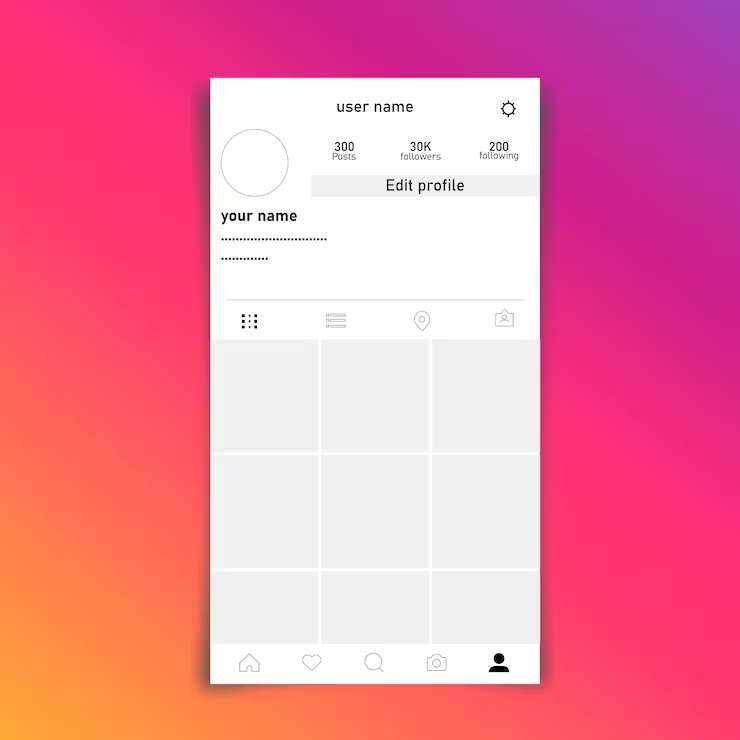
“The Social Media Profile” (40 min)
- Instruction: Students draw a paper “Instagram” profile for a fictional character.
- Task: They must write a bio using only the verb “to be” in different forms.
- Bio Example: “Hello! I am Leo. I am not a teacher; I am a gamer. My friends are very funny. We are in the park today!”
SESSION 3: CONSOLIDATION (80 min)
“The International Press Conference” (80 min / 2 Periods)

- Period 1 (Preparation): In pairs, students prepare a “celebrity interview” script. One is the journalist, and one is the celebrity. They must prepare 5 questions and 5 answers using “to be”.
- Period 2 (Performance): Pairs perform their interview for the class.
- Journalist: “Are you happy in Ecuador?”
- Celebrity: “Yes, I am! The people are very friendly.”
- Grading: Based on the correct use of am/is/are, the ability to form questions, and the use of the unit’s vocabulary.
NEE – Agregar el tipo de adaptaciones curriculares
Principio II: Pautas 6.1 – 6.3 – 6.4
Principio III: Pautas 7.1 – 8.1 – 9.1
ALUMNO 1: Constante monitoreo. Dar tiempo adicional para el desarrollo de la actividad y se reduce el número de ejercicios o se modifican los ejercicios con un nivel de dificultad reducido, de acuerdo con sus necesidades académicas.
ALUMNO 2: Constante monitoreo, Dar tiempo adicional para el desarrollo de la actividad y se reduce el número de ejercicios o se modifican los ejercicios con un nivel de dificultad reducido, de acuerdo con sus necesidades académicas.
ALUMNO 3: Constante monitoreo. Corroborar que el contenido entregado en clase haya sido comprendido por la estudiante mediante retroalimentación.