
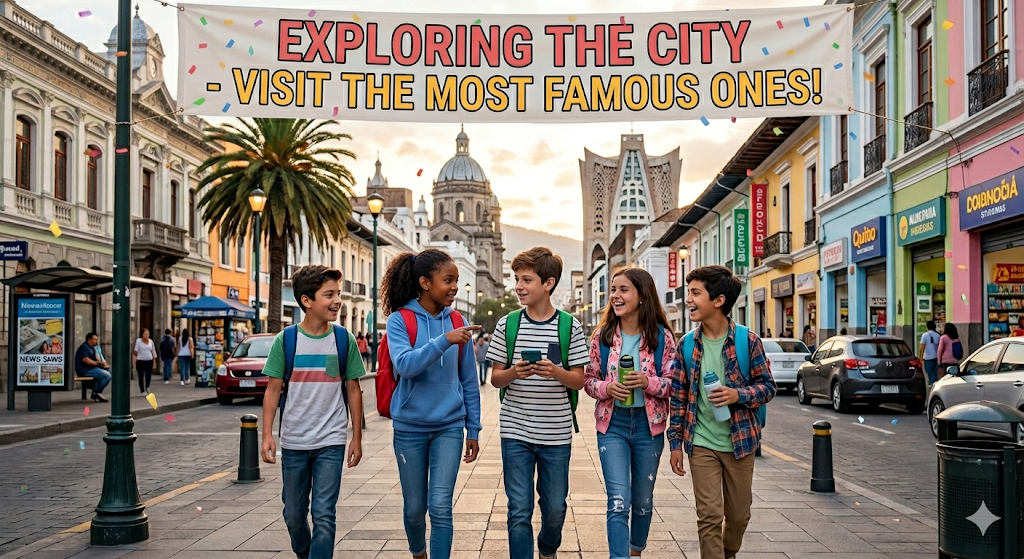
EXPLORING THE CITY
SKILLS
EFL 3.1.2 Ask and answer questions about places in the city and express curiosity about other cultures’ urban landmarks.
EFL 3.2.2 Ask for and give simple directions to find specific locations in a city (e.g., turn left, go straight, next to).
EFL 3.3.2 Understand the main points and key details in short, simple digital maps, brochures, or transit guides.
EFL 3.4.2 Write a short, simple description of a city tour itinerary or a postcard using imperative verbs and prepositions of place.
REAL-LIFE APPLICATION
Navigating a city is a survival skill. Whether students are using Google Maps to find a museum on a future vacation, helping a lost tourist in Quito or Guayaquil, or simply telling a friend how to get to their favorite skatepark, mastering spatial vocabulary gives them independence and confidence in any urban environment..
LEARNING ACTIVITIES
TOPICS
- Places in town
- Tourist Spots
- Maps
- Singular and Plural
- K-learning project
NEE – Agregar el tipo de adaptaciones curriculares
Principio II: Pautas 6.1 – 6.3 – 6.4
Principio III: Pautas 7.1 – 8.1 – 9.1
ALUMNO 1: Constante monitoreo. Dar tiempo adicional para el desarrollo de la actividad y se reduce el número de ejercicios o se modifican los ejercicios con un nivel de dificultad reducido, de acuerdo con sus necesidades académicas.
ALUMNO 2: Constante monitoreo, Dar tiempo adicional para el desarrollo de la actividad y se reduce el número de ejercicios o se modifican los ejercicios con un nivel de dificultad reducido, de acuerdo con sus necesidades académicas.
ALUMNO 3: Constante monitoreo. Corroborar que el contenido entregado en clase haya sido comprendido por la estudiante mediante retroalimentación.