
Cultural Traditions
SKILLS
EFL.5.1.3 Find parallels between Ecuadorian cultural and political referents and those of other countries by talking about holidays, symbols, customs and schooling.
EFL.5.4.1 Apply punctuation and capitalization conventions correctly to help the reader understand the message in personal and academic texts.

REAL-LIFE APPLICATION
Helps students understand that cultures may look different, but they often share similar purposes: celebrating identity, remembering history, bringing families together, or expressing values. Students also learn to write clearer sentences using capital letters, periods, commas, and question marks. In daily life, this helps them explain their traditions to others. In personal development, it helps them respect cultural diversity. In academic contexts, it helps them write simple comparisons clearly and correctly.
LEARNING ACTIVITIES
SESSION 1 (80 min) ANTICIPATION
Part 1 (20 min)
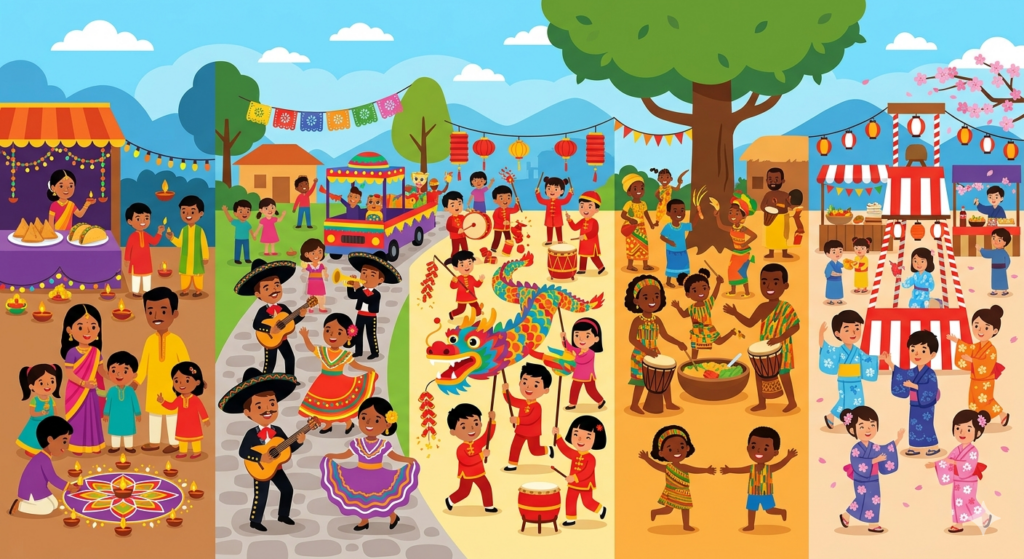
The teacher shows the opening image and asks: What traditions do you recognize? Students first observe silently and write two ideas. Then, in small groups, they identify one Ecuadorian tradition and one world tradition they know. The teacher guides the class discussion by asking what people usually do in these celebrations, what objects or symbols appear, and why these traditions matter to families or communities.
CONSTRUCTION
Part 2: Vocabulary Development (15 min)
The teacher introduces vocabulary students need to compare traditions:
- tradition
- celebration
- custom
- symbol
- festival
- family gathering
- food
- music
- dance
- costume
- parade
- respect
- belief
- community
- similarity
- difference
The teacher gives examples such as: Inti Raymi is a traditional celebration in Ecuador. Carnival includes music, dance, and costumes in many countries. Students repeat the vocabulary and write three simple sentences using the new words.
Part 3: Grammar Development(20 min)
The teacher explains that a good sentence needs a capital letter, a clear idea, and correct final punctuation:
The teacher writes examples on the board:
Ecuador celebrates Día de los Difuntos.
Do people celebrate Carnival in Brazil?
Many traditions include food, music, and family.
Students identify capital letters, commas, periods, and question marks. The teacher shows incorrect examples and asks students to correct them together.
Incorrect examples:
- inti raymi is a traditional celebration in ecuador
- in many countries people celebrate carnival with music dance and costumes
- do people celebrate dia de los difuntos in ecuador
- families prepare special food share stories and visit cemeteries
- carnival is colorful fun and exciting people wear costumes
- what traditions do people celebrate in your country
Part 4: Guided Comparison Practice(25 min)
Students complete a simple comparison chart with two traditions: one from Ecuador and one from another country. They write information about food, music, symbols, and purpose. Then, they create four complete sentences using sentence starters such as: Both traditions include… In Ecuador, people… In another country, people… One difference is… The teacher checks sentence boundaries and punctuation before students share.
SESSION 2: CONSTRUCTION – REINFORCEMENT (40 min)
Part 1 – Tradition Card Sort (15 min)
Students receive cards with names, images, or short descriptions of traditions. They classify them into categories: food, music, clothing, family, religion, or public celebration. This helps them understand that traditions can be compared by their elements, not only by their names. The teacher checks answers and asks students to justify their choices using simple sentences.
Part 2 – Punctuation Repair Workshop (15 min)
Students receive short sentences with missing punctuation and capitalization. For example: in ecuador people eat guaguas de pan. Students rewrite the sentences correctly. The teacher emphasizes that punctuation helps the reader understand meaning. Students compare answers with a partner and correct one sentence together on the board.
Part 3 – Exit Sentence (10 min)
Each student writes one complete sentence comparing two traditions.
The sentence must include a capital letter, correct punctuation, and one comparison word such as both, similar, or different. The teacher collects a few examples and gives quick feedback.
SESSION 3: CONSOLIDATION (80 min)
Part 1 – Preparation (15 min)
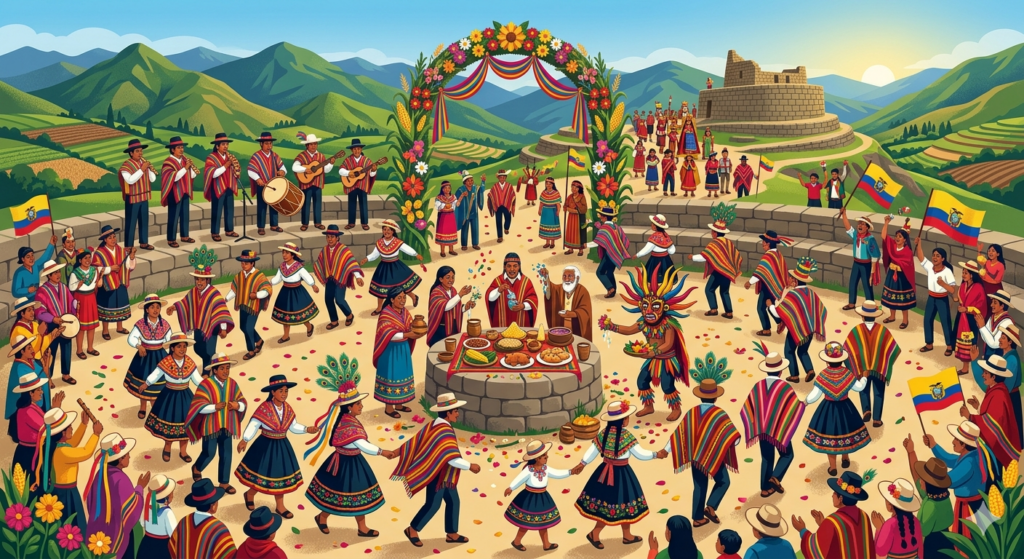
Students work in small groups and choose one Ecuadorian tradition and one world tradition. They prepare a short oral comparison using the vocabulary from the topic. The teacher reminds them to include at least one similarity, one difference, and correct punctuation in their written speaking notes.
Part 2 – Cultural Comparison Presentation (45 min)
Each group presents for 2–3 minutes. Students present a simple comparison using visual support. They must mention the tradition, the country, one similarity, one difference, and at least five vocabulary words.
Part 3 – Oral Feedback and Reflection (20 min)
After each presentation, classmates answer one question: “What similarity did you notice between both traditions?” The teacher gives brief feedback on clarity, vocabulary use, and comparison. Students close by saying one thing they learned about another culture.
 RUBRIC:
Cultural Comparison Presentation
NEE – Agregar el tipo de adaptaciones curriculares
Principio II: Pautas 6.1 – 6.3 – 6.4
Principio III: Pautas 7.1 – 8.1 – 9.1
ALUMNO 1: Constante monitoreo. Dar tiempo adicional para el desarrollo de la actividad y se reduce el número de ejercicios o se modifican los ejercicios con un nivel de dificultad reducido, de acuerdo con sus necesidades académicas.
ALUMNO 2: Constante monitoreo, Dar tiempo adicional para el desarrollo de la actividad y se reduce el número de ejercicios o se modifican los ejercicios con un nivel de dificultad reducido, de acuerdo con sus necesidades académicas.
ALUMNO 3: Constante monitoreo. Corroborar que el contenido entregado en clase haya sido comprendido por la estudiante mediante retroalimentación.