
Career Milestones

SKILLS
EFL 4.2.12 Describe habits, routines, past activities and experiences within the personal and educational domains.
EFL 4.2.13 Interact with reasonable ease in structured situations and short conversations within familiar contexts.


REAL-LIFE APPLICATION
This topic helps students describe how people grow through repeated experiences. They learn to talk about past habits, old routines, and actions that helped someone develop career skills. This is useful when explaining how a person became responsible, confident, organized, creative, or good at teamwork.
LEARNING ACTIVITIES
SESSION 1 (80 min) ANTICIPATION
Part 1: Education Career Memory Wall (20 min)




The teacher shows images of people at different stages of career growth: a student volunteering, someone practicing a skill, a person attending an internship, a young worker helping customers, and a team solving a problem. Students walk around and choose one image that represents “growth.” They explain what the person probably did repeatedly in the past. The teacher guides students to notice that careers are built through habits, not only one big decision.
Student profiles:
- A student had enjoyed science and wanted to study medicine.
- A student had repaired phones with a relative and liked practical tasks.
- A student had written strong essays and wanted university research.
- A student had helped in a family restaurant and wanted culinary training.
- A student had designed posters and wanted digital media.
- A student had enjoyed debates and wanted law.
- A student had built small robots and wanted engineering.
- A student had volunteered in a kindergarten and wanted education.
- A student had sold handmade products and wanted entrepreneurship.
- A student had studied biology and enjoyed laboratory practice.
CONSTRUCTION
Part 2: Vocabulary Development (15 min)
The teacher introduces vocabulary connected to jobs, internships, and soft skills.
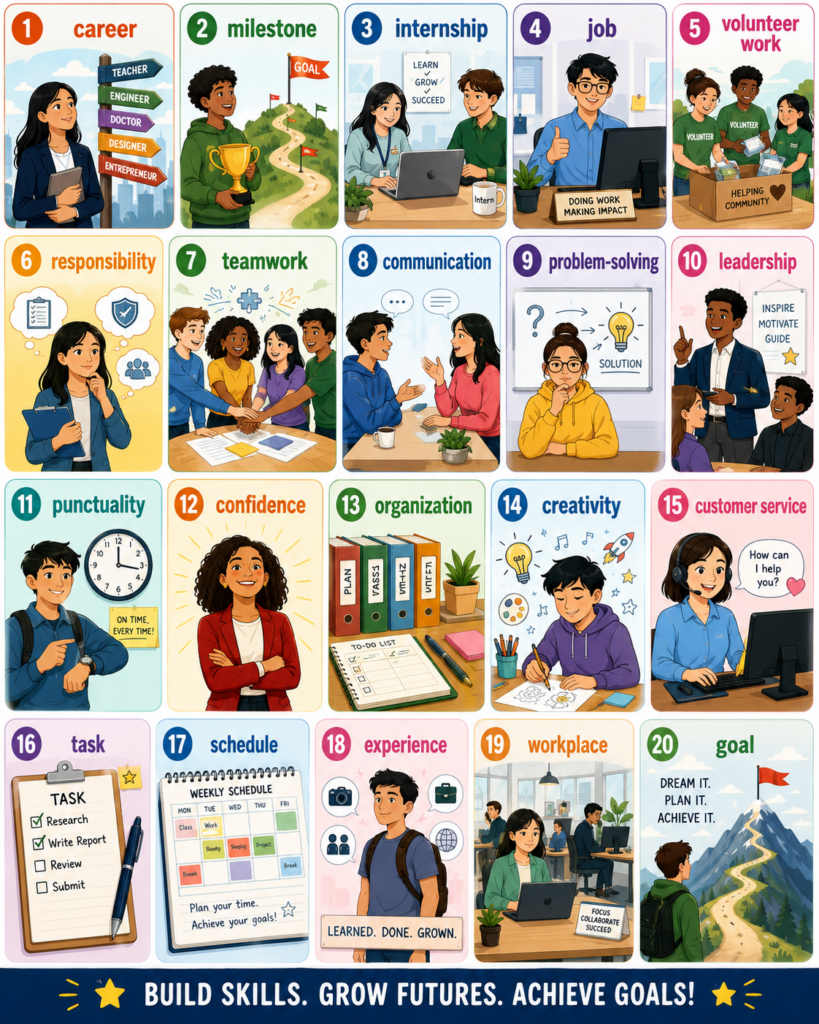
- career
- milestone
- internship
- job
- volunteer work
- responsibility
- teamwork
- communication
- problem-solving
- leadership
- punctuality
- confidence
- organization
- creativity
- customer service
- task
- schedule
- experience
- workplace
- goal
Model sentences:
“He used to volunteer after school.”
“She would help customers during her internship.”
“They used to practice teamwork in every project.”
Part 3: Grammar Input: Used to and Would (25 min)
Explanation

Both “used to” and “would” can describe repeated actions in the past.
“Used to” can describe past habits and past states.
“Would” usually describes repeated past actions, but not past states.
Examples:
“I used to be shy.” Correct.
“I would be shy.” Not correct for this meaning.
“I used to help my uncle in his store.” Correct.
“I would help my uncle in his store every weekend.” Correct.
@english.with.aga Used to and would – what’s the difference in English? 🇬🇧 Used to and would – what’s the difference in English? 🇬🇧 #learnenglish #speakenglish #englishgrammar #englishtenses #anglais #ingles #inglese #inglés #inglês #angielski #englisch #english ♬ original sound – English with Aga
Exercise: Choose used to or would. Sometimes both are possible.
- When I was younger, I ______ be very nervous in presentations.
- During the internship, she ______ answer emails every morning.
- He ______ work with his father on Saturdays.
- They ______ be interested in graphic design.
- We ______ practice teamwork in school projects.
- My cousin ______ help customers in a small shop.
- I ______ have poor organization skills.
- Every summer, she ______ volunteer at a community center.
- He ______ be afraid of speaking in public.
- The students ______ prepare posters for school events.
Part 4: Career Habit Interview (20 min)
Students work in pairs. One student invents a young professional profile, and the other interviews them about past habits. They must use “used to” and “would” in the answers. This is oral and interactive.
Interview questions:
- What did you use to do after school?
- What skill did you use to practice?
- Where did you use to volunteer?
- What task would you do every week?
- Who would you help?
- What responsibility did you use to have?
- What soft skill did you use to improve?
- What would you do when you had a problem?
- What job did you use to imagine?
- How did your habits help you grow?
SESSION 2: CONSTRUCTION – REINFORCEMENT (40 min)
Part 1 – Soft Skill Charades (15 min)
Students act out soft skills without speaking. The class guesses the skill and creates a sentence with “used to” or “would.” For example, if a student acts out helping a teammate, the class can say: “She would help her team during projects.”
Soft skills to act:
- teamwork
- leadership
- punctuality
- communication
- organization
- creativity
- problem-solving
- responsibility
- confidence
- customer service
Part 2 – Career Timeline Mixer (15 min)
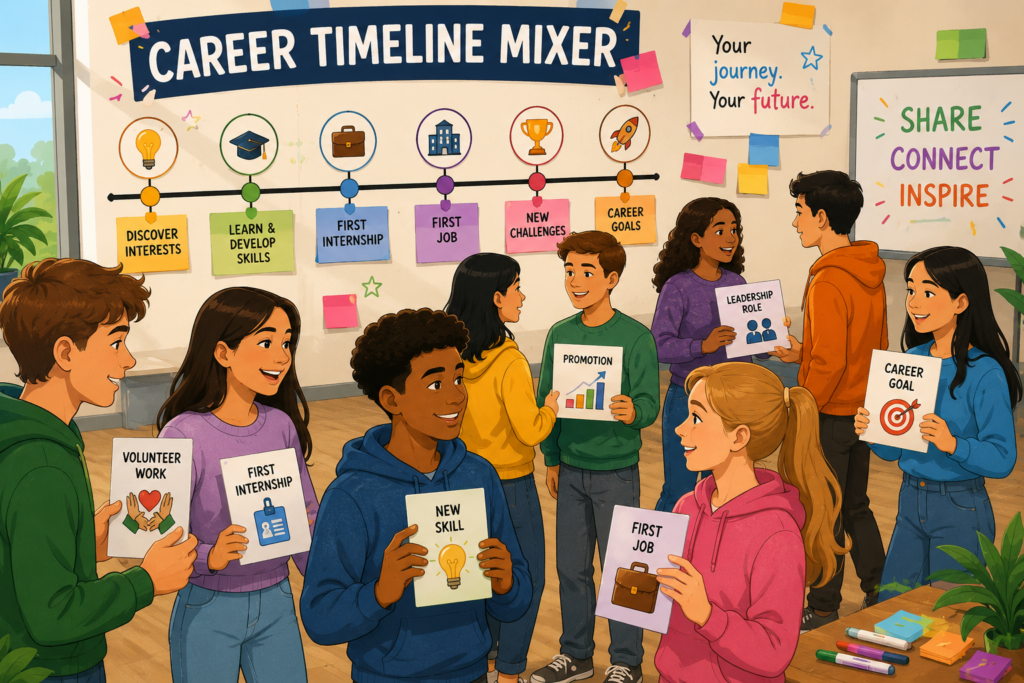
Students receive small event slips from a fictional person’s career path. They walk around and find classmates with related events. Then they create a short oral timeline using “used to” and “would.”
Events:
- He used to be shy.
- He would practice speaking at home.
- He used to volunteer in school events.
- He would help organize presentations.
- He used to enjoy technology.
- He would repair small devices.
- He used to work in a family store.
- He would talk to customers.
- He used to forget deadlines.
- He would use a planner to stay organized.
Part 3 – Exit Career Sentence (10 min)
Each student says one sentence about a past habit that could help someone’s future career.
Examples:
“I used to help my classmates, so I improved teamwork.”
“She would organize her tasks every week.”
SESSION 3: CONSOLIDATION (80 min)
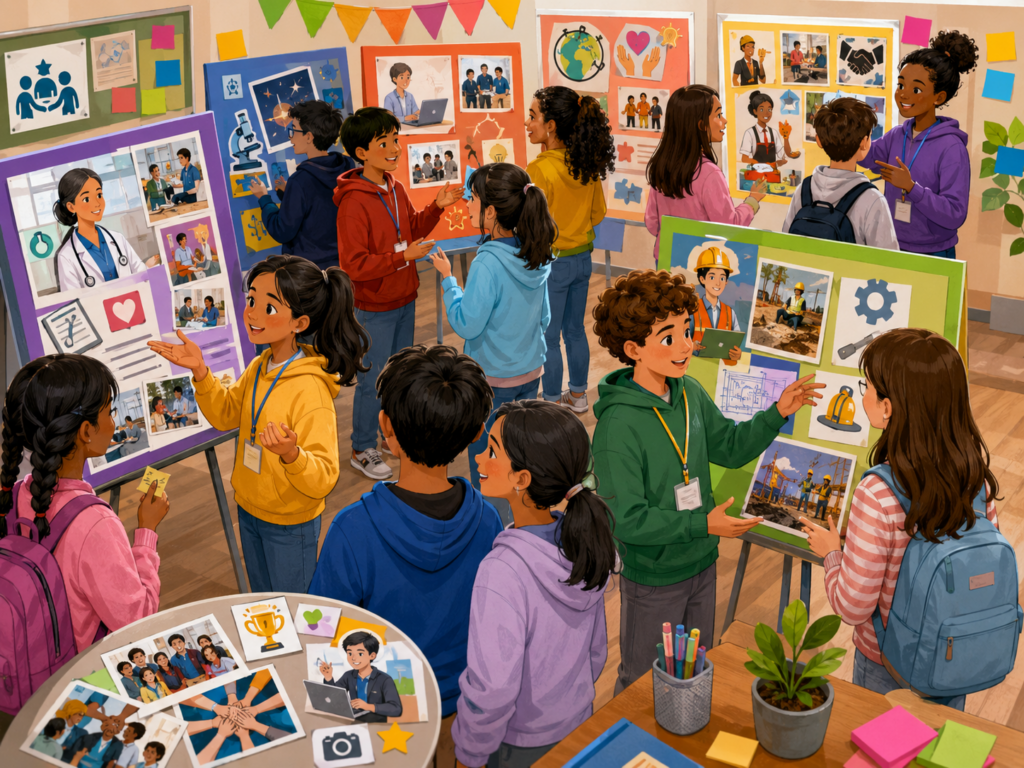
Part 1 – Preparation: Career Memory Walk (15 min)
Students create a short career profile for an imaginary person. They prepare notes only. The profile must include one past habit, one repeated action, one soft skill, and one career milestone.
Part 2 – Professional Milestone Interview Panel (50 min)
Students rotate through roles: candidate, interviewer, and observer. The candidate explains past habits and career growth. The interviewer asks questions about internships, jobs, and soft skills. The observer notes one strong use of grammar and one strong professional skill. This activity is interactive because students speak, question, evaluate, and rotate.
Required language:
- used to + base verb
- would + base verb
- soft skill vocabulary
- one career milestone
Visitor questions:
- What did this person use to do?
- What would they do regularly?
- What soft skill did they develop?
- What milestone did they reach?
- What job or internship did they have?
- How did the habit help them?
- What challenge did they face?
- What responsibility did they have?
- What goal did they achieve?
- What can we learn from this profile?
Part 3 – Hiring Decision Round (15 min)
Interviewers decide which candidate showed the strongest professional growth. They must justify the decision using one sentence with “used to” or “would.” The teacher closes by connecting repeated habits, soft skills, and career milestones.
 RUBRIC: Career Milestones
NEE – Agregar el tipo de adaptaciones curriculares
Principio II: Pautas 6.1 – 6.3 – 6.4
Principio III: Pautas 7.1 – 8.1 – 9.1
ALUMNO 1: Constante monitoreo. Dar tiempo adicional para el desarrollo de la actividad y se reduce el número de ejercicios o se modifican los ejercicios con un nivel de dificultad reducido, de acuerdo con sus necesidades académicas.
ALUMNO 2: Constante monitoreo, Dar tiempo adicional para el desarrollo de la actividad y se reduce el número de ejercicios o se modifican los ejercicios con un nivel de dificultad reducido, de acuerdo con sus necesidades académicas.
ALUMNO 3: Constante monitoreo. Corroborar que el contenido entregado en clase haya sido comprendido por la estudiante mediante retroalimentación.