
Innovation
SKILLS
EFL 4.2.12 Describe habits, routines, past activities and experiences within the personal and educational domains.
EFL 4.2.13 Interact with reasonable ease in structured situations and short conversations within familiar contexts, provided that speech is given clearly, slowly and directly.


REAL-LIFE APPLICATION
This topic helps students talk about actions that will be happening at a specific moment in the future. They learn how to describe future routines, medical appointments, health technology, and science innovations. This is useful when students imagine future hospitals, talk about health habits, explain what people will be doing at a certain time, or describe how technology may support people’s health.
LEARNING ACTIVITIES
SESSION 1 (80 min) ANTICIPATION
Part 1: Future Health Time Portal (20 min)
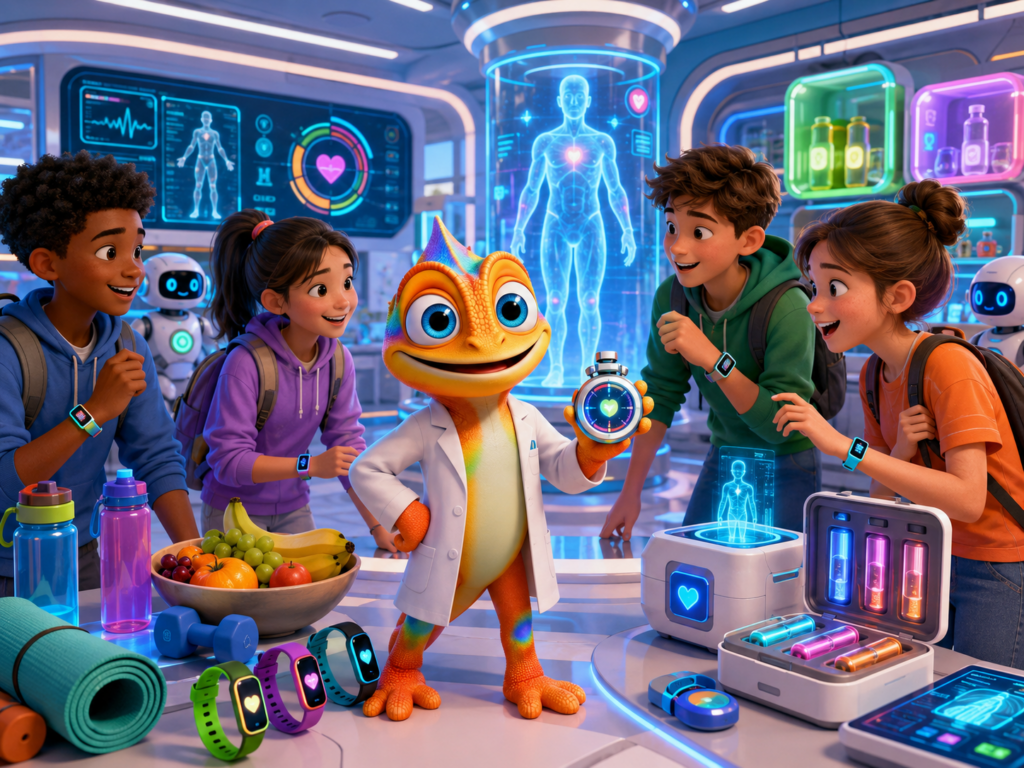
The teacher projects the opening image or a futuristic health-lab scene. Then the teacher places three large future times on the board:
- Tomorrow at 8:00 a.m.
- In 2035 at noon
- Next Friday at 4:00 p.m.
Students imagine what people will be doing in those moments. The teacher asks:
“What will doctors be doing in 2035?”
“What will students be using to check their health?”
“What will you be doing tomorrow at 8:00 a.m.?”
“What will people be wearing to monitor their health?”
Students first answer with simple ideas:
“Doctors will use robots.”
“People will wear smart watches.”
“I will study.”
Then the teacher upgrades their answers into Future Continuous:
“Doctors will be using robots.”
“People will be wearing smart health devices.”
“I will be studying tomorrow at 8:00 a.m.”
This introduces the idea that Future Continuous focuses on an action in progress at a specific future time.
CONSTRUCTION
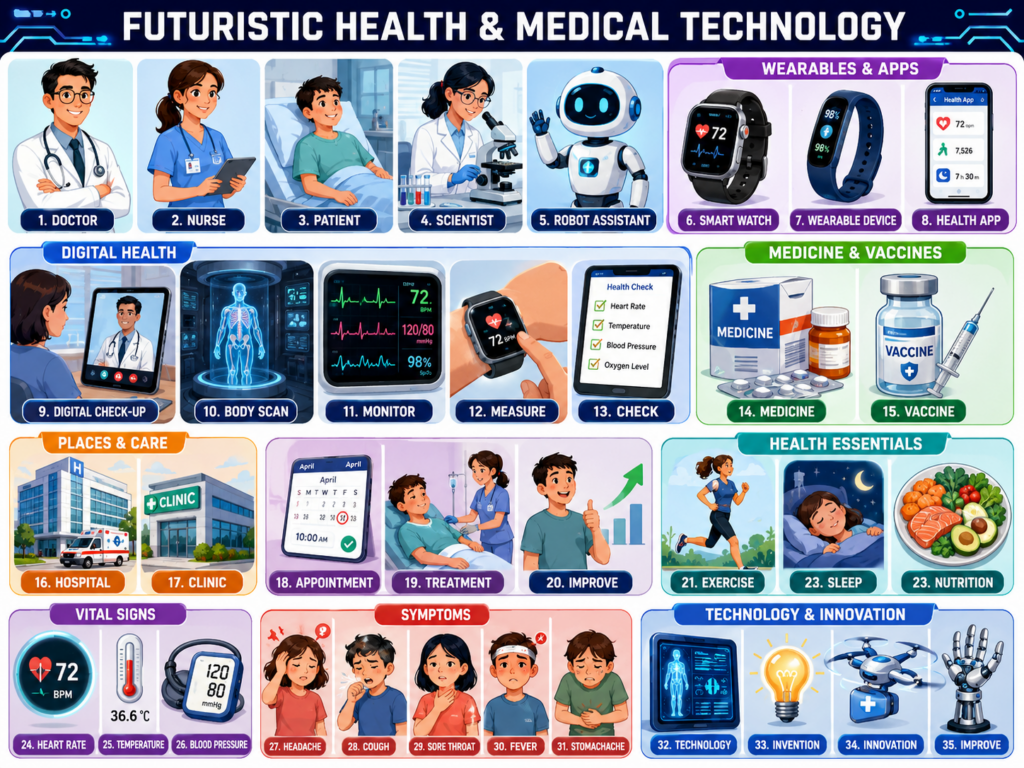
Part 2: Vocabulary Development (15 min)
The teacher introduces vocabulary using images, short gestures, and simple examples.
- doctor
- nurse
- patient
- scientist
- robot assistant
- smart watch
- wearable device
- health app
- digital check-up
- body scan
- medicine
- vaccine
- hospital
- clinic
- appointment
- treatment
- exercise
- sleep
- nutrition
- heart rate
- temperature
- blood pressure
- symptoms
- technology
- invention
- innovation
- monitor
- measure
- check
- improve
Part 3: Grammar Input: Future Continuous (25 min)
The teacher explains:
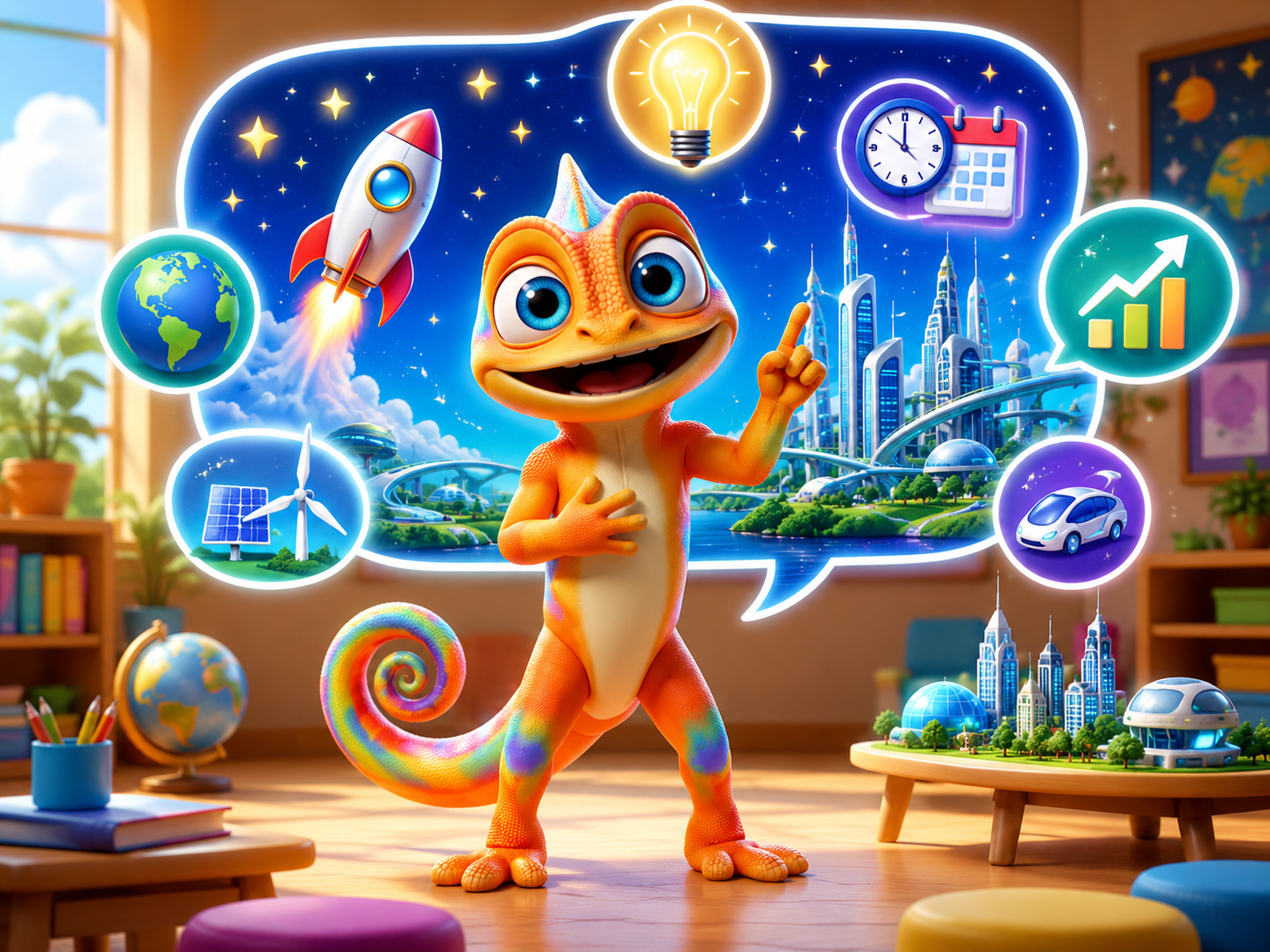
Future Continuous is used to talk about an action that will be in progress at a specific time in the future.
Structure:
subject + will be + verb-ing
Examples:
“At 9:00 tomorrow, I will be studying.”
“In 2035, doctors will be using more digital tools.”
“Next Friday, our group will be presenting a health invention.”
“At noon, patients will be waiting for their appointments.”
The teacher explains that Future Continuous is different from Future Simple.
Future Simple:
“I will study tomorrow.”
This means the action will happen, but we do not focus on the exact moment.
Future Continuous:
“I will be studying tomorrow at 8:00 p.m.”
This means that at that exact time, the action will be happening.
The teacher also explains the negative form:
“I will not be using my phone during the appointment.”
“The patients will not be waiting outside.”
“The doctor will not be working at 10:00 p.m.”
Question form:
“What will you be doing tomorrow at 7:00?”
“Will doctors be using robots in the future?”
“Will patients be wearing health devices?”
The teacher clarifies that students can use Future Continuous for realistic personal plans or imaginary future scenarios.
Exercise: Complete the sentences with the Future Continuous.
- Tomorrow at 8:00, I ______ studying science.
- In 2035, doctors ______ using new medical technology.
- Next Friday, our class ______ presenting health inventions.
- At 10:00, the nurse ______ checking the patient.
- This afternoon, I ______ exercising at home.
- In the future, people ______ wearing health devices.
- At noon, scientists ______ testing a new idea.
- Tomorrow morning, my friend ______ visiting the clinic.
- At 9:00 p.m., I ______ sleeping.
- Next week, students ______ designing future hospitals.
Watch the following video for better understanding
Part 4: Health Tech Motion Lab (20 min)
Students work in groups. Each group receives one future medical-tech situation. They must create a short physical demonstration using gestures, classroom objects, or projected images.
Situations:
- A robot assistant helping a patient.
- A smart watch checking heart rate.
- A doctor using a hologram body scan.
- A patient talking to a doctor online.
- A scientist testing a new medicine.
- A nurse checking temperature.
- A student using a health app.
- A family exercising with a digital coach.
- A hospital using delivery drones.
- A patient wearing a sleep monitor.
Each group performs the scene. Another group says what will be happening.
Examples:
“They will be checking the patient’s heart rate.”
“The doctor will be using a body scan.”
“The patient will be talking to a doctor online.”
Gamification:
- 1 point = correct Future Continuous
- 1 extra point = correct health vocabulary
- 1 extra point = clear performance
- 1 extra point = creative technology idea
SESSION 2: CONSTRUCTION – REINFORCEMENT (40 min)
Part 1 – Tomorrow’s Health Clock (15 min)
The teacher draws or projects a large clock. Students choose a future time and a health action. They must say what they will be doing at that specific time.
Times:
- tomorrow at 7:00 a.m.
- tomorrow at 10:00 a.m.
- next Monday at 8:00
- next Friday at noon
- tonight at 9:00
- in 2035 at 3:00 p.m.
- this afternoon at 5:00
- next week at 11:00
- on Saturday at 4:00
- tomorrow at midnight
Actions:
exercising
sleeping
visiting the doctor
using a health app
drinking water
checking symptoms
designing a robot
presenting an invention
monitoring heart rate
resting
Example:
“Tomorrow at 7:00 a.m., I will be exercising.”
“In 2035 at 3:00 p.m., doctors will be using robot assistants.”
Part 2 – Future Patient Mini-Roleplay (15 min)
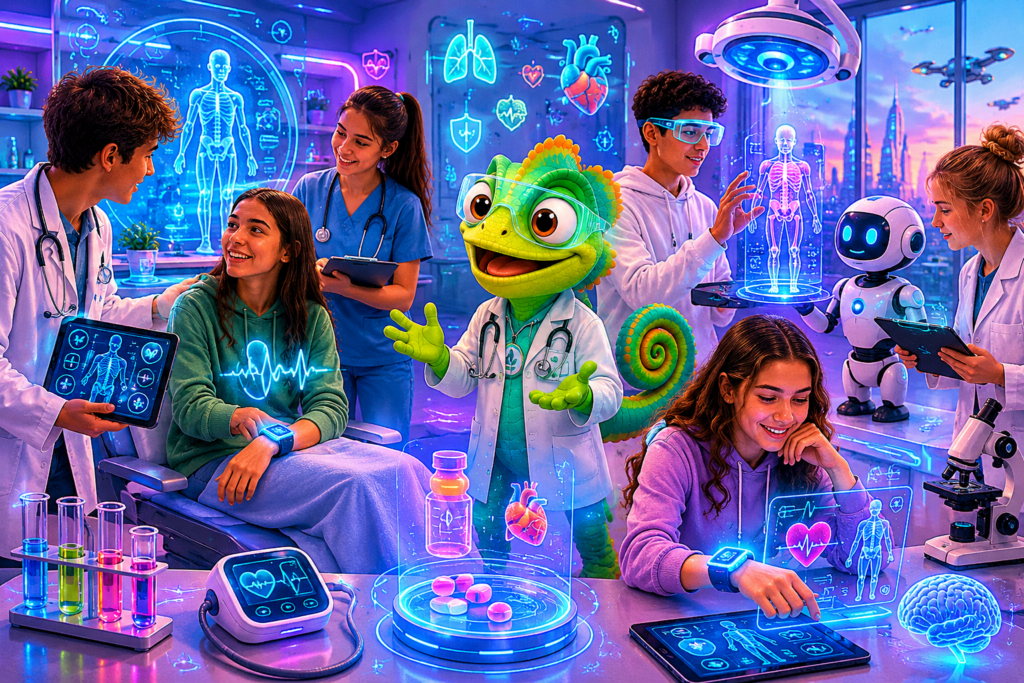
Students work in pairs. One student is the patient, and the other is the future health assistant. They act a short conversation using Future Continuous.
Required language:
“What will you be doing tomorrow morning?”
“I will be…”
“Will you be using…?”
“Yes, I will / No, I won’t.”
“At that time, I will be…”
Example:
Assistant: “What will you be doing tomorrow at 8:00?”
Patient: “I will be visiting the clinic.”
Assistant: “Will you be wearing your health bracelet?”
Patient: “Yes, I will. It will be measuring my heart rate.”
Part 3 – Exit Future Action (10 min)
Each student says one Future Continuous sentence connected to health, science, or technology.
Examples:
“Tomorrow at 6:00, I will be exercising.”
“In 2035, doctors will be using smart robots.”
“Next class, we will be designing a medical invention.”
SESSION 3: CONSOLIDATION (80 min)
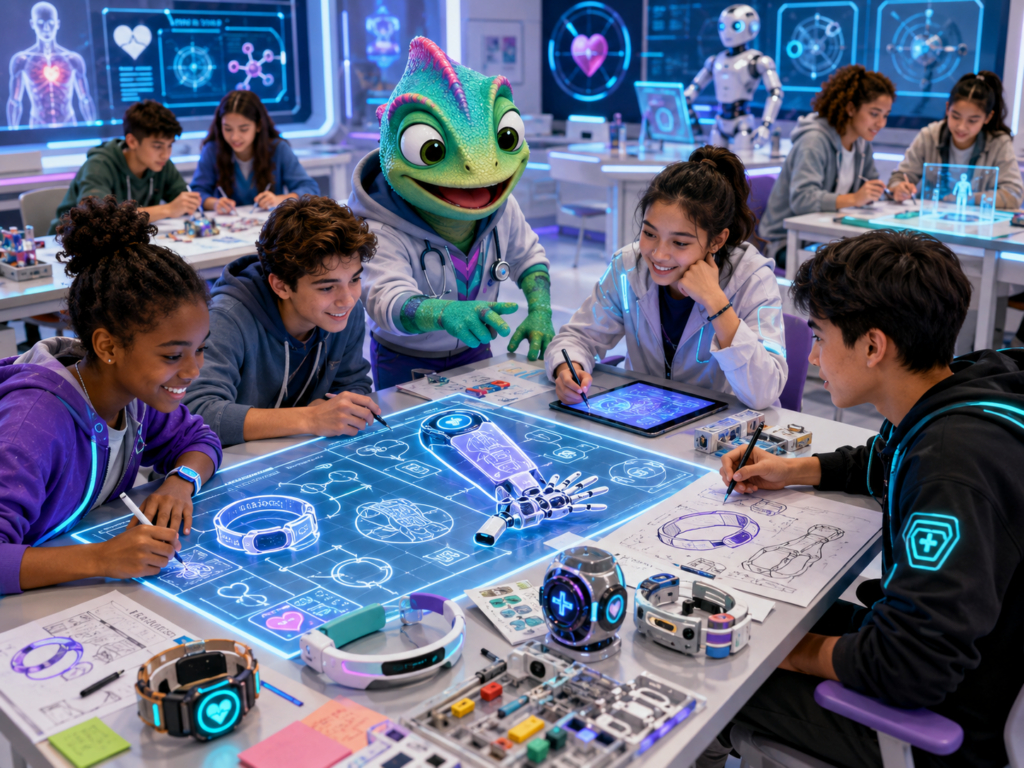
Part 1 – Preparation: Future Medical Invention Blueprint (15 min)
Students prepare a simple invention idea. They do not write a full paragraph. They create a quick visual blueprint with drawings, icons, arrows, or a small physical model.
Invention options:
- smart health bracelet
- robot nurse
- medicine reminder box
- sleep monitor pillow
- digital doctor screen
- exercise coach mirror
- smart water bottle
- emergency health drone
- school health app
- healthy food scanner
Required language:
What is the invention?
Who will be using it?
When will they be using it?
What problem will it help solve?
Why is it useful?
Part 2 – Future Health Demo Room (50 min)
Students present their invention in small demonstration groups. This is not a regular poster presentation. They must show how the invention works through a mini demonstration, roleplay, object model, or digital image.
Presentation requirements:
- name of the invention
- health problem it helps solve
- two Future Continuous sentences
- two health or science vocabulary words
- one short demonstration
Example:
“This is a smart water bottle. Students will be using it during school. At 10:00, the bottle will be reminding them to drink water. It will help students stay healthy.”
Audience task:
The audience must ask one Future Continuous question.
Examples:
“Who will be using it?”
“When will people be using it?”
“Will students be using it at school?”
“What will the device be measuring?”
Gamification:
Students earn innovation badges:
- Future Continuous Badge
- Health Vocabulary Badge
- Clear Demo Badge
- Creative Invention Badge
- Teamwork Badge
Part 3 – Innovation Badge Reflection (15 min)
Students vote for:
- most useful invention
- clearest demonstration
- best Future Continuous use
- most creative health solution
- best teamwork
They explain their vote orally.
Examples:
“I voted for this group because students will be using this invention every day.”
“Their invention will be helping people remember medicine.”
“The demonstration was clear and creative.”
RUBRIC:
Innovation Future Continuous
NEE – Agregar el tipo de adaptaciones curriculares
Principio II: Pautas 6.1 – 6.3 – 6.4
Principio III: Pautas 7.1 – 8.1 – 9.1
ALUMNO 1: Constante monitoreo. Dar tiempo adicional para el desarrollo de la actividad y se reduce el número de ejercicios o se modifican los ejercicios con un nivel de dificultad reducido, de acuerdo con sus necesidades académicas.
ALUMNO 2: Constante monitoreo, Dar tiempo adicional para el desarrollo de la actividad y se reduce el número de ejercicios o se modifican los ejercicios con un nivel de dificultad reducido, de acuerdo con sus necesidades académicas.
ALUMNO 3: Constante monitoreo. Corroborar que el contenido entregado en clase haya sido comprendido por la estudiante mediante retroalimentación.