
Solving Problems
SKILLS
EFL 4.2.13 Interact with reasonable ease in structured situations and short conversations within familiar contexts, provided that speech is given clearly, slowly and directly.
EFL 4.3.4 Find the most important information in print or online sources in order to support an idea or argument.
REAL-LIFE APPLICATION

This topic helps students make logical guesses based on evidence. They learn to say what something probably is, what it possibly is, and what it cannot be. They also learn to describe people, objects, places, and problems with more detail using relative clauses. This is useful when students solve everyday problems, explain situations, describe objects, report what happened, or give reasons for their ideas.
LEARNING ACTIVITIES
SESSION 1 (80 min) ANTICIPATION
Part 1: Anticipation: Mystery Bag Evidence Table (20 min)
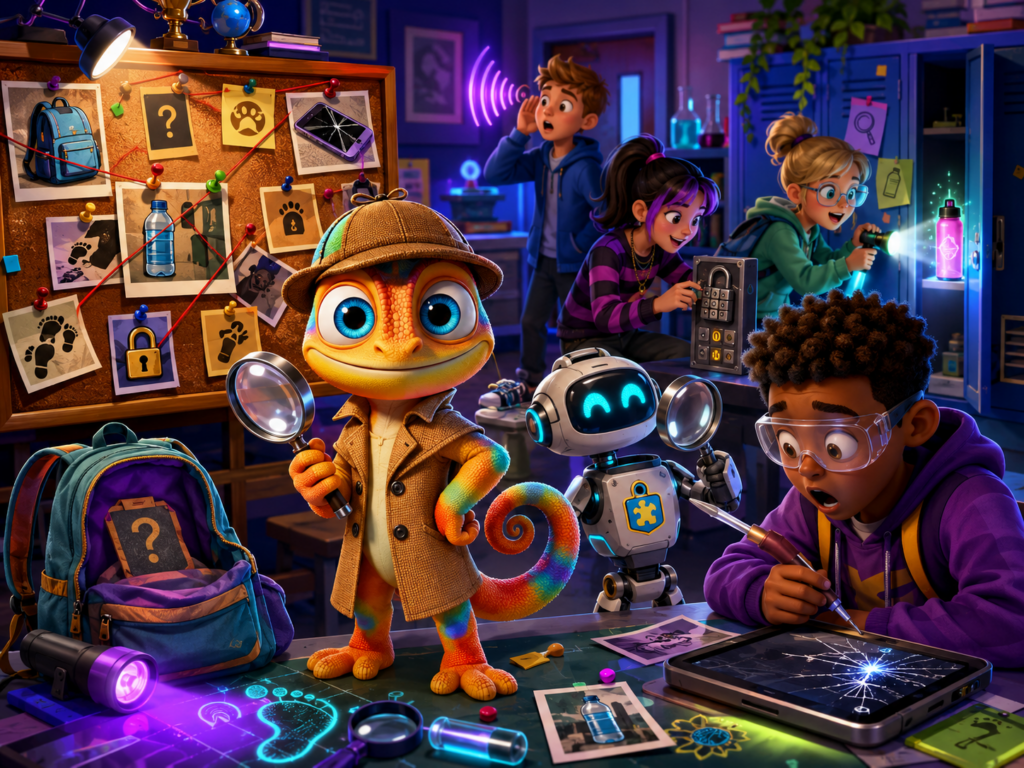
The teacher places a closed backpack, box, or bag in the middle of the room. Around it, there are visual clues: a sports bottle, a broken pencil, a bus ticket, a science drawing, a small towel, headphones, a snack wrapper, and a notebook. Students cannot touch the bag at first. They only observe.
The teacher asks:
- “What can we guess?”
- “What evidence do you see?”
- “What can’t be true?”
- “What object might be inside?”
- “Who could this belong to?”
Students give simple guesses first:
“It is a student’s bag.”
“It is for sports.”
“It is not a teacher’s bag.”
“It is a science student’s bag.”
Then the teacher upgrades their answers:
“It must be a student’s bag.”
“It might belong to someone who plays sports.”
“It can’t be a teacher’s bag.”
“It might be a bag which belongs to a science student.”
This introduces both grammar targets through a problem-solving context.
CONSTRUCTION
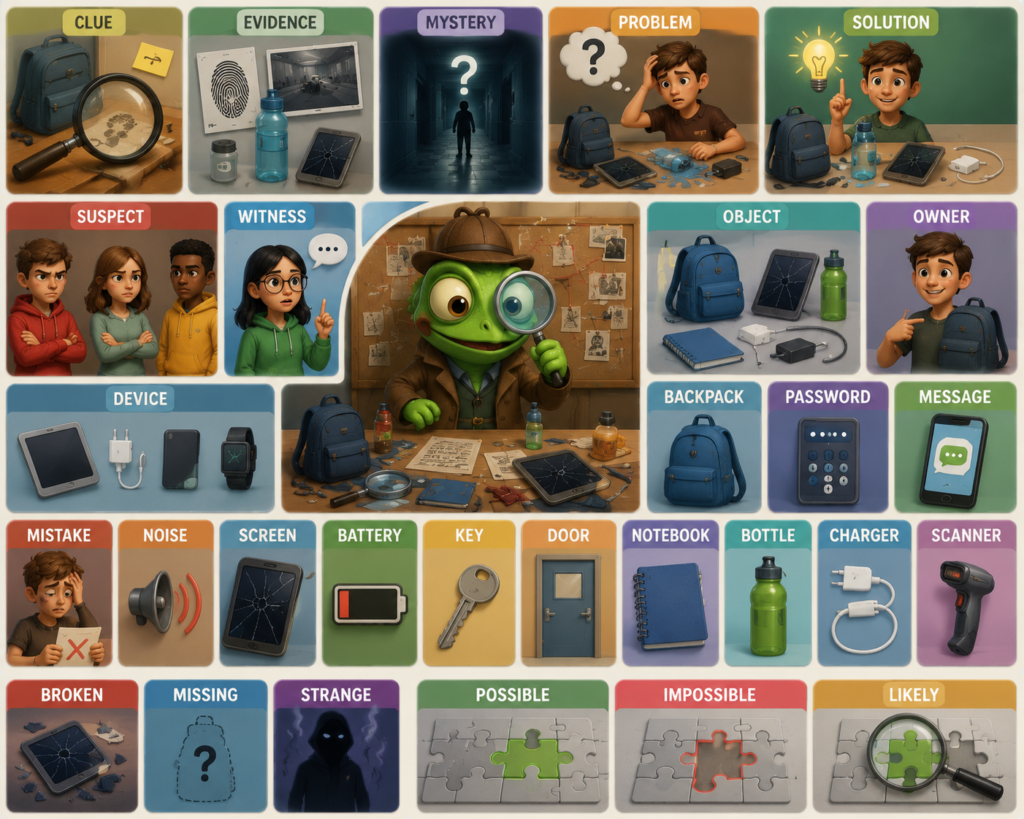
Part 2: Vocabulary Activation: Clue Touch Table (15 min)
The teacher places clue objects around the room. Students move in pairs, touch or point to one object, and say what problem it could connect to.
- clue
- evidence
- mystery
- problem
- solution
- suspect
- witness
- object
- owner
- device
- backpack
- password
- message
- mistake
- noise
- screen
- battery
- key
- door
- notebook
- bottle
- charger
- scanner
- broken
- missing
- strange
- possible
- impossible
- likely
Part 3: Grammar Discovery: Evidence Scale + Clause Magnets (25 min)
Instead of teaching grammar only through explanation, the teacher uses two visual tools.
First tool: Evidence Scale
The teacher draws or projects a scale:
100% sure → must
50% possible → might / may / could
0% possible → can’t
The teacher gives clues and students place them on the scale.
Example:
Clue: “The floor is wet and there is an umbrella.”
Deduction: “It must be raining.”
Clue: “The backpack has a soccer ball.”
Deduction: “It might belong to a student who plays soccer.”
Clue: “The bag is very small and empty.”
Deduction: “It can’t be full of books.”
Second tool: Clause Magnets
The teacher writes words on separate paper strips or digital blocks:
person / thing / place
who / which / that / where
extra information
Students build definitions.
Examples:
“A witness is a person who saw the problem.”
“A scanner is a device which checks objects.”
“A lab is a place where experiments happen.”
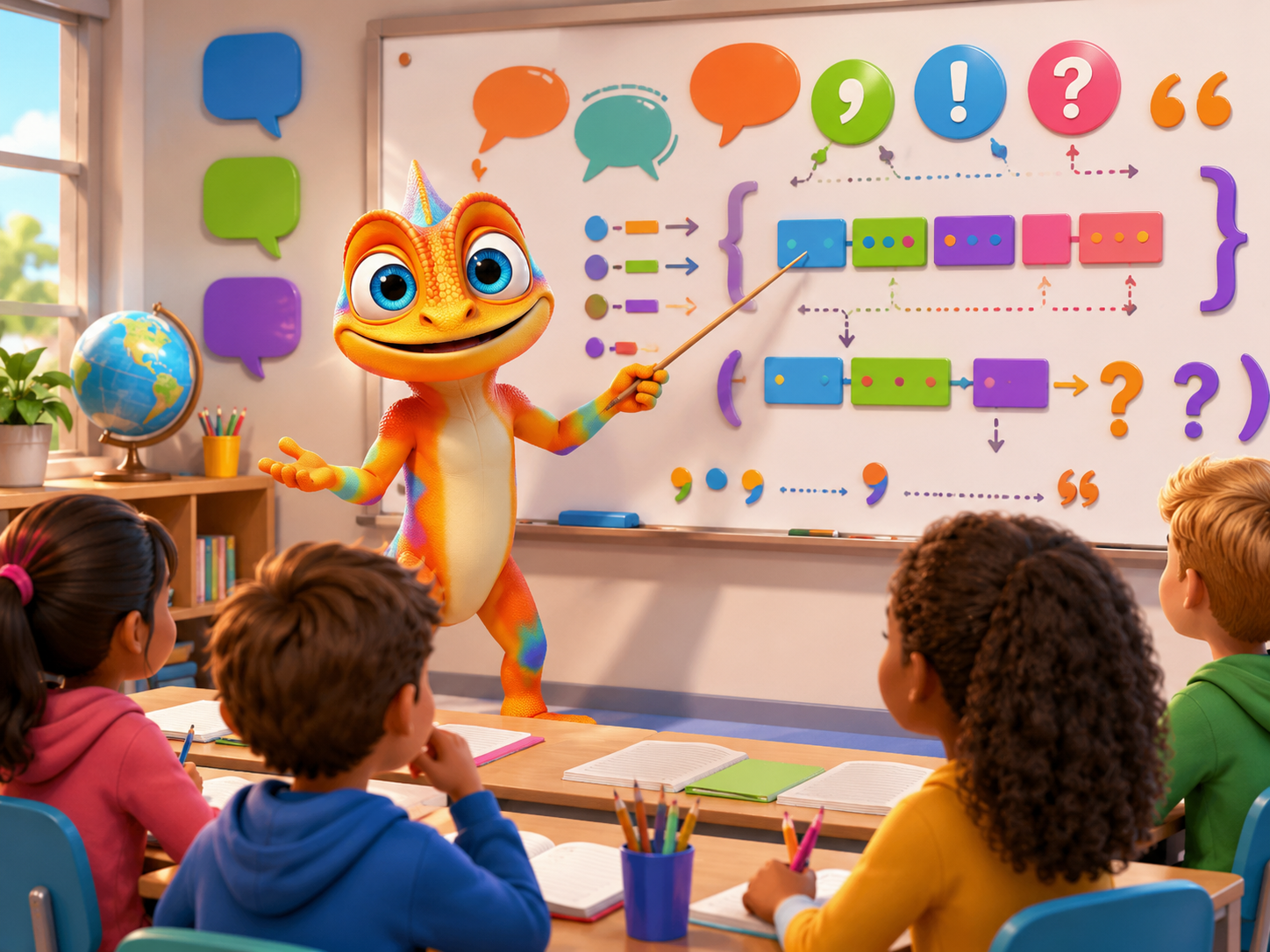
The teacher explains defining relative clauses:
A defining relative clause gives necessary information. Without it, the sentence is incomplete or unclear.
Examples:
“The student who found the key is outside.”
“The device which stopped working is on the table.”
“This is the place where we found the clue.”
Grammar explanation
Use must when the evidence is strong.
“The phone is ringing. It must be inside the backpack.”
Use might / may / could when something is possible, but not certain.
“The notebook might belong to Ana.”
Use can’t when something is impossible or very unlikely.
“That can’t be Pedro’s jacket. It is too small.”
Structure:
subject + must / might / may / could / can’t + base verb
Examples:
“It must be important.”
“She might know the answer.”
“He can’t be the owner.”
“The device could be broken.”
Non-defining
A non-defining relative clause adds extra information. The sentence still makes sense without it. It uses commas.
Examples:
“Kmaleon, who is helping the class, found a clue.”
“The science lab, which is on the second floor, was closed yesterday.”
“My tablet, which is very old, stopped working.”
Key difference:
Defining: necessary information, no commas.
Non-defining: extra information, commas.
Part 4: Mystery Sentence Construction Lab (20 min)
Students work in groups. Each group receives a visual clue scene. They must build three types of sentences:
- One strong deduction with must
- One possibility with might / could
- One sentence with a relative clause
Visual clue scenes:
- wet floor + umbrella
- broken tablet + charger
- lost bottle + sports shoes
- open notebook + science drawing
- locked classroom + missing key
- strange sound + backpack
- empty cafeteria + food wrapper
- dark classroom + open window
- wrong homework file + laptop
- missing poster + tape on wall
Example:
“The floor must be wet because someone came from outside.”
“The umbrella might belong to a student who arrived late.”
“This is the place where the clue was found.”
Gamification:
1 point = correct modal
1 point = correct relative pronoun
1 point = clear reason
1 point = creative explanation
Bonus = team uses both grammar targets in one sentence
Example bonus sentence:
“The bottle might belong to the student who was playing soccer.”
SESSION 2: CONSTRUCTION – REINFORCEMENT (40 min)
Part 1 – Human Evidence Scale (15 min)
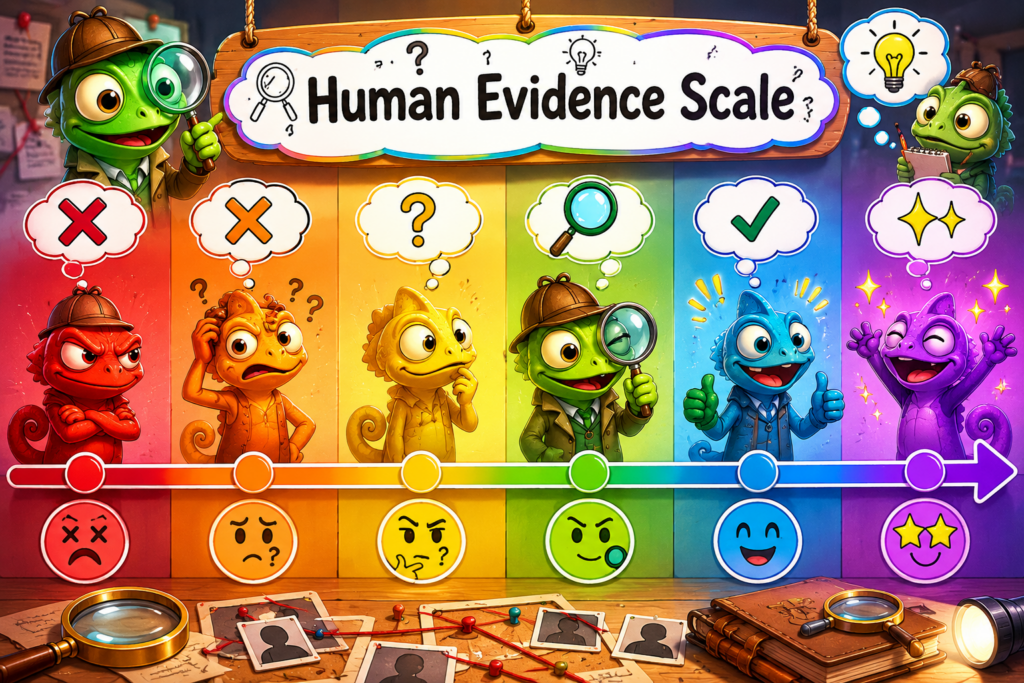
The room becomes a physical evidence scale. One side is “must,” the middle is “might,” and the other side is “can’t.” The teacher reads clues. Students move to the side that matches their deduction and explain orally.
Clues:
- The charger fits this tablet perfectly.
- The jacket is too small for the teacher.
- The backpack has a student ID inside.
- The classroom is dark, but the projector is on.
- The phone has no battery.
- The notebook has only math exercises.
- The water bottle is next to the football field.
- The key opens the classroom door.
- The computer screen is frozen.
- The book has a library sticker
Example:
“It must belong to a student because there is a student ID.”
“It can’t be the teacher’s jacket because it is too small.”
“It might belong to a football player because it was near the field.”
Part 2 – Relative Clause Chain Reaction (15 min)
Students stand in a circle. One student says a noun. The next student must define it with a relative clause.
Example:
Student 1: “doctor”
Student 2: “A doctor is a person who helps patients.”
Student 3: “clinic”
Student 4: “A clinic is a place where people receive medical help.”
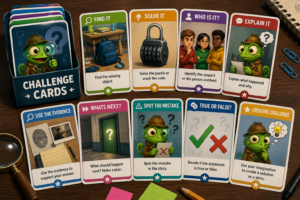
The teacher then adds challenge cards:
Use who
Use which
Use where
Add extra information with commas
Use a mystery word
Use a problem-solving word
Part 3 – Exit Deduction Ticket (10 min)
Each student gives one oral sentence before leaving:
Option A: one deduction
“It must be…”
“It might be…”
“It can’t be…”
Option B: one relative clause
“A clue is something which…”
“A witness is a person who…”
“A lab is a place where…”
SESSION 3: CONSOLIDATION (80 min)
Part 1 – Preparation: Mystery Solver Live Board (15 min)
Students prepare a live mystery board using drawings, icons, objects, or projected images. They do not write a full script. They organize their board into:
- Problem
- Clues
- Possible explanations
- Impossible explanation
- Final solution
Required language:
“It must be…”
“It might be…”
“It can’t be…”
“The person who…”
“The object which…”
“The place where…”
Part 2 – Mystery Solver Live Board Challenge (50 min)
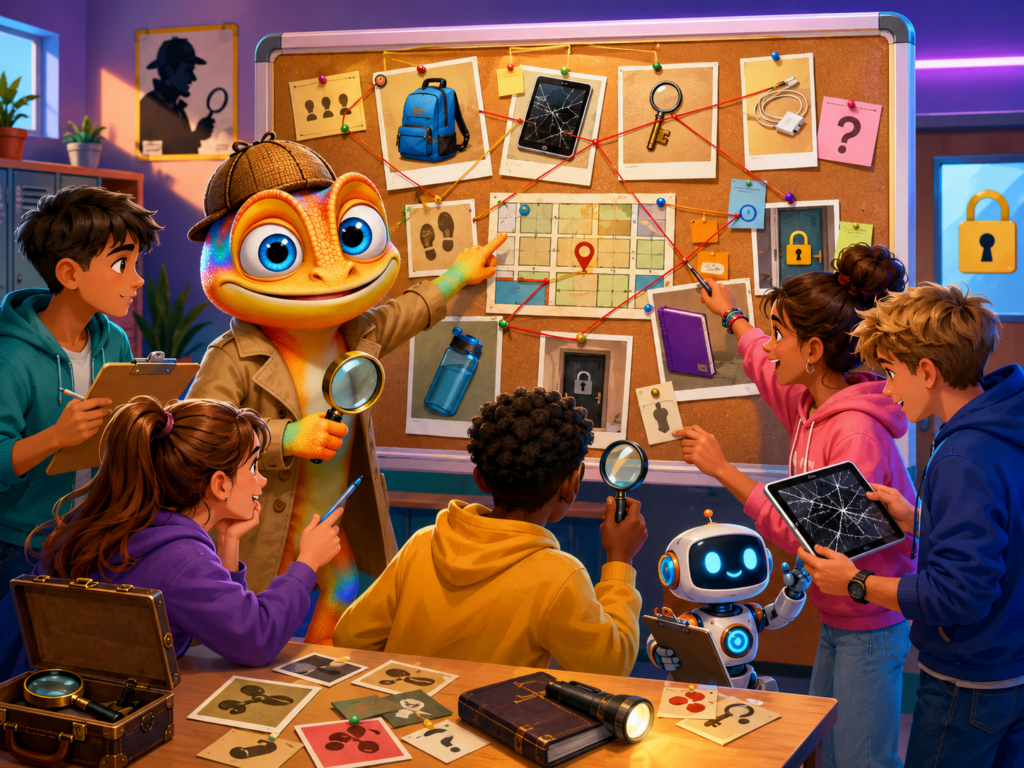
Groups present their mystery board as a live investigation. They must move objects, point to clues, and explain their reasoning. The audience acts as assistant detectives and asks questions.
Mystery options:
- The missing backpack
- The broken tablet
- The strange classroom sound
- The lost key
- The wrong homework file
- The locked classroom
- The missing water bottle
- The empty lunchbox
- The strange science smell
- The disappeared poster
Presentation requirements:
one clear problem
three clues
two deductions with must / might / can’t
two relative clauses
one final solution
one audience question
Example:
“The backpack must belong to someone who plays sports because there is a soccer ball inside. The charger might be for the tablet which stopped working. It can’t be the teacher’s bag because there is a student ID. Our final solution is that the backpack belongs to a student who went to sports class.”
Gamification:
Teams earn detective badges:
- Evidence Badge
- Deduction Badge
- Relative Clause Badge
- Clear Explanation Badge
- Teamwork Badge
Part 3 – Detective Debrief Reflection (15 min)
Students vote for:
- clearest mystery
- best evidence
- strongest deduction
- best use of relative clauses
- most creative solution
Students explain their vote orally.
Examples:
“I voted for this group because their evidence was clear.”
“Their solution must be correct because they explained the clues well.”
“They used a good sentence with who.”
RUBRIC:
Solving Problems
NEE – Agregar el tipo de adaptaciones curriculares
Principio II: Pautas 6.1 – 6.3 – 6.4
Principio III: Pautas 7.1 – 8.1 – 9.1
ALUMNO 1: Constante monitoreo. Dar tiempo adicional para el desarrollo de la actividad y se reduce el número de ejercicios o se modifican los ejercicios con un nivel de dificultad reducido, de acuerdo con sus necesidades académicas.
ALUMNO 2: Constante monitoreo, Dar tiempo adicional para el desarrollo de la actividad y se reduce el número de ejercicios o se modifican los ejercicios con un nivel de dificultad reducido, de acuerdo con sus necesidades académicas.
ALUMNO 3: Constante monitoreo. Corroborar que el contenido entregado en clase haya sido comprendido por la estudiante mediante retroalimentación.