
Unit 2: K-Learning Project
SKILLS
EFL.5.2.11 Express opinions on abstract and concrete topics while describing reactions to them and others’ opinions.
EFL.5.3.3 Determine the main conclusion in texts which clearly argue a point of view in order to make informed decisions about one’s own opinion and reaction.


REAL-LIFE APPLICATION
This project helps students analyze cultural products as social texts. At B2 level, students should not only describe what a product looks like; they should deconstruct how it represents identity, shapes public opinion, reinforces or challenges power, and produces social or political impact. This skill supports academic discussion, media literacy, cultural criticism, civic awareness, and public speaking.
LEARNING ACTIVITIES
SESSION 1 (80 min) ANTICIPATION
Part 1: Anticipation: Culture on Trial (20 min)
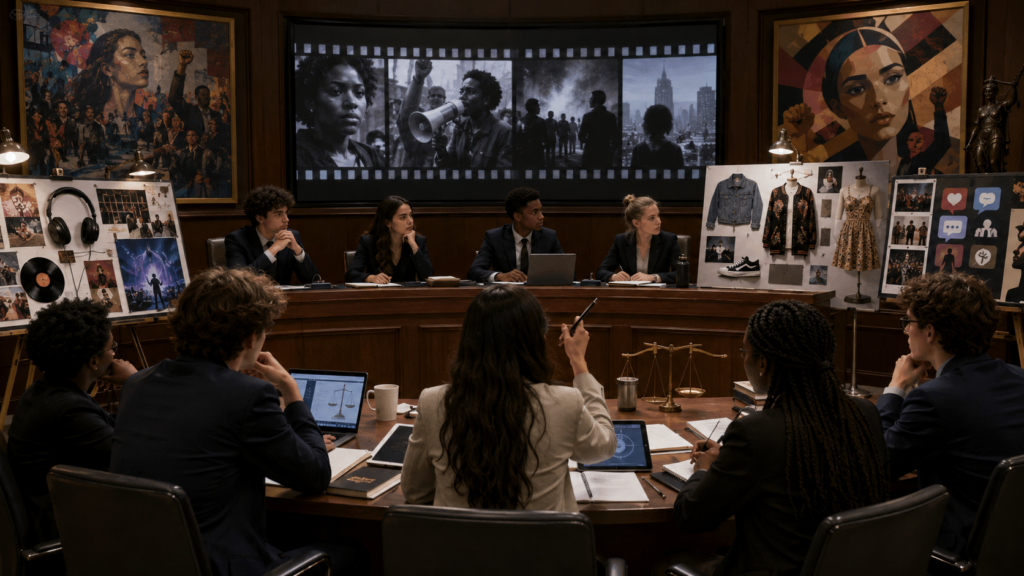
The teacher presents one cultural product image, such as a controversial advertisement, protest mural, music video still, fashion campaign, or public statue. Students are divided into three groups: defenders, critics, and analysts. Defenders explain what the product does well. Critics explain what might be problematic. Analysts identify the message, audience, and possible impact. This creates a mock-trial atmosphere and prepares students to think beyond simple opinion.
Trial questions:
- What message does this product communicate?
- Who is represented?
- Who is missing or excluded?
- What values does it promote?
- What stereotypes might it challenge?
- What stereotypes might it reinforce?
- Who benefits from this message?
- Who might be harmed by this message?
- How could it affect public opinion?
- Should it be celebrated, questioned, or redesigned?
CONSTRUCTION
Part 2: Vocabulary for Cultural Deconstruction (15 min)
The teacher introduces vocabulary for mature cultural analysis.
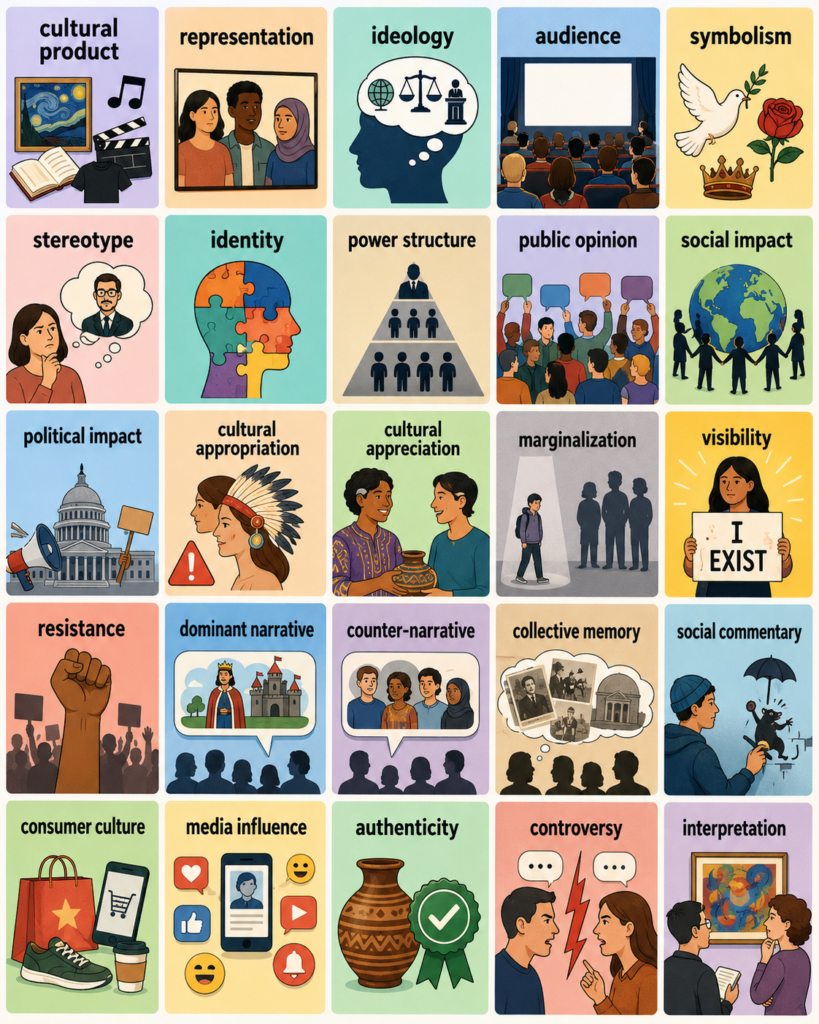
- cultural product
- representation
- ideology
- audience
- symbolism
- stereotype
- identity
- power structure
- public opinion
- social impact
- political impact
- cultural appropriation
- cultural appreciation
- marginalization
- visibility
- resistance
- dominant narrative
- counter-narrative
- collective memory
- social commentary
- consumer culture
- media influence
- authenticity
- controversy
- interpretation
Part 3: Analytical Input: Deconstructing a Cultural Product (25 min)
Explanation:
Deconstruction
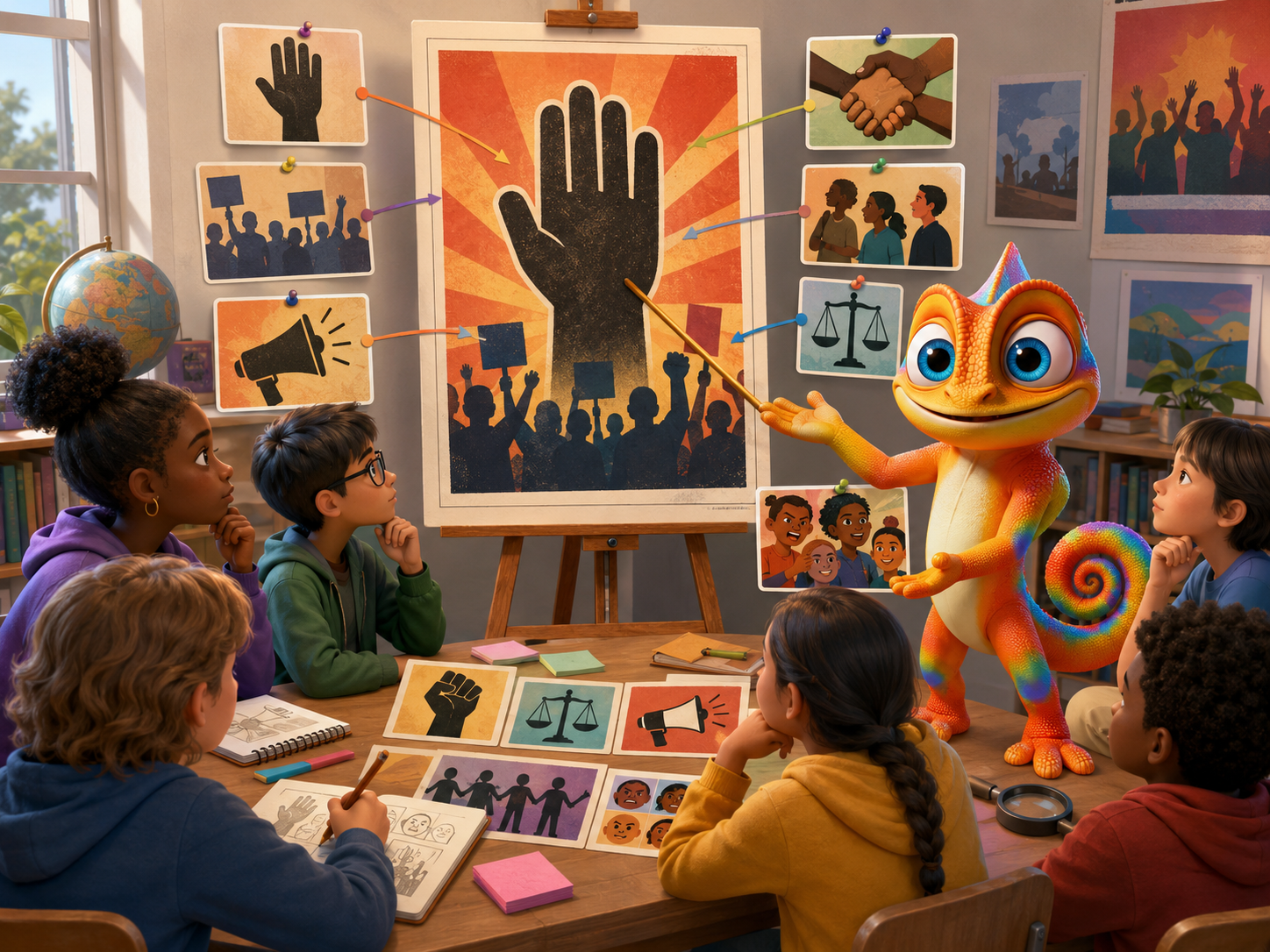
Deconstruction means looking closely at a cultural product to understand how its meaning is created. Students do not only describe what they see or summarize the product. They analyze how details such as images, symbols, colors, characters, setting, audience, and context communicate a message.
A strong analysis answers two important questions:
What meaning is being created?
Why does that meaning matter socially or politically?
Analytical Structure
Product: What are we analyzing?
Example: a mural, song, advertisement, meme, film scene, poster, or fashion campaign.
Context: Where does it come from?
Example: a country, community, historical moment, social movement, or online trend.
Symbols: What details carry meaning?
Example: colors, objects, gestures, clothing, music, facial expressions, or repeated images.
Representation: Who is shown or excluded?
Example: women, young people, Indigenous communities, migrants, workers, leaders, or minority groups.
Message: What idea is communicated?
Example: resistance, equality, pride, criticism, unity, protest, or social change.
Impact: How may it affect society or politics?
Example: it may change public opinion, challenge stereotypes, give visibility to a group, create debate, or inspire action.
Simple Model
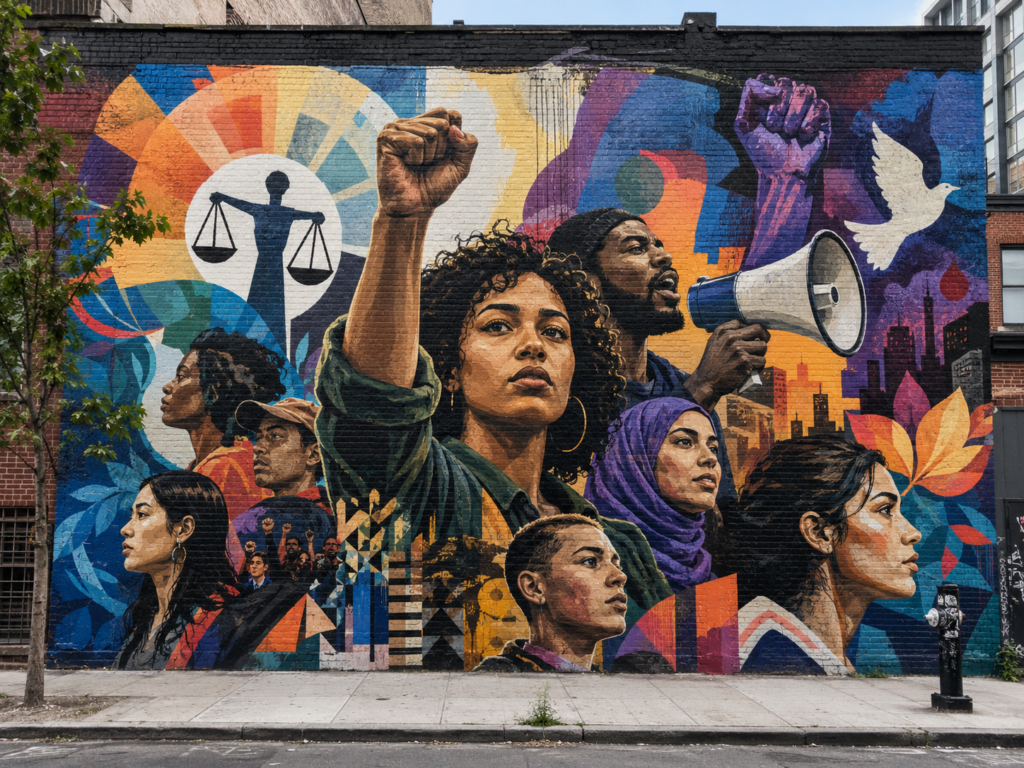
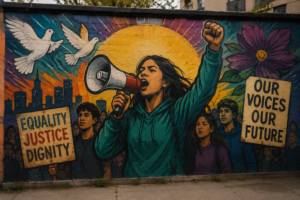
A protest mural with raised hands is not only a picture. The raised hands may symbolize resistance and unity. If the mural shows marginalized communities, it may give them visibility. Its message may be that people deserve justice, and its impact could be encouraging public discussion about rights and equality.
Exercise: Deconstructing a Cultural Product
Part 4: Cultural Product Shark Tank (20 min)
Students work in groups. Each group receives a cultural product and must “pitch” why it deserves serious analysis. They are not selling the product; they are defending its relevance. Other groups act as critical investors and ask questions about impact, representation, and controversy.
Product options:
- A protest song
- A public mural
- A controversial advertisement
- A social media campaign
- A traditional clothing item used in fashion
- A public statue
- A film about migration
- A music video about inequality
- A meme about politics
- A festival performance
Investor questions:
- What makes this product socially relevant?
- What power relationship does it show?
- What group is represented?
- What group is excluded?
- What message might be controversial?
- What evidence supports your interpretation?
- How could it influence public opinion?
- Does it challenge or reinforce stereotypes?
- Is the product respectful or problematic?
- Why should people analyze it seriously?
SESSION 2: CONSTRUCTION – REINFORCEMENT (40 min)
Part 1 – Symbol Interrogation Room (15 min)
Students choose one symbol from a cultural product and “interrogate” it. One student acts as the symbol and answers questions from classmates. For example, if the symbol is a chain, students ask: “What do you represent?” “Who do you affect?” “Why were you included?” This is dramatic, oral, and analytical.
Symbol options:
- Chain
- Flag
- Mask
- Mirror
- Wall
- Microphone
- Fire
- Bridge
- Closed door
- Open road
Question frames:
“What do you represent?”
“What emotion do you create?”
“What social issue are you connected to?”
“Who might interpret you differently?”
“What message do you help communicate?”
Part 2 – Impact Ranking Challenge (15 min)
Students receive different possible impacts and rank them from most serious to least serious for a cultural product. Then they justify their top choice orally.
Impact options:
It changes public opinion.
It reinforces a stereotype.
It gives visibility to a marginalized group.
It creates controversy.
It encourages civic participation.
It sells a simplified version of culture.
It preserves collective memory.
It normalizes inequality.
It inspires protest.
It influences young people’s identity.
Sentence frames:
“The most serious impact is…”
“This matters because…”
“The product may affect…”
“The audience might interpret it as…”
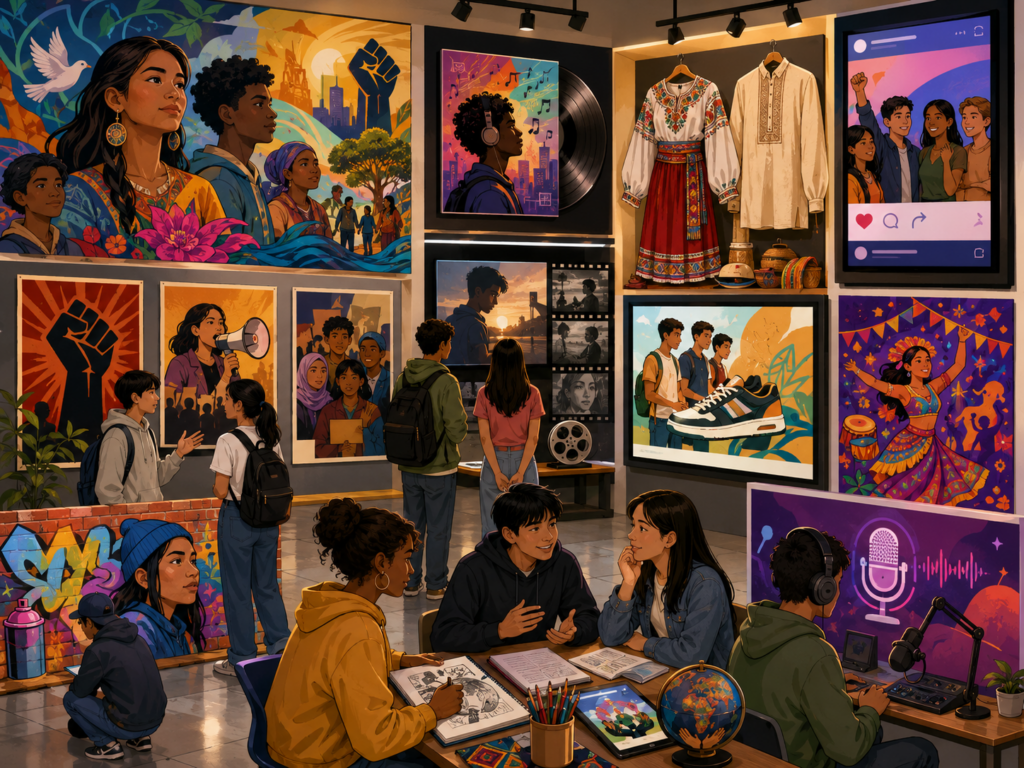
Part 3 – Second Analytical Sprint (10 min)
Each student gives a 30-second analysis of one image. They must mention product, symbol, and impact. The teacher gives quick feedback on clarity and depth.”
SESSION 3: CONSOLIDATION (80 min)

Part 1 – Preparation: Cultural Impact Tribunal (15 min)
Students choose one cultural product and prepare evidence notes only. They cannot write a full script. Their notes must include product, context, symbol, representation, socio-political impact, and final judgment. The teacher explains that analytical stamina means sustaining a clear argument for 90 seconds with evidence and interpretation.
Cultural product options:
Protest mural
Political meme
Music video
Public statue
Fashion campaign
Advertisement
Film scene
Social media trend
Traditional object in commercial use
Public performance
Part 2 – Cultural Impact Tribunal (50 min)
Students present a 90-second argument before a tribunal panel. The speaker must argue whether the cultural product should be celebrated, questioned, redesigned, or studied critically. Panel members ask one question after each presentation. This activity is interactive, formal, and analytical, like a mock trial combined with cultural criticism.
Required structure:
- Identify the cultural product.
- Explain its context.
- Analyze one symbol.
- Explain representation.
- Explain socio-political impact.
- Give a final judgment.
- Answer one panel question.
Panel questions:
- What evidence supports your interpretation?
- Who benefits from this product?
- Who might be harmed or excluded?
- What public opinion could it influence?
- Does it challenge a stereotype?
- Does it reinforce a stereotype?
- Is it cultural appreciation or appropriation?
- Why is the symbol important?
- What would you redesign?
- Why should this product be studied critically?
Part 3 – Tribunal Verdict (15 min)
The panel gives a verdict for each product: celebrate, question, redesign, or study critically. Students must justify the verdict with one evidence-based sentence. The teacher closes by explaining that cultural products are powerful because they shape identity, memory, values, and public debate.
 RUBRIC:
KLearning Cultural Product
NEE – Agregar el tipo de adaptaciones curriculares
Principio II: Pautas 6.1 – 6.3 – 6.4
Principio III: Pautas 7.1 – 8.1 – 9.1
ALUMNO 1: Constante monitoreo. Dar tiempo adicional para el desarrollo de la actividad y se reduce el número de ejercicios o se modifican los ejercicios con un nivel de dificultad reducido, de acuerdo con sus necesidades académicas.
ALUMNO 2: Constante monitoreo, Dar tiempo adicional para el desarrollo de la actividad y se reduce el número de ejercicios o se modifican los ejercicios con un nivel de dificultad reducido, de acuerdo con sus necesidades académicas.
ALUMNO 3: Constante monitoreo. Corroborar que el contenido entregado en clase haya sido comprendido por la estudiante mediante retroalimentación.