
End-of-Level Review Phase

SKILLS
EFL.5.2.7 Present information clearly and effectively in a variety of oral forms for a range of audiences and purposes.
EFL.5.2.15 Engage in an extended conversation on most general topics and keep it going by expressing and responding to suggestions, opinions, attitudes, advice, feelings, etc.
REAL-LIFE APPLICATION
This final topic helps students use English as an academic, civic, and future-ready communication tool. Students must read strategically, listen critically, synthesize information, speak with stamina, interact respectfully, and write with formal purpose. These skills are useful for university preparation, interviews, exchange programs, research projects, Model UN-style discussions, leadership roles, scholarship applications, public speaking, and any situation where students need to understand complex issues and communicate responsible solutions.
LEARNING ACTIVITIES
SESSION 1 (80 min) ANTICIPATION
Part 1: Global Issue Launch Gate – 20 min
The teacher presents six symbolic gates, each representing one global citizenship challenge:
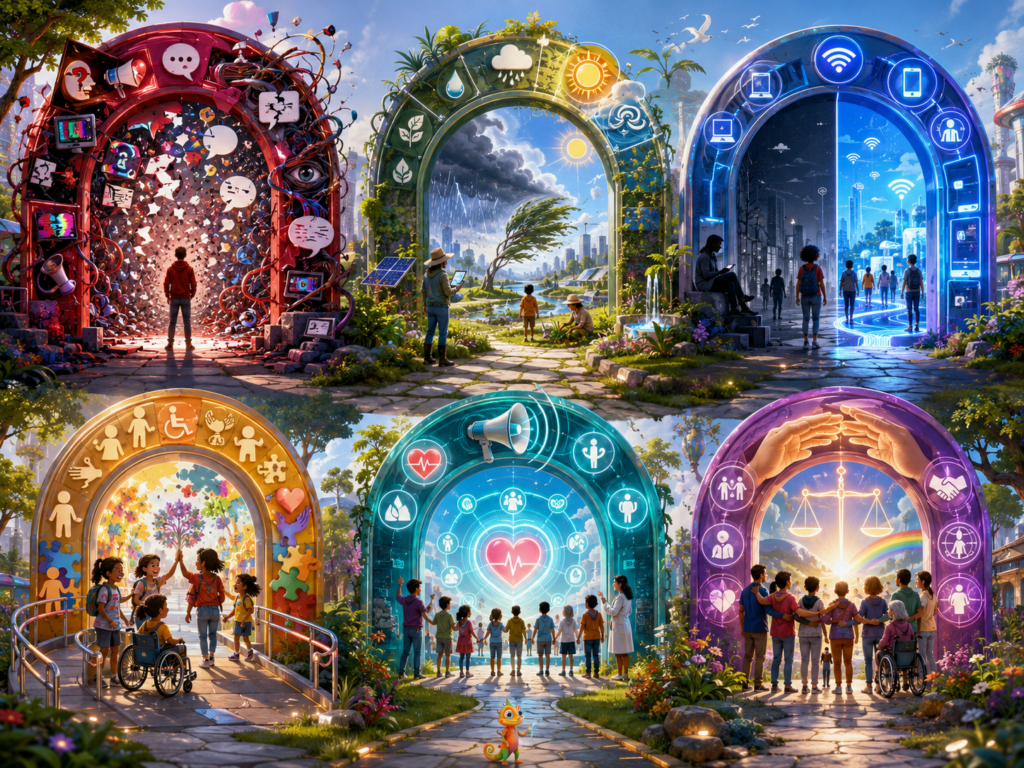
Students choose one gate and answer:
What is the issue?
How does it connect to students?
What local action could respond to it?
What evidence would make a proposal stronger?
What English skills would help explain this issue?
The teacher should push students to avoid vague answers. For example, “technology is bad” is too general. A stronger idea is: “Digital exclusion matters because some students may not have equal access to online learning tools.” This creates the final B2 mindset: students must think with precision, not only opinion.
Part 2: Vocabulary Activation: Summit Language Control Board – 15 min
• global citizenship
• civic responsibility
• ethical participation
• sustainability
• inclusion
• equity
• intercultural understanding
• human rights
• digital citizenship
• environmental responsibility
• social impact
• local action
• global challenge
• evidence
• source
• main idea
• supporting detail
• speaker stance
• implied meaning
• perspective
• argument
• counterargument
• recommendation
• feasibility
• impact
• stakeholder
• collaboration
• negotiation
• formal register
• academic tone
• performance stamina
• synthesis
• reflection
• lifelong learning
• future readiness
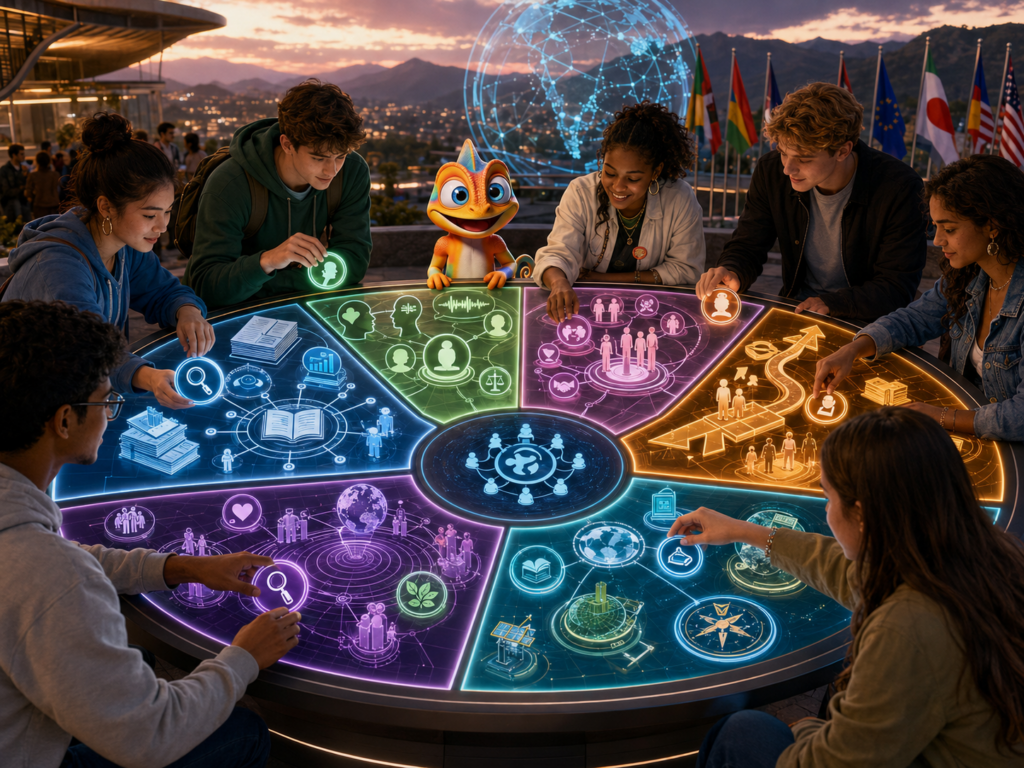
Students use the vocabulary list and place words on the summit control board. The teacher should require a reason for each placement. If a group places counterargument under interaction, they should explain that discussion requires responding to opposing views. If another group places formal register under writing, they should explain that proposals need academic tone.
This activity prepares students for the final performance because the vocabulary corresponds directly to the skills they will demonstrate: reading, listening, speaking, interaction, and writing.
Part 3: Extended Explanation: What Is the Final B2 Integrated Skills Performance? – 30 min
The teacher explains that the final milestone is not a traditional review. It is a complete performance where students demonstrate what they can actually do with English. Students should be able to understand complex information, explain ideas with detail, respond to questions, organize arguments, and adapt language to purpose and audience.

The teacher explains the five performance layers:
Layer 1: Input
Students receive information through reading and listening. They must identify main ideas, supporting details, stance, implication, and evidence.
Layer 2: Processing
Students connect information to a global citizenship issue. They decide what matters, what is missing, and what action is realistic.
Layer 3: Spoken output
Students deliver a 90–120 second brief. This tests stamina, clarity, organization, tone, and confidence.
Layer 4: Interaction
Students respond to a partner or audience. They ask clarification questions, respond to counterpoints, compare options, and reach a decision.
Layer 5: Written output
Students write a formal proposal or message. This tests structure, register, vocabulary, cohesion, and purpose.
The teacher should explain that performance stamina is not just speaking for a long time. It means maintaining quality while communicating. A student with stamina keeps the idea organized, uses formal language, connects evidence to claims, listens to others, and continues even when challenged.
Useful language:
“The issue I want to address is…”
“This matters because…”
“One piece of evidence suggests that…”
“From a global citizenship perspective…”
“A feasible action would be…”
“One possible challenge is…”
“Nevertheless, this action could…”
“My final recommendation is…”
Part 4: Source-to-Action Summit Trail – 15 min

Students receive a short source pack: one reading extract, one teacher-read audio detail, and one symbolic image.
Source Pack
1. Reading Extract (The Data)
“A school counselor survey conducted last month showed that 68% of 10th-grade students belong to unmonitored messaging groups. The data indicates that 4 out of 10 students have received or witnessed hurtful rumors, anonymous teasing, or edited screenshots of classmates shared in these chats after school hours.”
2. Teacher-Read Audio Detail (The Human Context)
(The teacher reads this aloud to the class using an anxious, serious tone to convey speaker attitude):
“Yesterday, two students came to my office crying because an edited, embarrassing photo of them was sent to a group chat with over 100 people. They didn’t want to come to school today. This isn’t just joking around anymore—it’s affecting their sleep, their grades, and how safe they feel walking into the classroom.”
3. Symbolic Image Prompt
- Visual Description: A teenage student sits alone, looking down at a bright, glowing smartphone screen in a dimly lit bedroom. On the screen, toxic speech bubble icons pop up. In the background, dark, abstract shadow figures overlap, whispering to each other, symbolizing the unseen, rapid spread of digital rumors behind someone’s back.
They must move through four summit trail points:
evidence
interpretation
action
impact
At each point, they produce one sentence.
Example:
Evidence: “The text explains that misinformation can spread quickly online.”
Interpretation: “This suggests that students need stronger digital citizenship skills.”
Action: “A feasible action would be a student-made verification guide.”
Impact: “This could help students share information more responsibly.”
This activity prepares students for the final test because it trains them to move from information to action. It also prevents shallow presentations by requiring evidence and interpretation before recommendation.
SESSION 2: CONSTRUCTION – REINFORCEMENT (40 min)
Part 1 – Civic Dialogue Arena – 15 min
Students work in groups of three. Each group receives one issue and three possible actions.
Issue and Possible Actions
Issue 1: Cyberbullying and Toxic Language in Grade-Level Chats
- Three Possible Actions:
- An anonymous digital reporting system: A private online form where students can flag toxic behavior or harmful screenshots without fear of retaliation.
- Student-led restorative circles: Peer-led mediation sessions during homeroom to resolve online group chat conflicts through dialogue.
- A zero-tolerance digital contract: A strict, school-wide behavioral agreement signed by students and parents that applies immediate social media/device restrictions at school if breached.
- Assigned Stakeholders for the Group of 3: Student, Teacher, Family.
Issue 2: Excessive Food and Plastic Waste in the School Cafeteria
- Three Possible Actions:
- A school garden composting program: Turning leftover organic lunch items into soil nutrients managed completely by grade-level clubs.
- A mandatory reusable container policy: Banning all single-use cafeteria plastics and requiring everyone to bring their own flasks and lunchboxes.
- A “Surplus Share” community fridge: Setting up a designated, monitored station where untouched packaged food items are donated daily to local shelters.
- Assigned Stakeholders for the Group of 3: Student, School Leader, Community Member.
Issue 3: Heavy Digital Footprints and Lack of Online Privacy Awareness
- Three Possible Actions:
- A student-made digital verification guide: A viral infographic checklist posted on school accounts teaching peers how to lock down personal data privacy.
- A mandatory “Digital Detox” week: A school-sanctioned 7-day challenge where all non-essential academic screens are prohibited, shifting entirely to physical logs.
- Alumni mentorship webinars: Live Q&A sessions where university-level future students share real stories of how past social media posts impacted their admissions.
- Assigned Stakeholders for the Group of 3: Student, Family, Future Student.
They must discuss which action is strongest, but they cannot decide immediately. First, each student must represent a different stakeholder: student, teacher, family, school leader, community member, or future student.
Example issue: digital citizenship
Possible actions: online respect campaign, fact-checking workshop, student digital agreement
Each student explains the issue from their stakeholder perspective. This helps students understand that global citizenship requires perspective-taking. The teacher should encourage language such as:
“From a student perspective…”
“A possible concern is…”
“This action may be feasible because…”
“The strongest impact would be…”
Part 2 – Challenge Question Arena – 15 min
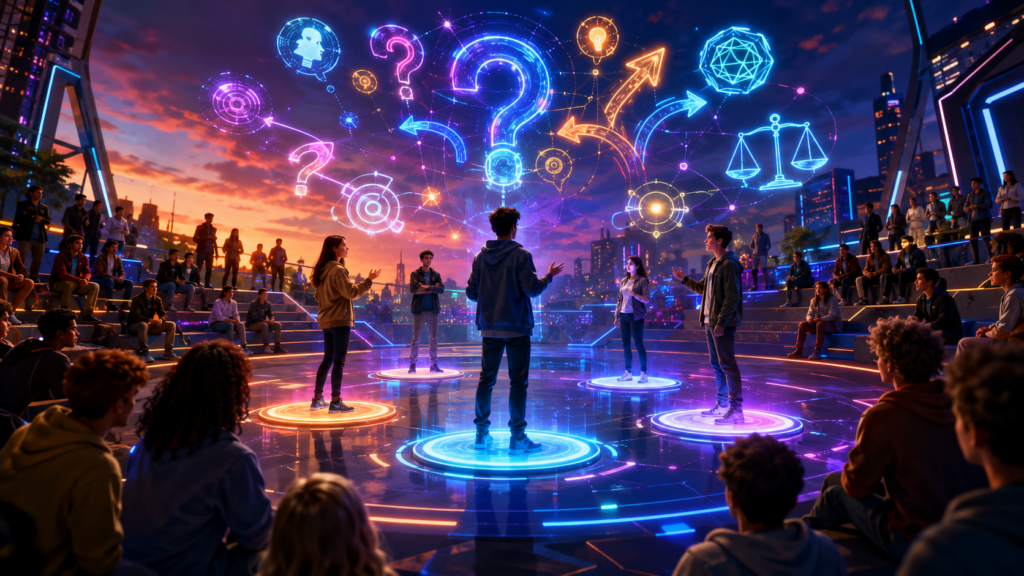
Students practice answering challenge questions. This is essential because the final performance is not finished after the speech; students must respond to another person’s question.
Challenge questions:
How do you know this action is realistic?
Who would be responsible for the project?
What could go wrong?
How would you measure impact?
Why does this matter beyond our school?
What evidence supports your recommendation?
Students answer in 20–30 seconds. The teacher should remind them to avoid defensive answers. A strong answer acknowledges complexity and gives a reason.
Example:
“That is a valid concern. The action is realistic because it can start with one class before expanding to the whole school.”
Part 3 – Peer Impact Review – 10 min
Students exchange project ideas and complete a quick oral review:
The issue is clear because…
The recommendation is feasible because…
One possible challenge is…
One way to strengthen the impact is…
This closes the reinforcement class through peer evaluation and improvement, not a repeated formula.
SESSION 3: CONSOLIDATION (80 min)
Part 1- Preparation: Final Brief Card – 10 min
Students prepare a brief card with seven keywords only:
issue
evidence
stakeholder
action
feasibility
impact
recommendation
The teacher explains that this card is not a script. At B2 level, students should use it to guide their thinking while speaking naturally. The teacher should check that students have keywords, not full sentences.
Part 2 – Final Integrated Skills Test – 55 min
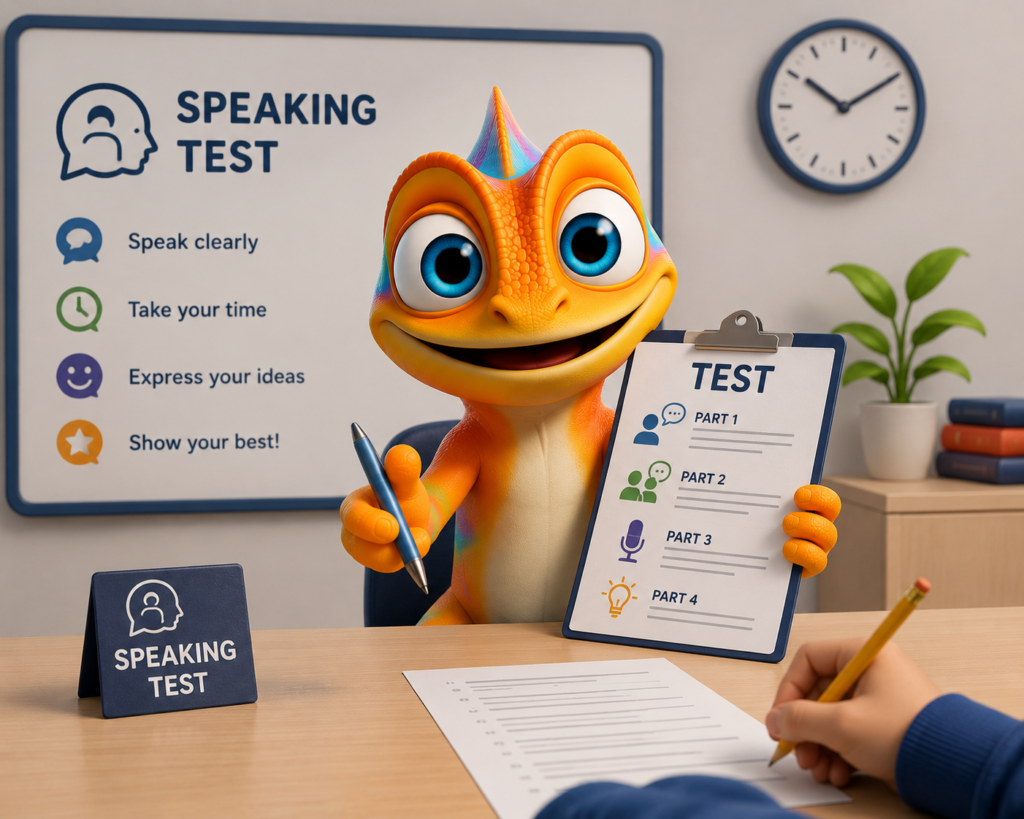
Students complete the final B2 integrated skills performance. The complete student-ready version is in the Word document linked below.
Test structure:
Reading: short global citizenship text
Listening: teacher-read academic-style audio
Speaking: 90–120 second global citizenship brief
Collaborative interaction: decision-making task
Writing: 120–150 word formal proposal
The teacher should frame this as the final proof of B2 growth. Students are demonstrating that they can understand, evaluate, speak, interact, and write about meaningful issues with purpose and control.
Global Citizenship BGU Final Test
Part 3 – Legacy Statement Ceremony – 15 min
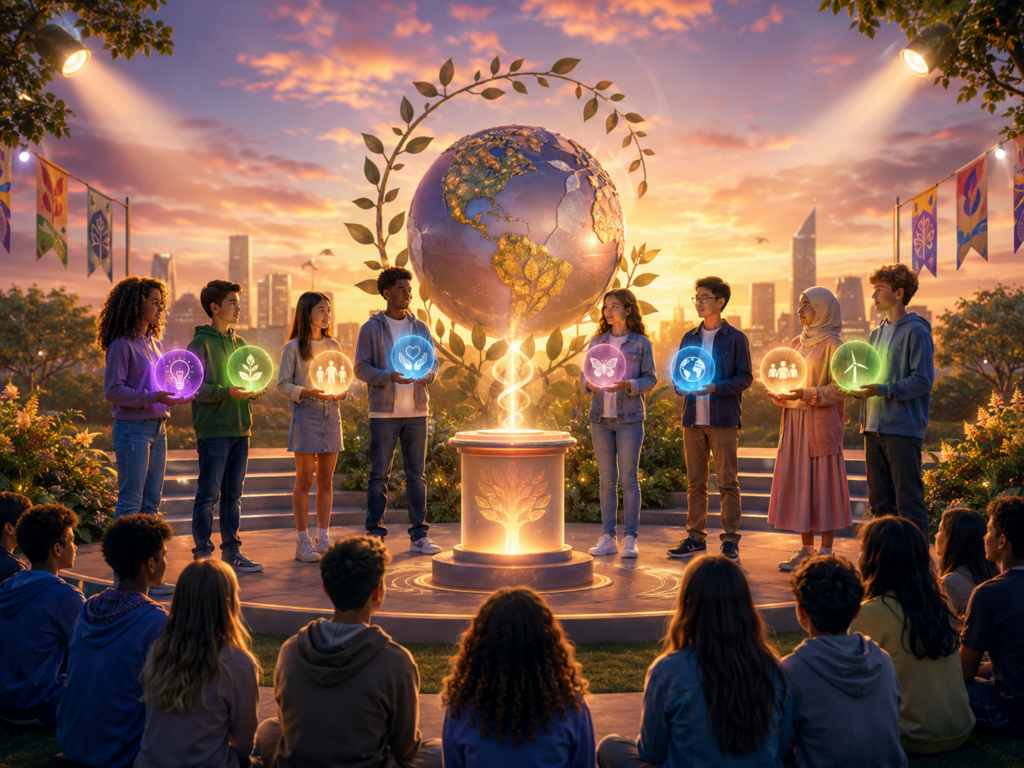
Students write and perform a final 30–45 second legacy statement. They complete one of these frames:
“This year, English helped me…”
“One issue I can discuss more clearly now is…”
“One skill I will continue developing is…”
“As a global citizen, I can…”
“My next learning goal is…”
The ceremony can be visual and symbolic. Students can place their statement on a future-learning wall, record it as a class audio capsule, or attach it to a symbolic map of the world. The purpose is to close the level with reflection and forward movement.
“Education is the most powerful weapon which you can use to change the world.”
Nelson Mandela

RUBRIC:
Global Citizenship
NEE – Agregar el tipo de adaptaciones curriculares
Principio II: Pautas 6.1 – 6.3 – 6.4
Principio III: Pautas 7.1 – 8.1 – 9.1
ALUMNO 1: Constante monitoreo. Dar tiempo adicional para el desarrollo de la actividad y se reduce el número de ejercicios o se modifican los ejercicios con un nivel de dificultad reducido, de acuerdo con sus necesidades académicas.
ALUMNO 2: Constante monitoreo, Dar tiempo adicional para el desarrollo de la actividad y se reduce el número de ejercicios o se modifican los ejercicios con un nivel de dificultad reducido, de acuerdo con sus necesidades académicas.
ALUMNO 3: Constante monitoreo. Corroborar que el contenido entregado en clase haya sido comprendido por la estudiante mediante retroalimentación.