
Life-changing Decisions

SKILLS
EFL.5.2.11 Express opinions on abstract and concrete topics while describing reactions to them and others’ opinions.
EFL.5.2.15 Engage in an extended conversation on most general topics and keep it going by expressing and responding to suggestions, opinions, attitudes, advice, feelings, etc.

REAL-LIFE APPLICATION
This topic helps students evaluate important life decisions by comparing possible benefits, risks, and consequences. They learn to use the Second Conditional to discuss hypothetical present situations, such as choosing a career path, moving abroad, starting a business, or taking an internship. This skill is useful for interviews, counseling conversations, debates, personal planning, and academic discussions.

LEARNING ACTIVITIES
SESSION 1 (80 min) ANTICIPATION
Part 1: Future Fork Scenario Room (20 min)

The teacher presents different “future fork” scenarios around the room. Each scenario gives a student two possible life paths. Groups choose one scenario and discuss which path would be more strategic. The teacher asks: “If this student had to decide today, what would be the smartest option?” This activates hypothetical reasoning.
Scenarios:
- University now or work first.
- Study abroad or stay close to family.
- Start a business or accept an internship.
- Choose passion or choose stability.
- Take a technical course or an academic program.
- Move to another city or stay in the same school.
- Work part-time or focus only on studies.
- Study medicine or study design.
- Join a family business or create a new project.
- Volunteer for a year or enter university immediately.
CONSTRUCTION
Part 2: Vocabulary for Life Decisions (15 min)
The teacher introduces vocabulary for more mature discussion of life paths.

- life-changing decision
- life path
- advantage
- disadvantage
- consequence
- opportunity
- risk
- long-term goal
- short-term benefit
- career path
- financial stability
- personal growth
- independence
- responsibility
- scholarship
- internship
- entrepreneurship
- technical training
- academic path
- social impact
- family expectations
- personal values
- future planning
- sacrifice
- priority
Model sentences:
“If I accepted an internship, I would gain professional experience.”
“If she chose financial stability, she might sacrifice personal passion.”
“If they started a business, they would need a clear strategy.”
Part 3: Grammar Input: Second Conditional for Hypothetical Present (25 min)
The teacher explains that the Second Conditional is used to talk about imagined or hypothetical situations in the present or future.
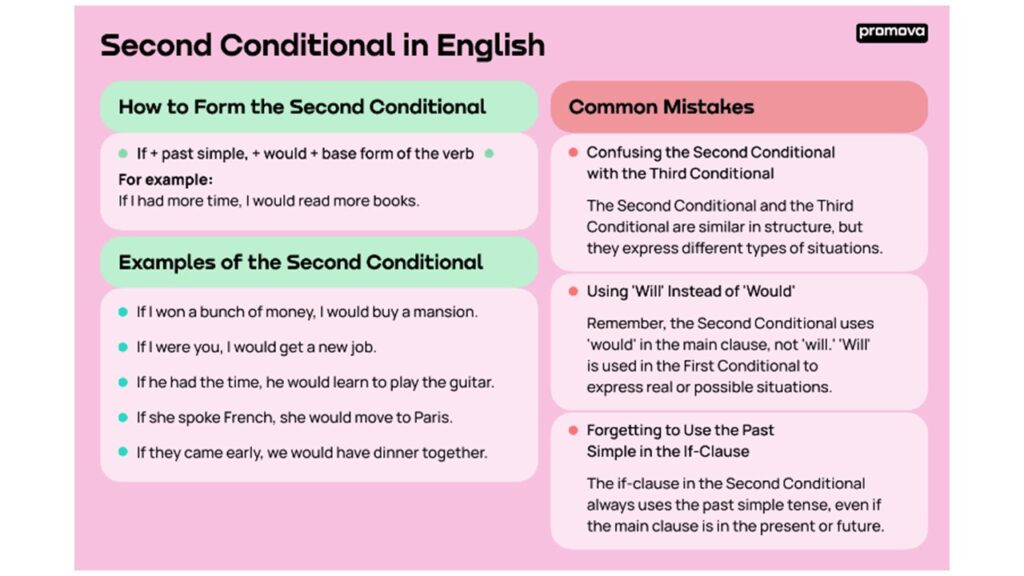
Exercise: Complete the sentences with the correct form.
- If I ______ a full scholarship, I would study abroad.
- If she chose a technical path, she ______ gain practical experience.
- If he started a business, he ______ need financial planning.
- If they moved to another city, they ______ become more independent.
- If I had to choose between passion and stability, I ______ analyze both carefully.
- If we accepted the internship, we ______ learn workplace skills.
- If he followed his family’s expectations, he ______ feel secure but less motivated.
- If she took a gap year, she ______ discover new interests.
- If they studied entrepreneurship, they ______ create their own opportunities.
- If I worked while studying, I ______ improve my time management.
Part 4: Pros and Cons Strategy Map (20 min)
Students work in advisory teams. Each team chooses one life path scenario and builds a strategy map with four areas: benefits, risks, values, and final recommendation. They must include at least three Second Conditional sentences. This is collaborative and analytical.
Scenarios:
- If a student studied abroad…
- If a student started a business…
- If a student chose technical training…
- If a student chose university…
- If a student worked while studying…
- If a student took a gap year…
- If a student followed family expectations…
- If a student chose a creative career…
- If a student accepted an internship…
- If a student moved to another city…
SESSION 2: CONSTRUCTION – REINFORCEMENT (40 min)
Part 1 – Life Path Risk Tournament (15 min)
The teacher presents pairs of decisions. Students vote for the one with the higher risk and justify their answer using the Second Conditional. This works like a quick tournament bracket.
Decision pairs:
- study abroad vs. stay home
- start a business vs. get a job
- take a gap year vs. enter university
- follow passion vs. follow family advice
- move to another city vs. stay local
- work while studying vs. only study
- choose arts vs. choose medicine
- accept an internship vs. focus on grades
- join a family business vs. build your own
- choose technical training vs. academic study
Example:
“If I started a business, I would face more financial risk, but I would learn entrepreneurship.”
Part 2 – Advisor vs. Dreamer Dialogue (15 min)
Students work in pairs. One student is the dreamer who wants to choose a life path. The other student is the advisor who asks questions and discusses pros and cons. Then they switch roles.
Advisor questions:
- What would you do if you had to decide today?
- What would be the biggest advantage?
- What would be the biggest risk?
- How would this decision affect your family?
- How would this path help your long-term goal?
- What would you sacrifice?
- What would you gain?
- Would you feel motivated?
- Would this path give you independence?
- What would you do if the plan failed?
Part 3 – Exit Strategy Sentence (10 min)
Each student gives one strategic Second Conditional sentence.
Examples:
“If I accepted an internship, I would gain experience before university.”
“If I chose only stability, I might ignore my real interests.”
SESSION 3: CONSOLIDATION (80 min)

Part 1 – Preparation: Life Path Strategy Council (15 min)
Students prepare for a strategy council. Each group receives one life-changing decision case. They prepare notes under: option A, option B, pros, cons, risks, and recommendation. They cannot write a full script.
Cases:
- A student must choose university or technical training.
- A student must choose between passion and financial stability.
- A student can study abroad but would leave family.
- A student can start a small business instead of getting a job.
- A student can work part-time while studying.
- A student can accept an internship but has less free time.
- A student can take a gap year to volunteer.
- A student can join a family business.
- A student can choose a creative career.
- A student can move to another city for education.
Part 2 – Strategy Council Simulation (50 min)
Groups act as life path advisors. One student presents the case, two students explain pros and cons, and one student gives the final recommendation. The class acts as the council and asks one challenge question. This is interactive and decision-based, not a simple presentation.
Council questions:
- What would happen if the student failed?
- What would the student gain from this path?
- What would the student sacrifice?
- How would this affect future opportunities?
- What would be the safest option?
- What would be the most meaningful option?
- How would family expectations affect the decision?
- What would change in the student’s daily life?
- What would help the student succeed?
- Why would your recommendation be better?
Required language:
If he/she chose…, he/she would…
One advantage would be…
One disadvantage would be…
The biggest risk would be…
We would recommend… because…
Part 3 – Council Vote and Reflection (15 min)
Students vote for the strongest recommendation based on logic, language, and clarity. They explain their vote using one Second Conditional sentence. The teacher closes by emphasizing that mature decisions require imagination, realistic pros and cons, and clear reasoning.
 RUBRIC: Life Changing Decisions
Here is presentation to remind you about Zero, First and Second Conditionals:
NEE – Agregar el tipo de adaptaciones curriculares
Principio II: Pautas 6.1 – 6.3 – 6.4
Principio III: Pautas 7.1 – 8.1 – 9.1
ALUMNO 1: Constante monitoreo. Dar tiempo adicional para el desarrollo de la actividad y se reduce el número de ejercicios o se modifican los ejercicios con un nivel de dificultad reducido, de acuerdo con sus necesidades académicas.
ALUMNO 2: Constante monitoreo, Dar tiempo adicional para el desarrollo de la actividad y se reduce el número de ejercicios o se modifican los ejercicios con un nivel de dificultad reducido, de acuerdo con sus necesidades académicas.
ALUMNO 3: Constante monitoreo. Corroborar que el contenido entregado en clase haya sido comprendido por la estudiante mediante retroalimentación.