
K-Learning Project
SKILLS
EFL.5.2.7 Present information clearly and effectively in a variety of oral forms for a range of audiences and purposes.
EFL.5.2.15 Engage in an extended conversation on most general topics and keep it going by expressing and responding to suggestions, opinions, attitudes, advice, feelings, etc.
REAL-LIFE APPLICATION

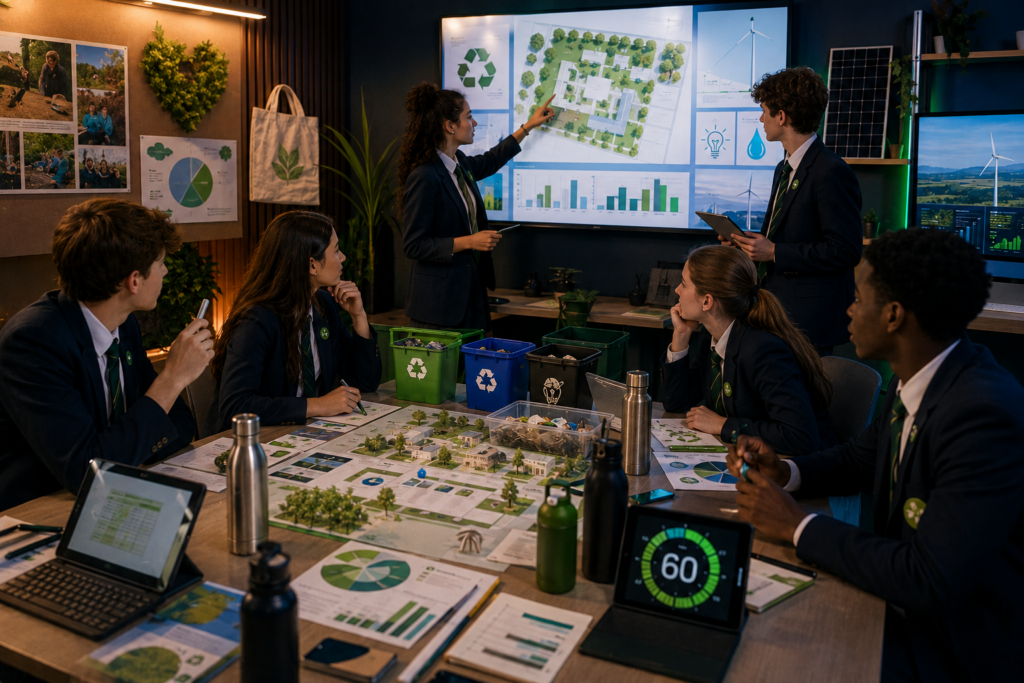
This topic helps students build a short but complete argument about a real school problem. They learn to propose a realistic environmental solution, support it with observation or evidence, explain expected impact, and respond to questions. This is useful for academic presentations, leadership projects, student council proposals, sustainability campaigns, interviews, and real decision-making in school communities.
LEARNING ACTIVITIES
SESSION 1 (80 min) ANTICIPATION
Part 1: School Environmental Audit Snapshot (20 min)
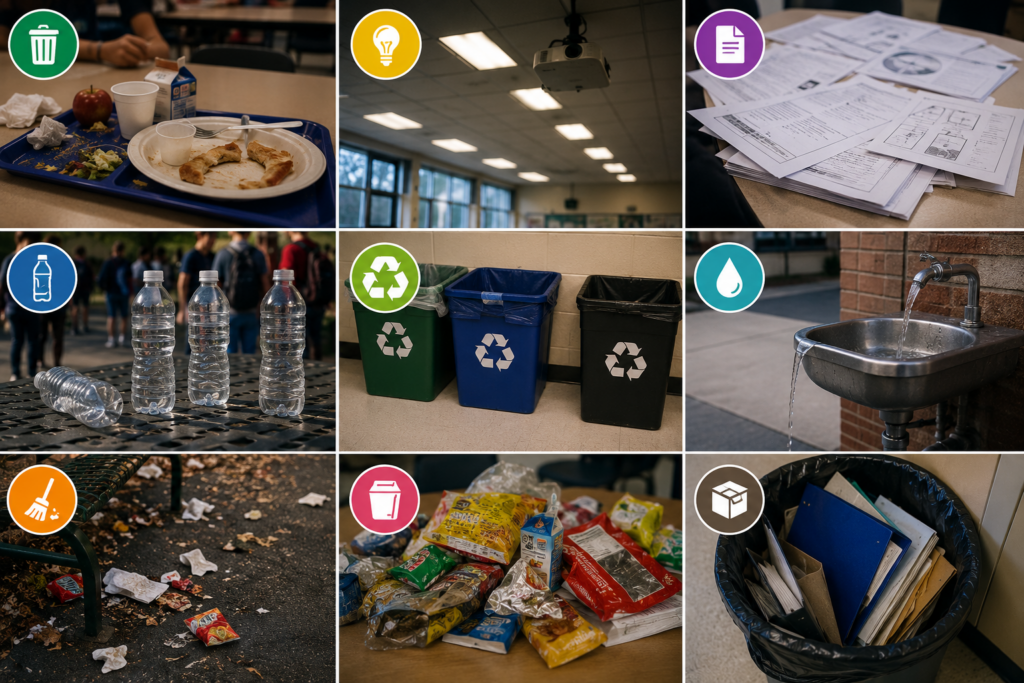
The teacher presents a set of realistic school audit images or icons: cafeteria waste, lights left on, printed worksheets, plastic bottles, unused recycling bins, water waste, dirty shared spaces, excessive packaging, and old materials thrown away.
Students work in groups and choose the issue that seems most urgent. They must answer:
What is the problem?
What evidence can we observe?
Who is affected?
What will happen if nothing changes?
What realistic action could begin this month?
The teacher models a stronger response:
“The main issue is plastic waste after break time. This matters because it creates unnecessary trash and shows weak sustainability habits. A realistic solution would be a reusable bottle campaign with weekly class tracking.”
CONSTRUCTION
Part 2: Vocabulary Activation: Impact Word Challenge (15 min)
Groups receive 100 imaginary impact points. They “invest” their points in the words they think will make their proposal stronger. To invest in a word, they must use it in a meaningful sentence.
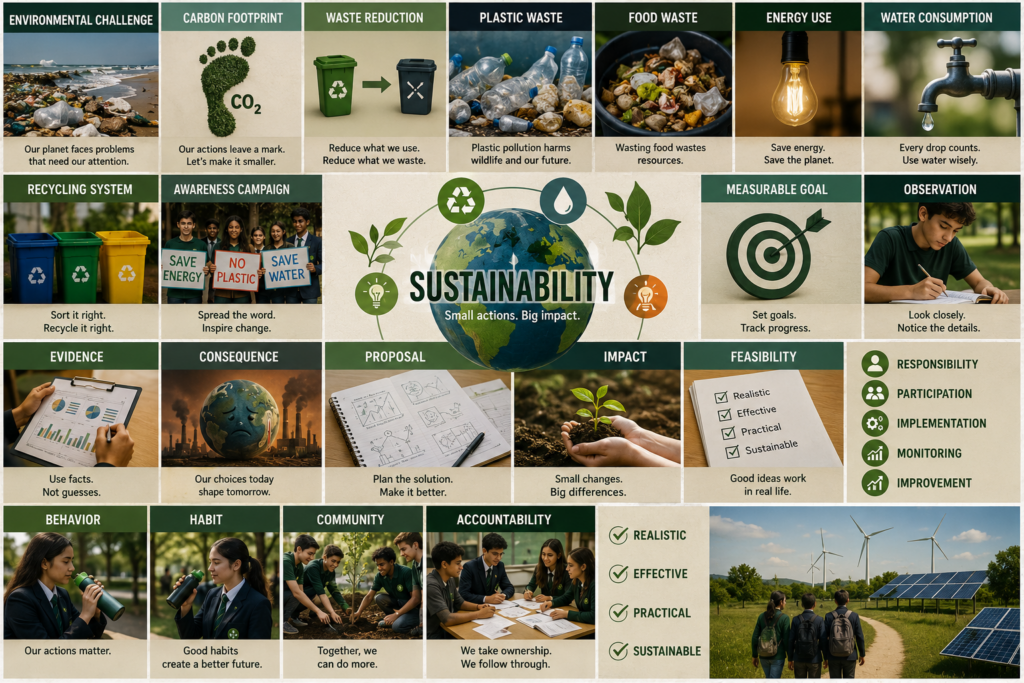
- sustainability
- environmental challenge
- carbon footprint
- waste reduction
- plastic waste
- food waste
- energy use
- water consumption
- recycling system
- awareness campaign
- measurable goal
- observation
- evidence
- consequence
- proposal
- impact
- feasibility
- responsibility
- participation
- implementation
- monitoring
- improvement
- behavior
- habit
- community
- accountability
- realistic
- effective
- practical
- sustainable
Example:
“We invest in measurable goal because a proposal without a measurable goal is difficult to evaluate.”
“We invest in feasibility because the solution must be realistic for students and teachers.”
Part 3: Language Input: The 60-Second Proposal Formula (25 min)
The teacher explains that argumentative stamina means sustaining a clear argument under time pressure. In this project, students are not giving a long speech. They are delivering a concise proposal with enough detail to be convincing.

A strong 60-second environmental proposal includes:
- Hook: Why should the audience listen?
- Problem: What school-based environmental issue exists?
- Evidence: What observation supports the problem?
- Solution: What action do you propose?
- Feasibility: Why is the solution realistic?
- Impact: What will improve?
- Call to action: What should happen next?
Suggested 60-second timing:
0–8 seconds: hook
8–18 seconds: problem
18–28 seconds: evidence or observation
28–42 seconds: solution
42–52 seconds: expected impact
52–60 seconds: call to action
Useful proposal language:
Problem:
“The main issue is…”
“One environmental challenge at school is…”
“This problem matters because…”
Evidence:
“We observed that…”
“One visible sign is…”
“This suggests that…”
Proposal:
“We propose…”
“Our solution is…”
“The school should…”
“Students could…”
Feasibility:
“This is realistic because…”
“This can start with…”
“The first step would be…”
Impact:
“This would reduce…”
“This will improve…”
“This could help students…”
Call to action:
“We recommend starting with…”
“The next step should be…”
“Our class can begin by…”
The teacher explains how to avoid weak arguments:
Weak: “Plastic is bad. We should recycle.”
Stronger: “Plastic waste after break time is a visible school problem. We propose a reusable bottle campaign with weekly classroom tracking. This is realistic because students already bring water to school, and it will reduce single-use bottles.”
Part 4: Grammar Teaching Method: Argument Surgery Board (20 min)
Instead of teaching grammar as isolated rules, students “operate” on weak arguments and improve them.
Weak argument:
“Trash is bad. Students should stop. It will help.”
Students identify missing parts:
- What kind of trash?
- Where does it happen?
- What should students do exactly?
- How will it help?
- Can the solution be measured?
Improved argument:
“Plastic waste after break time is a visible problem near the cafeteria. Students should bring reusable bottles and avoid single-use packaging. This will reduce trash and help the school build more sustainable habits.”

Language focus
Use because to justify:
“This matters because…”
Use so that to show purpose:
“We should place signs near the bins so that students remember to separate waste.”
Use would for a realistic expected result:
“This would reduce plastic waste.”
Use should for strong recommendations:
“The school should create a classroom eco-monitor role.”
Use could for flexible options:
“Students could measure waste every Friday.”
Use however to anticipate problems:
“However, some students may forget, so reminders will be necessary.”
SESSION 2: CONSTRUCTION – REINFORCEMENT (40 min)
Part 1 – 30-Second Problem Defense (15 min)
Students choose one school environmental issue and defend why it matters in 30 seconds.
They must include:
- problem
- observation
- consequence
Prompt:
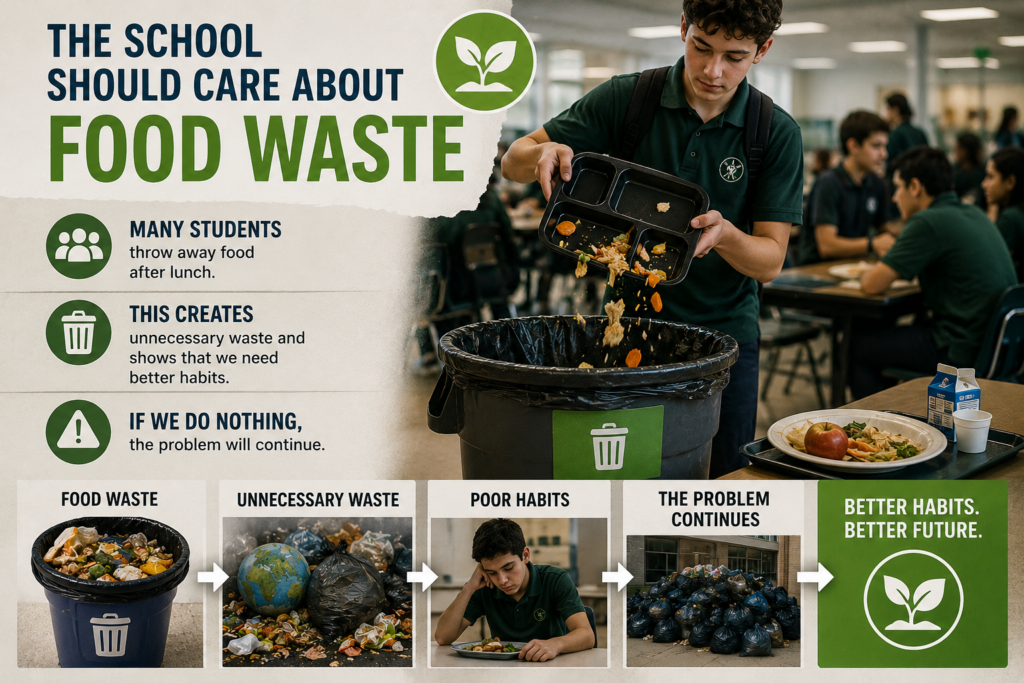
“Why should the school care about this issue?”
Examples:
“The school should care about food waste because many students throw away food after lunch. This creates unnecessary waste and shows that we need better habits. If we do nothing, the problem will continue.”
Part 2 – Solution Feasibility Check (15 min)
Groups receive possible solutions. They must decide whether each one is realistic, difficult, or unrealistic. They must explain why.
Solutions:
- Ban all plastic immediately.
- Start a reusable bottle challenge.
- Turn off lights after every class.
- Create one recycling point for each classroom.
- Stop using paper completely.
- Measure food waste for one week.
- Create a student eco-monitor role.
- Plant 100 trees in one day.
- Use digital notices instead of printed posters.
- Organize a no-plastic snack day once a month.
Required language:
“This is realistic because…”
“This might be difficult because…”
“This could work if…”
“This would not work because…”
Part 3 – Exit Impact Sentence (10 min)
Each student says one complete impact sentence.
Examples:
“This solution would reduce paper waste.”
“This proposal could improve student habits.”
“This campaign will help the school reduce plastic.”
SESSION 3: CONSOLIDATION (80 min)
Part 1 – Preparation: 60-Second Sustainability Memo (15 min)
Students prepare a short oral memo for school leadership. They cannot write a full script. They prepare keywords only under:
- hook
- problem
- evidence
- solution
- feasibility
- impact
- call to action
Required language:
“The main issue is…”
“We observed that…”
“We propose…”
“This is realistic because…”
“This would…”
“The next step should be…”
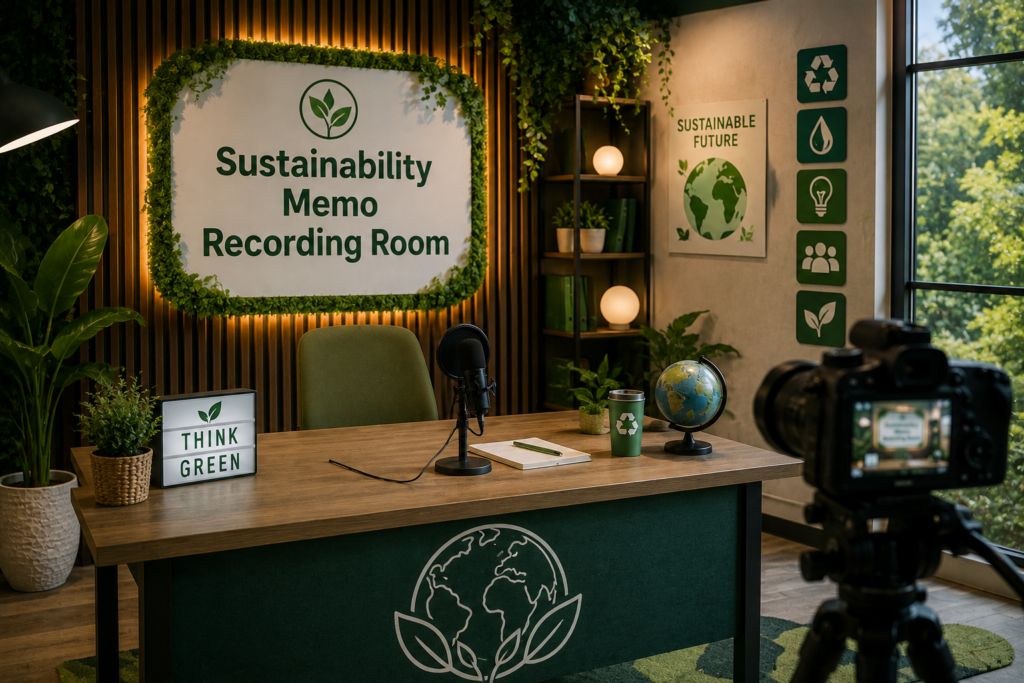
Part 2 – Sustainability Memo Recording Room (50 min)
Students deliver a 60-second oral memo. This is not a debate, tribunal, expo, or council. It works like a professional audio/video memo that could be sent to school leadership.
Format:
- Student records or performs a 60-second memo.
- A peer acts as timekeeper.
- A peer acts as clarity reviewer.
- A peer asks one follow-up question.
- Speaker answers in 20–30 seconds.
Memo requirements:
- school-based environmental problem
- one observation or evidence
- one realistic solution
- one expected impact
- one call to action
- 60 seconds
- clear voice and formal/semi-formal tone
Example:
“The main issue is paper waste in classrooms. We observed that many worksheets are used only once and then thrown away. We propose a paper-saving system where students use both sides of paper and teachers use digital notices when possible. This is realistic because it does not require expensive materials. This would reduce classroom waste and help students become more responsible. The next step should be a one-week paper audit.”
Part 3 – Memo Review Huddle (15 min)
Students listen to selected memos and give feedback using academic frames:
“One strong point was…”
“The solution was realistic because…”
“One thing to clarify is…”
“The impact was clear because…”
“The next step could be…”
Students vote for:
- strongest evidence
- most realistic solution
- clearest 60-second argument
- strongest call to action
- best professional tone

RUBRIC: Argumentative Stamina
Exercise Bank – Extra Practice
The Exercise Bank can be used as an additional practice section after the main lesson activities. These exercises are useful for students who finish early, need extra reinforcement, or want more practice before the final task. The teacher may select specific exercises depending on the students’ needs, class time, or level of difficulty.
Argumentative Stamina BGU Exercise Bank
NEE – Agregar el tipo de adaptaciones curriculares
Principio II: Pautas 6.1 – 6.3 – 6.4
Principio III: Pautas 7.1 – 8.1 – 9.1
ALUMNO 1: Constante monitoreo. Dar tiempo adicional para el desarrollo de la actividad y se reduce el número de ejercicios o se modifican los ejercicios con un nivel de dificultad reducido, de acuerdo con sus necesidades académicas.
ALUMNO 2: Constante monitoreo, Dar tiempo adicional para el desarrollo de la actividad y se reduce el número de ejercicios o se modifican los ejercicios con un nivel de dificultad reducido, de acuerdo con sus necesidades académicas.
ALUMNO 3: Constante monitoreo. Corroborar que el contenido entregado en clase haya sido comprendido por la estudiante mediante retroalimentación.